

SENSITIVE PLANT (MIMOSA PUDICA)
 Sluvk
SluvkDiscover the incredible Mimosa pudica, a plant with a neurological-like response that folds its leaves when touched. This plant employs unique survival strategies, including a 'primitive memory' and nitrogen-fixing abilities, making it an extraordinary subject in the botanical world.
 8 - 12 ឆ្នាំ
In the vibrant grasslands and disturbed soils of the tropics, a modest-looking shrub hides a sophisticated neurological-like response. Known as Mimosa pudica, this plant possesses the extraordinary ability to react to physical stimuli in a fraction of a second, a rarity in the stationary world of flora.
The most famous trait of this plant is its "seismonastic movement," where the leaflets fold inward and the entire leaf stalk droops when touched, shaken, or heated. This rapid collapse is not a result of muscle, but of a specialized hydraulic system controlled by clusters of cells called pulvini located at the base of the leaves.
Biologically, this movement is triggered by an electrical signal, similar to an animal's nerve impulse, that travels through the plant’s vascular system. When the signal reaches the pulvinus, it causes a sudden loss of turgor pressure as potassium and water are flushed out of the cells, forcing the leaf to fold under its own weight.
This rapid folding serves as a brilliant survival strategy, designed to startle and deter herbivores that might otherwise consume the tender foliage. By collapsing, the plant suddenly appears wilted, smaller, and less appetizing to hungry insects or grazing animals, while also exposing its sharp thorns.
At the cellular level, the Mimosa pudica exhibits a form of "primitive memory" or habituation. Research has shown that if the plant is subjected to a harmless stimulus repeatedly—such as being dropped from a low height—it eventually stops folding, demonstrating its ability to learn that the stimulus is not a threat.
Beyond its mechanical movements, the plant is a resilient nitrogen-fixer, possessing nodules on its roots that house symbiotic bacteria. These bacteria convert atmospheric nitrogen into a usable form, allowing the plant to thrive in nutrient-poor soils while enriching the earth for future generations.
The foliage of the Sensitive Plant is also nyctinastic, meaning it follows a circadian rhythm where the leaves fold every night to conserve moisture and energy. This internal clock ensures that the plant maximizes its photosynthetic efficiency during the day and remains protected during the cool, dark hours.
In the world of pharmacology, Mimosa pudica is studied for its diverse chemical arsenal, including mimosine, an alkaloid with potent antimicrobial and wound-healing properties. Extracts from the roots and leaves have been used in traditional medicine to treat snakebites and inflammatory conditions.
The plant produces delicate, globe-shaped flower heads that resemble pink or purple pom-poms, attracting a variety of small pollinators. These blooms eventually give rise to clusters of flat, bristly pods that cling to the fur of passing animals, ensuring the wide dispersal of its seeds.
The story of the Sensitive Plant is one of dynamic adaptation, proving that plants are far from passive observers of their environment. It remains a fascinating subject for scientists, bridging the gap between botanical biology and the complex behavior of living organisms.
 Max Sees Outside
 Max's Little Seed
 A Glowing Seed
 Things That Change
 Max and the Mud
 Tree Frogs
 Butterflies
 S - S - Stop
 Animals That Sting
 Rabbit
 Hello!
Join Max, a curious light-blue rabbit, as he explores the outdoors in this simple picture book. With clear, repeating sentences and gentle sound effects, children can practice early observation vocabulary. Perfect for early listening and speaking practice.
Max finds a tiny seed and, with a lot of impatience and a little help from Lily, learns that growing things (and good things in general) require sun, water, and most importantly, time. A charming story about patience and nature's processes.
A little girl found a glowing seed, so she took it home, planted it, and took good care of it. But the seed still hadn’t sprouted. When she noticed all the plants outside her window were thriving, she finally realized what the seed needed. 小女孩发现了一颗会发光的种子,于是她把种子带回家种下并细心照顾,但是种子却迟迟不发芽。小女孩发现窗外的植物都生长得茂盛,终于明白了种子需要什么。

Cuz's Journey of Growth
This simple and insightful story explores the concept of change through everyday examples, like seeds becoming plants and caterpillars turning into butterflies. It concludes with a comforting message about personal growth, making it perfect for young readers to learn about evolution and development.
Max and his younger brother Tom discover a muddy puddle in their backyard and can't resist jumping in. As they get messier and messier, their mom comes out to find them, leading to a playful solution to their muddy fun. A warm and humorous tale for early readers.
A documentary-style picture book introducing young readers to the basic characteristics and habitats of tree frogs, using simple, factual language.
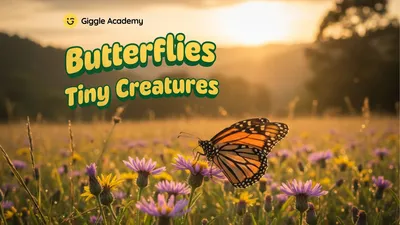
Discover the amazing world of butterflies in this factual and wonder-filled reader. Learn about their colorful wings, unique feeding habits, incredible life cycle from egg to chrysalis, and the astonishing journeys some take across vast distances, all while helping flowers grow.
A simple and engaging story designed to introduce young children to words starting with the letter 'S', focusing on sounds and basic vocabulary.
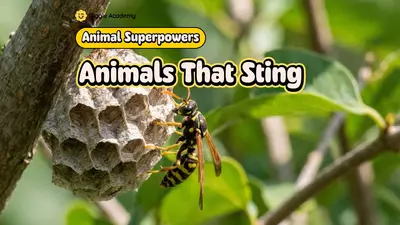
This book introduces young readers to various animals that sting, explaining why they sting and how it helps them survive. It covers bees, jellyfish, fireworms, rays, ants, and wasps.
This book introduces young readers to rabbits as pets, covering their basic characteristics and care. It uses simple language and clear facts to describe their fur, ears, habitat, and needs, making it an ideal first look at these gentle animals.
Max is getting ready for his birthday party! As his friends arrive, they greet each other with “Hello” and “Hi.” A simple and fun story to help young learners practice their first greetings.
© រក្សាសិទ្ធិ 2024 - Giggle Academy
上海吉咯教育科技有限公司
រក្សាសិទ្ធិ © 2026 - Giggle Academy