

COFFEA (COFFEE PLANT)
 Sluvk
SluvkDiscover the incredible story of the coffee plant, from its origins in Ethiopia to its role in human civilization. Learn how caffeine acts as both a pesticide and a pollinator stimulant, contributing to the plant's survival and its impact on our daily lives. Explore its biological marvels, cultural significance, and the challenges it faces today.
 10 - 14 tau te pakeke
Originating from the shaded highlands of Ethiopia, the Coffee plant (Coffea) is far more than a lush evergreen with jasmine-scented white blossoms. Hidden within its glossy leaves and hardy seeds lies a sophisticated chemical weapon designed to manipulate and conquer the biological world: Caffeine.
Biologically, Caffeine is a bitter alkaloid that the coffee plant utilizes as a high-concentration natural pesticide. This compound possesses the power to paralyze or kill most insects that attempt to consume its leaves or seeds, effectively shielding the plant’s precious genetic material from the ravages of tropical pests.
The brilliance lies in the low concentration of caffeine found in the plant's nectar, where it acts not as a toxin, but as a neurological stimulant for pollinators like bees. Caffeine enhances the bees' long-term memory, ensuring they remember the plant’s location and return repeatedly, guaranteeing efficient cross-pollination and the species' survival.
When the coffee fruit—known as a "cherry"—ripens to a vibrant red, it attracts various mammals and birds with its sweet pulp. While the fruit is digested, the hardy seeds pass through the digestive tract and are dispersed into the environment along with a dose of natural fertilizer, allowing saplings to take root in new territories.
The coffee plant is a partial shade-dweller, thriving best in the "Coffee Belt" between the tropics, where elevation and rainfall are ideal. Its root system spreads wide but remains relatively shallow, allowing the plant to rapidly absorb nutrients from the organic-rich topsoil and volcanic earth.
In human life, Caffeine sparked a cognitive revolution due to its structural similarity to Adenosine—a molecule in the human brain that signals sleepiness. By occupying Adenosine receptors, caffeine keeps humans alert, focused, and energized, becoming the "fuel" for many of the advances in modern civilization.
Modern science has demonstrated that the coffee plant possesses powerful antioxidant properties, thanks to compounds like chlorogenic acids. These substances not only protect the plant from free radicals under ultraviolet stress but also offer numerous health benefits to humans, from liver protection to reducing the risk of neurodegenerative diseases.
However, the coffee plant currently faces a massive challenge from climate change, as species like Coffea arabica are extremely sensitive to rising temperatures. A shift of just 1-2 degrees Celsius can disrupt flowering cycles and reduce essential oil content, driving scientists to breed more heat-tolerant varieties to preserve the multi-billion dollar industry.
The journey of a coffee bean from the wild forest to your cup is a perfect intersection of botanical evolution and human history. It is perhaps the only plant that has compelled billions of people to change their morning routines, transforming a chemical defense mechanism into a universal symbol of connection and creativity.
The life of the coffee plant is an affirmation of the power of plant chemistry; it exists not just to grow, but to interact. From a lowly shrub beneath the forest canopy, it has risen to become one of the most influential plant species on the planet, altering the flow of history and the rhythm of human life.
 C - C - Cake
 Max's Little Seed
 A Glowing Seed
 Hello!
 Broccoli's Adventure
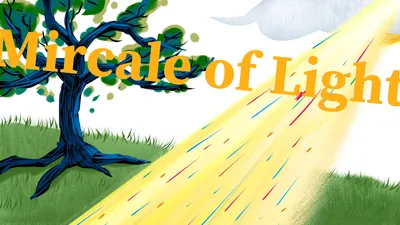 The Wonder of Light
 Gorillas
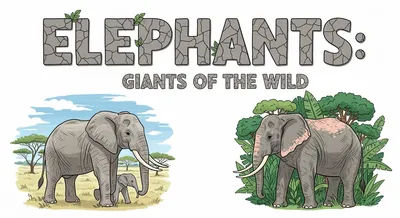 Elephants: Giants of the Wild
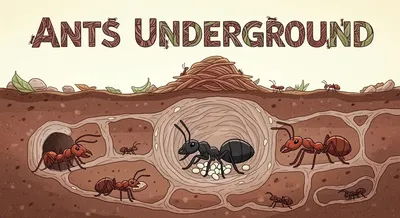 Ants Underground
 Elephants
A simple and repetitive rhyme that introduces children to words starting with the letter 'C', helping with early phonics and vocabulary.
Max finds a tiny seed and, with a lot of impatience and a little help from Lily, learns that growing things (and good things in general) require sun, water, and most importantly, time. A charming story about patience and nature's processes.
A little girl found a glowing seed, so she took it home, planted it, and took good care of it. But the seed still hadn’t sprouted. When she noticed all the plants outside her window were thriving, she finally realized what the seed needed. 小女孩发现了一颗会发光的种子,于是她把种子带回家种下并细心照顾,但是种子却迟迟不发芽。小女孩发现窗外的植物都生长得茂盛,终于明白了种子需要什么。
Max is getting ready for his birthday party! As his friends arrive, they greet each other with “Hello” and “Hi.” A simple and fun story to help young learners practice their first greetings.
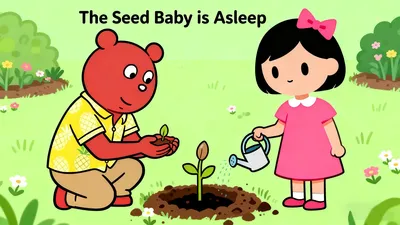
Cuz's Journey of Growth
Join Broccoli, a playful dog, as he discovers friendship and fun in a big, busy world.
Have you ever wondered what light is made of? This engaging picture book uncovers the secrets of light—from the Sun to a lightbulb—and shows how this everyday superpower makes our world colorful, warm, and full of life.
A simple and factual introduction to gorillas, exploring their habitat, physical characteristics, and behaviors through clear and concise language, suitable for young readers.
A clear and informative nonfiction story introducing young readers to the three species of elephants, their physical characteristics, behaviors, habitats, and the importance of conservation efforts. Written in simple, factual language suitable for early elementary children.
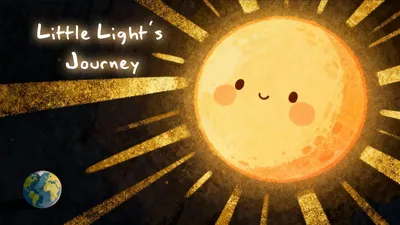
A Bright Adventure from the Sun to Earth
An informative and realistic exploration of ants and their colonies, explaining their roles, behaviors, and importance in nature. The story uses straightforward language and scientific facts to engage young readers interested in insects and biology.
A simple, factual book introducing young readers to elephants, focusing on their physical characteristics and behavior in a clear, concise manner, suitable for early vocabulary building.
© Mana pupuri 2024 - Giggle Academy
上海吉咯教育科技有限公司
Manatārua © 2026 - Giggle Academy