

Jackie and the Magic Baseball Glove
 NianNian Edu
This heartwarming story introduces young readers to Jackie Robinson, an eight-year-old boy in 1920s Cairo, Georgia, who loves baseball but faces unfair rules due to his skin color. It follows his journey from a local "Dream Field" to breaking racial barriers in Major League Baseball, teaching children about courage, perseverance, and the importance of inclusivity and kindness in a world that wasn't always fair.
 6 - 10 år gammel
Once upon a time, in a sunny town called Cairo, Georgia, there lived a speedy boy named Jackie Robinson. Jackie was eight years old, just like you, and he had the biggest smile in the whole neighborhood. But what Jackie loved most of all was baseball. Oh boy, could he run! He could dash around the bases faster than a rabbit chasing a carrot. And when he swung his bat—crack!—the ball would fly like a shooting star.
Every afternoon, Jackie grabbed his beat-up glove and headed to the empty lot behind his house. There, he and his friends would play pickup games. They called it "Dream Field" because that's where all their wildest wishes came true. Jackie dreamed of being a big-league player someday, hitting home runs for crowds who cheered louder than thunder.
But not everything was fair in Dream Field. Back then, in the 1920s, some grown-ups had silly rules. They said, "Baseball is only for kids who look a certain way." Jackie's skin was brown, like rich chocolate soil where flowers grow strong. But the other kids' parents whispered, "No, Jackie can't play on our team. He's different." It hurt Jackie's heart like a fastball to the chest. Why couldn't everyone play together? Baseball was about fun, friends, and flying balls—not fences that kept people out.
One hot summer day, Jackie's best friend, Tommy, invited him to a real game at the town park. "Come on, Jackie! You're the best shortstop ever!" Tommy said, tossing him a shiny new ball. Jackie's eyes lit up like fireworks. He ran all the way there, his sneakers kicking up dust clouds.
At the park, the field was perfect—green grass like a fluffy blanket, white lines crisp as fresh paper, and bleachers full of cheering families. But when Jackie stepped up to bat, the other team's coach crossed his arms and scowled. "This game's for white boys only," he grumbled. "Go home, kid."
The words stung worse than a bee. Some kids giggled meanly, and others looked away, too shy to speak up. Jackie's cheeks burned hot. He wanted to yell, to cry, to throw his glove into the dirt and never play again. But deep inside, a little voice whispered, "You're strong, Jackie. Strong like a oak tree in a storm. Don't let mean words bend you."
Tommy squeezed his hand. "It's not fair," he said softly. "You're my friend. And friends stick together." A few other kids nodded, their faces pink with bravery. One girl named Rosie even shouted, "Let him play! He's faster than lightning!"
Jackie took a deep breath, like he was filling his lungs with courage from the sky. He didn't run away. Instead, he picked up his bat and said, "Okay. But someday, this game will be for everybody. No fences, no rules that hurt hearts. Just bases and buddies."
The coach grumbled more, but the kids on Jackie's side cheered so loud, the birds in the trees joined in with chirps. They let him play that day—just one inning. And guess what? Jackie hit a triple! He slid into third base safe, dust flying everywhere, and the whole park exploded in claps. Even a few of the mean kids smiled. "Wow," one whispered. "He's good."
From that day on, Jackie didn't give up. He practiced every single day, rain or shine. He ran laps around the block until his legs felt like jelly. He swung his bat until his arms ached like they'd carried a mountain. And he studied the game like a treasure map, learning every trick to make a perfect throw.
Years flew by like fast pitches. Jackie grew tall and strong, playing baseball in college and even for the army during a big war. But the fences were still there in the grown-up world. Big leagues like the Dodgers wouldn't let players with brown skin join. Scouts shook their heads and said, "Too different. Too risky."
Then, one magical day in 1945, something wonderful happened. A brave man named Branch Rickey, who owned the Brooklyn Dodgers, believed in dreams without walls. He called Jackie into his office. "Son," Mr. Rickey said, his eyes twinkling like stars, "I see your fire. I see your speed. And I see a world where every kid can play. Will you join my team? But it won't be easy. There'll be boos and bumps in the road."
Jackie's heart pounded like a drum. "I'll do it," he promised. "For all the kids like me. For inclusivity—the magic word that means 'room for everyone.'"
In 1947, Jackie stepped onto Ebbets Field as the first Black player in the major leagues. The crowd was huge, buzzing like a hive of happy bees. But not everyone cheered. Some fans yelled mean things from the stands. Teammates turned their backs at first. Pitchers threw wild beans at him, hoping to scare him away. Reporters wrote nasty stories, like poison ivy words.
Jackie felt the weight of it all, heavy as a backpack full of rocks. Nights, he'd lie awake, wondering if he could keep going. But then he'd remember Dream Field, and Tommy's hand in his, and Rosie's shout. "This isn't just for me," he'd tell himself. "It's for every kid who ever felt left out. The quiet ones, the shy ones, the ones who look different or talk funny. We're all part of the big game called life."
So Jackie played with grace, like a dancer on diamonds. He stole bases sneaky as a fox—82 in one season! He fielded grounders smooth as silk. And when the boos came, he answered with smiles and slams. Slowly, slowly, the fences started to crumble. Teammates high-fived him. Fans waved signs that said, "Jackie, You're Our Hero!" Black kids across America—and white kids too—picked up bats and balls, dreaming bigger. "If Jackie can break through," they said, "so can we!"
By the end of that first year, Jackie's team won the National League pennant. He was voted Rookie of the Year, and the whole world whispered his name like a spell. Jackie Robinson wasn't just a player; he was a bridge, connecting hearts across colors and crowds.
Years later, when Jackie retired, he looked back at that little boy in Cairo. "You did it," he smiled. "You showed the world that inclusivity isn't a fancy word—it's a promise. Include everyone, and watch the magic happen. Believe in yourself, and inspire others to believe too."
And so, whenever you play a game today—soccer, tag, or yes, baseball—remember Jackie. If someone tries to build a fence, be the one to say, "Scoot over! There's room for you." Because in the grand playground of the world, we're all on the same team. And with a little courage and a lot of kindness, we can hit it out of the park—together.
 Baseball
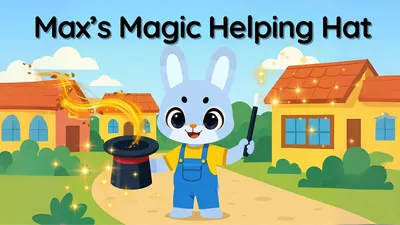 Max's Magic Helping Hat + QuizMax's Magic Helping Hat
 Basketball
 Tennis
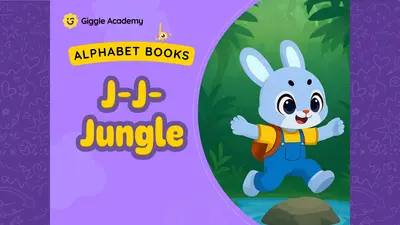 J - J - Jungle
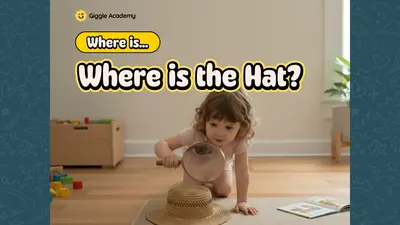 Where is the Hat?
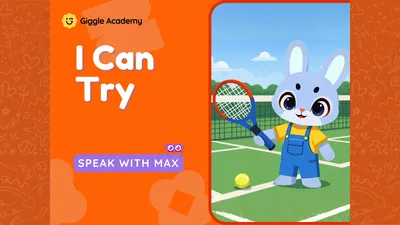 I Can Try
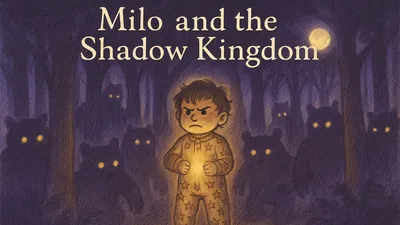 Milo and the Shadow Kingdom
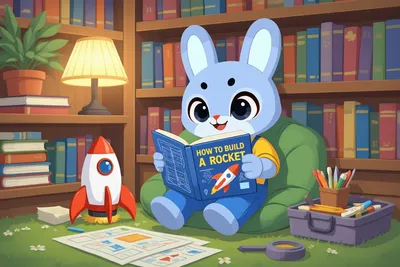 Max and the Pattern Puzzle Rocket
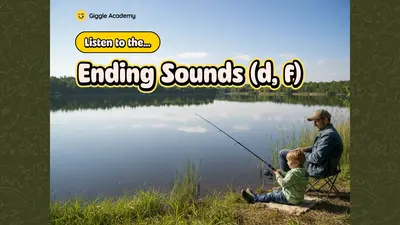 Listen to the Ending Sounds! (d, f)
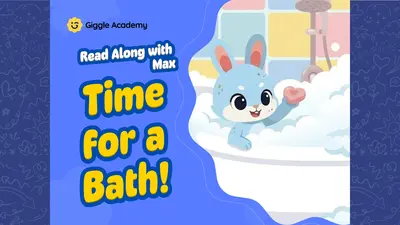 Time for a Bath!
An introductory book about baseball, covering basic terms, equipment, and actions in a simple, factual manner for young readers.
In this magical story, Max helps people in town by pulling out just the right items from his magic hat! Each item is made by changing a single letter sound in a CVC word. Young readers will have fun guessing the next word as they see how swapping the first or last sound creates something new!
In this magical story, Max helps people in town by pulling out just the right items from his magic hat! Each item is made by changing a single letter sound in a CVC word. Young readers will have fun guessing the next word as they see how swapping the first or last sound creates something new!
This book introduces young readers to the basics of basketball, showing teams, the court, dribbling, running, jumping, and scoring with simple, clear language and realistic imagery. It's a great first look at the sport.
An introductory book that explains the basics of tennis, including the court, racket, ball, net, and players. Written in a simple, repetitive style with high-frequency words, it's perfect for young readers learning about sports.
This playful story follows Max as he explores the jungle and meets a friendly jaguar, giving early learners lots of chances to hear and say the /j/ sound. Through bright illustrations and a simple, picture-led storyline, children can follow along easily while hearing the /j/ sound repeated.
A simple and repetitive story perfect for early readers, introducing basic vocabulary and concepts of location with a hat, a cap, and a bat.
A simple story about a character trying out different sports and activities. Reader learn the repeating sentence, "I can try ..."
"A story about finding the light within, discovering that everyone has fears, and learning that courage grows when we face the darkness together."
Max builds a rocket that flies him to the moon. But how will be get home again?
A simple and sweet story for young children, following a child's day from fishing with dad to dreaming of an elf, with a focus on word recognition and rhyming sounds.
Tom the little rabbit plays outside and gets very dirty — but after a bath, fresh clothes, and brushing his teeth, he is clean and ready for bed! #Bedtime stories for you.
© Copyright 2024 - Giggle Academy
上海吉咯教育科技有限公司
Copyright © 2026 - Giggle Academy