

The Master Weaver: How Do Spiders Build Perfect Webs?
 Sluvk
SluvkDiscover the incredible engineering skills of a tiny spider as it constructs its perfect, symmetrical web. Learn about spinnerets, different silk types, and how spiders build, measure, and even recycle their intricate homes. A fascinating look at nature's master builders.
 6 - 10 år gammel
I am looking at a rose bush covered in morning dew. In the center, a beautiful, silver web is sparkling in the sun. It looks like a giant wheel made of diamonds. It is perfectly symmetrical, with every line in the right place. But there are no blueprints or construction workers here—just one tiny spider.
I look at the spider’s back. She has tiny organs called spinnerets. They work like a magical 3D printer! Inside her body, the silk is a liquid, but as soon as she pulls it out through her spinnerets, it turns into a solid, strong thread. She can make different kinds of silk: some for strength, some for sticking, and some for wrapping her lunch.
How does she start? She can't fly across the gap! I watch her stand on a leaf and let out a long, light thread into the wind. The wind carries the silk until it catches on a branch far away. This is her Bridge Thread. Once it sticks, she walks across it to make it stronger with more silk.
Now the spider needs a frame. She drops down from the middle of the bridge on a new thread, making a shape that looks like the letter "Y". This is the heart of the web. These three lines are the strongest parts of the whole house.
Next, the spider builds the "spokes," just like the ones on a bicycle wheel. She moves back and forth from the center to the edges. She uses her own body to measure the distance! She knows exactly how far apart each spoke should be by using her legs as a measuring tape.
Now comes a big secret. The spider starts at the center and builds a spiral moving outward. But this isn't the sticky trap yet! This is just a scaffolding—a temporary path made of dry silk so she has something to walk on while she finishes her work.
Now the real work begins. The spider starts from the outside and moves back toward the center. This time, she uses a special, "gluey" silk. As she lays down this new spiral, she actually eats the old, dry scaffolding to recycle it! She replaces the dry path with a sticky trap.
I look at the sticky silk through my macro lens. It is covered in millions of tiny, invisible drops of glue. If a fly even touches one of these threads, it gets stuck like a piece of tape. The spider is very careful to space these lines perfectly so that no bug can fly through the gaps.
Here is the spider's best secret: She only walks on the spokes! Remember, the spokes are made of dry silk. She also has a special oily coating on her feet that works like a non-stick pan. She can run across her sticky house without ever getting her own legs caught.
The spider sits in the very center, called the hub, and waits. She doesn't have very good eyes, but she has "magic" feet. When a bug hits the web, it creates a tiny shaking. The spider feels these vibrations through her legs. She can tell exactly where the bug is and how big it is just by feeling the web shake.
I see a web that has been broken by the wind. Spiders don't like to waste! Every night or every few days, many spiders eat their old, broken webs. They turn the old silk back into liquid inside their bodies so they can make a brand-new, clean web the next morning. They are the best recyclers in nature!
I look at the finished web one last time. Without a ruler, a computer, or a map, the spider has built a perfect geometry puzzle. She reminds us that even the smallest creatures can be great artists and engineers. The garden is full of tiny miracles, if you just know where to look.
 The Itsy Bitsy Spider
 Ants Underground
 Max and the Vanishing Pasta
 Why Ants Walk in a Line
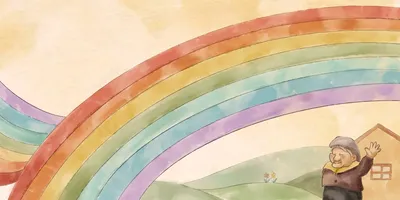 If There’s a Rainbow on the Horizon
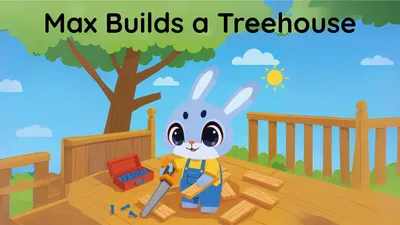 Max Builds a Treehouse
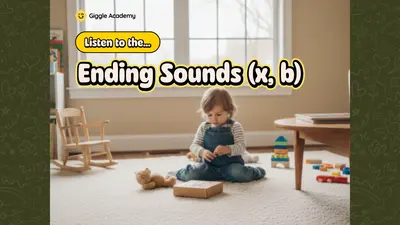 Listen to the Ending Sounds! (x, b)
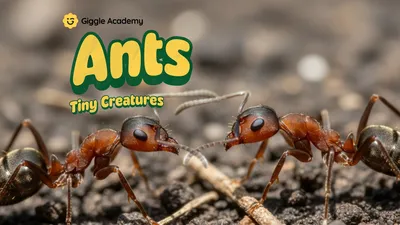 Bug Eyes: Ants
 Why Does Light Bend?
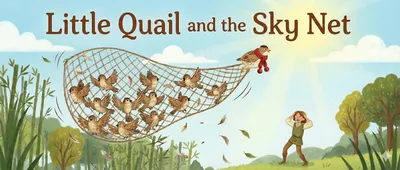 Little Quail and the Sky Net
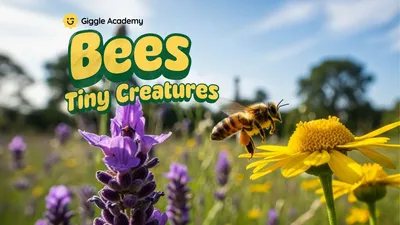 Bees
BeesA classic children's rhyme about an itsy bitsy spider's persistent journey up a water spout, despite the rain.
An informative and realistic exploration of ants and their colonies, explaining their roles, behaviors, and importance in nature. The story uses straightforward language and scientific facts to engage young readers interested in insects and biology.
When Max discovers that heavy bowls of pasta are getting lighter, it leads him on a noodle-filled adventure to solve the mystery of the vanishing pasta.
A playful and charming story about a group of ants learning to walk in a line with the help of friendly animals. Through lively dialogue and fun illustrations, children discover the value of working together and being organized, all told with humor and whimsy.
Inspiration Rainbows—glowing symbols of light and hope—inspired this book, conveying warm comfort via art and text. Content Aunt Ma, a knitter who lost her spark after her husband’s death, regains hope (and her love for knitting) when boy Bad Weather asks for a gift. Vivid, light-filled art wraps readers in hope. Techniques Bright rainbow hues (echoing light), soft rendering, a cheerful boy, and concise text weave a hopeful vibe.
Max uses his toolbox and favorite tools to build a cozy treehouse high up in the oak tree.
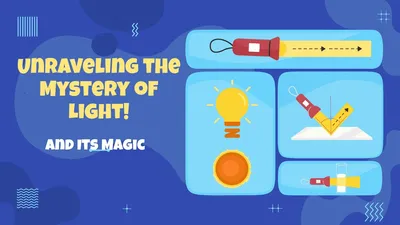
learning about the properties of light in a fun way
A playful and simple rhyming story that introduces young readers to basic words and sounds, with a fun, surprising ending.
This is an informative story about ants, detailing their physical characteristics, social structure, daily activities, and life cycle. Perfect for young readers curious about the natural world.
Light is like a magician! It zooms, bounces, and even bends. Join us on a bright adventure to discover the secrets of physics—from sunlight to lenses. This book is perfect for curious little scientists who love to ask 'Why?'
A gentle retelling of a Jataka tale where a little quail teaches her flock the power of unity against a hunter. When squabbles begin to break their rhythm, they learn a hard lesson about the importance of togetherness.
This is an informative story that introduces young readers to the fascinating world of bees. It covers where bees live, their physical characteristics, how they work in a hive, the process of making honey, and their importance to plants.
© Copyright 2024 - Giggle Academy
上海吉咯教育科技有限公司
Copyright © 2026 - Giggle Academy