

The Astronaut Who Loved to Explore
 Art of life
Join a friendly astronaut on an awe-inspiring journey through our solar system, exploring each planet and dwarf planet with fascinating facts and vivid descriptions. This story introduces young readers to the wonders of space, from Mercury's craters to Neptune's winds and Pluto's heart-shaped ice field, fostering curiosity and a love for discovery.
 6 - 8 کلن
The Astronaut Who Loved to Explore
Hello, explorers! It’s me—your friendly astronaut in a shiny white and blue suit. Out here in space, stars sparkle like tiny lanterns, and colorful galaxies swirl in soft, glowing patterns. Around us, nine beautiful planets orbit gently in the warm light of the Sun. Come float with me—I want to show you how each planet shines in its own special way.
Look over there, explorers—that tiny world glowing bright! That’s Mercury, the closest planet to the Sun. Its rocky surface is covered with craters that make it look bumpy and moon-like. Even though the Sun shines fiercely on it, Mercury’s sky stays dark because it has no air to hold the light.
Now let’s drift to Venus, wrapped in thick yellow clouds. It’s the hottest planet of all, hotter than any oven on Earth! The clouds trap heat like a giant blanket, swirling with strong winds that never stop. Down below, the rocky surface glows orange through the mist, with tall volcanoes and dusty plains. Venus spins so slowly that its day is longer than its whole year. It looks beautiful and bright—but it’s one of the toughest places in the solar system.
Look… our home. This is Earth, the only world we know bursting with life. Blue oceans shimmer, green lands stretch across continents, and soft white clouds dance in the sky. Earth has the perfect air for breathing and just the right warmth for animals, plants, and people.
Let’s glide over to the red planet — Mars. Its dusty, rusty color comes from iron in the soil, spreading across giant deserts. Huge volcanoes, deep valleys, and swirling dust storms make Mars look wild and mysterious.
Hold onto your helmets—here comes Jupiter, the biggest planet of them all! It’s a giant ball of swirling gas with colorful stripes stretching across its surface. Do you see that big red circle? That’s the Great Red Spot, a storm larger than Earth that has been spinning for centuries!
There it is—Saturn, glowing gently with its wide, beautiful rings. The rings are made of countless pieces of ice and rock, circling the planet like a frozen halo. Saturn is a light, fluffy world made mostly of gas, so light it could float in water!
Look at that pale blue world turning on its side—that’s Uranus. It spins like a rolling ball because long ago something giant knocked it over! Its icy atmosphere gives it a soft blue glow, with gentle rings that circle around it. Uranus is freezing cold, far from the Sun, and its winds sweep across smooth cloud layers.
And there—deep blue and far away—is Neptune. This icy giant has the strongest winds in the whole solar system, blowing faster than race cars. Dark storms swirl like huge whirlpools, appearing and disappearing in the cold atmosphere. Neptune’s beautiful color comes from the gases in its air, making it look like a glowing sapphire in space. Thin rings circle softly around it, and moons drift in the frozen starlight.
Way out in the dim edges of the Sun’s light is Pluto, small but full of charm. Its surface is icy and rocky, shining with soft white patches and reddish plains. Sometimes Pluto is closer to the Sun… sometimes farther… because its orbit is stretched like an oval. A giant heart-shaped ice field covers part of it—like a message of love from a tiny world. Even though it’s a dwarf planet now, Pluto still sparkles with wonder.
Floating in the asteroid belt is Ceres, the smallest dwarf planet. Its surface is dusty and gray, but bright salty spots glow like tiny lights. Scientists think there may be water deep inside, hiding under the crust. Ceres spins gently, almost like it’s quietly humming in space.
Meet Haumea, the fast spinner! It twirls so quickly that it has stretched into an oval shape instead of a circle. Its icy surface sparkles, and a big red patch marks one side like a cosmic birthmark. Two moons dance around it while it races through the Kuiper Belt.
There’s Makemake, bright and reddish with a frosty surface. It’s covered in frozen gases that shimmer under the distant sunlight. Makemake has one moon, and together they drift slowly through the cold darkness.
Now say hello to Eris, one of the farthest dwarf planets. It’s extremely cold, icy, and shiny—almost like a frozen pearl in space. Eris is even a little bigger than Pluto, and its orbit stretches far beyond the other planets. Its single moon follows it through the quiet, distant dark.
Explorers, every world we visited shines in its own special way—hot light, soft light, icy light, stormy light… And even out here, far from home, the warmest light of all is the one we carry inside us: curiosity, courage, and the joy of learning. Thank you for floating with me. Let’s keep discovering together—there is always more light in the universe to explore.
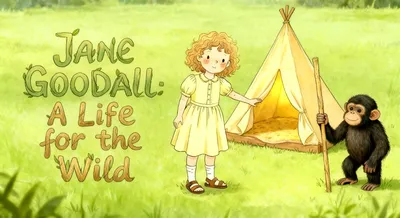 Jane Goodall: A Life for the Wild
 Max在空中
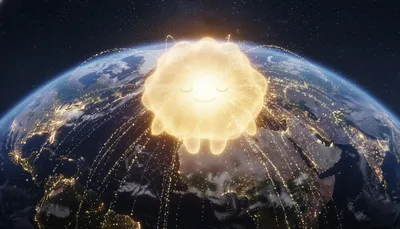 The Stardust Traveler's Earthly Lights
 Max and the Pattern Puzzle Rocket
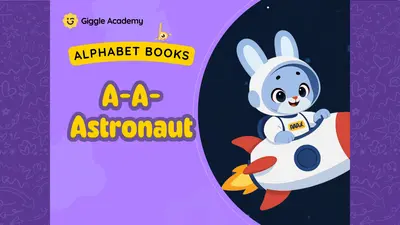 A - A - Astronaut
  Pilot Max: Delivery to Sandy Shell Island
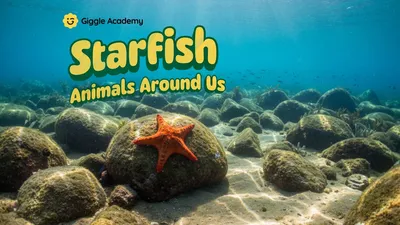 Starfish
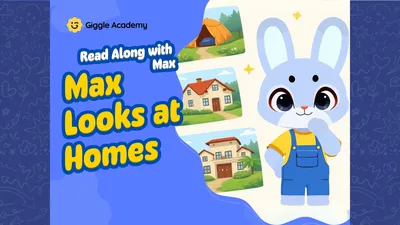 Max Looks at Homes
 Max's Curious Cave Adventure
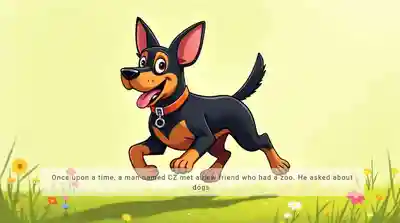 Broccoli's AdventureMax's Curious Cave Adventure + Quiz
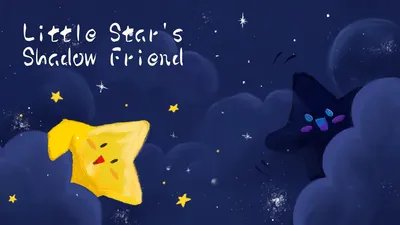 Little Star's Shadow Friend
Follow the inspiring journey of Jane Goodall, from a curious young girl observing chickens in her garden to a renowned scientist who uncovered the secrets of chimpanzees and dedicated her life to protecting wildlife and our planet. This biographical story highlights patience, discovery, and how one person can make a profound difference.
Join Max, a curious light-blue rabbit, as he explores the sky in various flying objects. This simple picture book uses repetitive sentences to introduce young readers to sky vehicles and vocabulary in a playful and predictable way.
A lonely stardust traveler discovers Earth’s gentle lights — guiding, joyful, and warm — all lit by people for one another. He transforms into a guardian star, forever watching over this planet where kindness shines brightest in the dark.
Max builds a rocket that flies him to the moon. But how will be get home again?
This playful story follows Max the astronaut as his rocket gets stuck on the moon, giving young readers lots of chances to hear and say the letter a sound /a/. Through bright space illustrations and simple single a words on each page children learn the /a/ sound while enjoying Max’s exciting adventure to cut his rocket free and fly home.
Max has to follow the directions to deliver a special package to Sandy Shell Island. But can he remember which way to go?
A simple, factual picture book introducing young readers to starfish, detailing their basic characteristics like arms, tube feet, and habitat in the sea.
Max explores different types of homes, from houses to tents, with a simple and repetitive narrative perfect for very young readers.
Max explores a dark cave and encounters curious shadows that give him a scare! But along the way, he meets companions who help him discover the meaning of friendship. This story supports early readers in learning beginning letter sounds, with a special focus on the /c/ sound.
Join Broccoli, a playful dog, as he discovers friendship and fun in a big, busy world.
Max explores a dark cave and encounters curious shadows that give him a scare! But along the way, he meets companions who help him discover the meaning of friendship. This story supports early readers in learning beginning letter sounds, with a special focus on the /k/ sound.
At night, a little star emerges from the clouds, befriending a shadow born of its light. They play together, and the star finds the shadow fades when light is blocked—yet reappears with fireflies’ glow after seeing forest and river shadows. They promise: as long as the star shines, the shadow will always be its friend.
© د کاپي حق 2024 - ګیګل اکاډمي
上海吉咯教育科技有限公司
Copyright © 2026 - Giggle Academy