

Words That Tell How
 Fanos Academy
This educational story introduces young readers to adverbs, explaining how these words describe actions. It provides simple examples and helps children understand their role in making sentences more vivid and clear.
 6 - 8 years old
Words That Tell How
Some words tell how an action happens.
These words are called adverbs.
A person can walk slowly. The word “slowly” tells how they walk.
A bird can sing softly. The word “softly” tells how it sings.
Rain can fall quickly or quietly. Adverbs show the way something happens.
Wind can blow gently. Waves can move smoothly.
Sometimes adverbs tell when: “now,” “later,” “today.”
Sometimes adverbs tell where: “here,” “there,” “everywhere.”
Adverbs help actions feel clear like steps you can follow.
With adverbs, your sentences move like a story that knows its path.
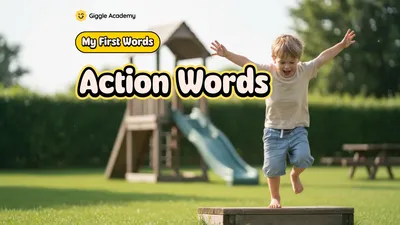 Action Words
 Land Vehicles
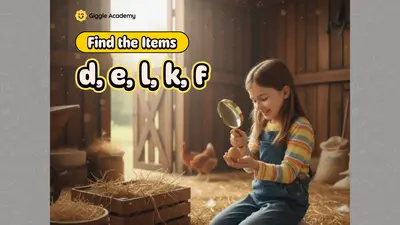 Find the Items (d, e, l, k, f)
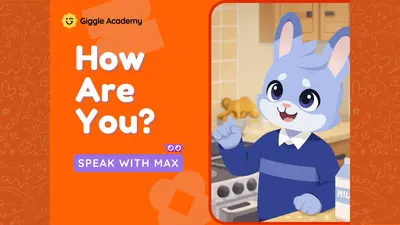 How Are You?
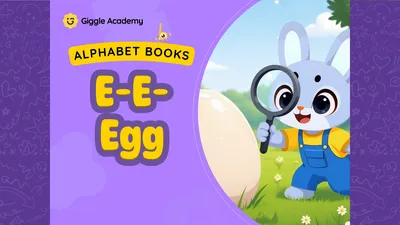 E - E - Egg
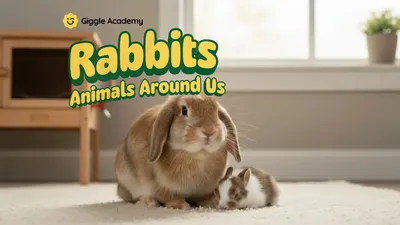 Rabbit
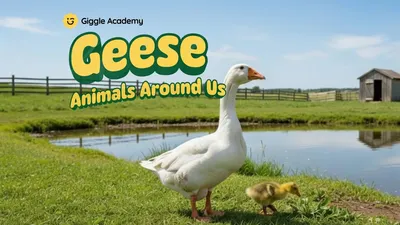 Geese
Geese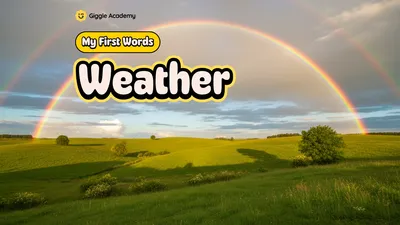 Weather
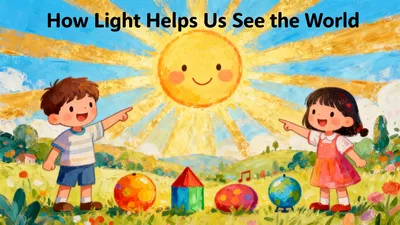 How Light Helps Us See the World
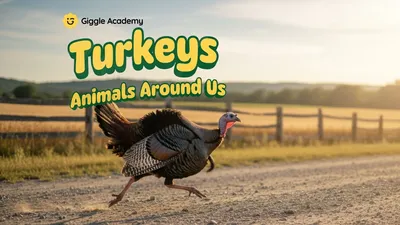 Turkeys
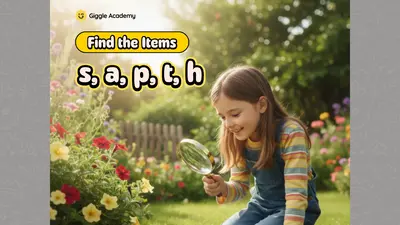 Where is it?
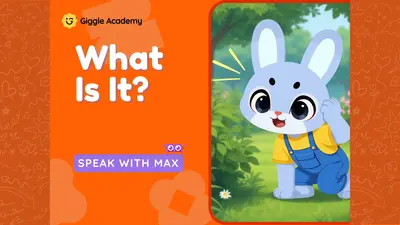 What Is It?
This early reader book introduces young children to common action verbs through simple, repetitive sentences. It encourages recognition of words like 'eat,' 'drink,' and 'dance' by associating them with clear, everyday activities, and prompts interaction by asking what activities the child enjoys.
An early reader book designed to help young children recognize and name common vehicles. Each page features a clear illustration of a vehicle with a simple phrase, focusing on observation and vocabulary building.
A simple and repetitive story that introduces young children to basic descriptive words and encourages observation and questioning.
This simple story introduces different emotions and how to ask and answer a basic question about feelings. Max is tired, Tom is sad, Lily is good, and Dad is busy.
This playful picture story follows Max as he finds a big egg and wonders what could be inside, giving young readers many chances to hear and say the short /ɛ/ sound. Through bright, colorful illustrations and a simple one-word-per-page storyline, children repeat the /ɛ/ sound while following Max’s exciting egg adventure.
This book introduces young readers to rabbits as pets, covering their basic characteristics and care. It uses simple language and clear facts to describe their fur, ears, habitat, and needs, making it an ideal first look at these gentle animals.
This is a simple, factual picture book that introduces young readers to geese as farm animals. It highlights key features such as their long necks, beaks, and behaviors like eating plants, walking, and swimming, along with introducing the term 'gosling' for a baby goose.
A simple story introducing different types of weather conditions through short, descriptive sentences.
An interactive story that explores how light helps us see colors and identify objects through a series of questions and answers about common things like the sky, animals, and everyday items.
This is a simple, factual book introducing young readers to turkeys as farm animals. It covers basic characteristics like their beak, feathers, diet, and movement, and introduces the term for a baby turkey, a poult. The tone is calm and clear, ideal for early learning.
A simple and repetitive story designed for very young children to practice identifying objects and colors. Each page introduces a new item and asks the child to locate it, followed by a concluding question to encourage observation.
A simple and repetitive story perfect for young children learning to say common conversational phrases, such as asking "what is it?" and replying "I know."
© Copyright 2026 - Giggle Academy
上海吉咯教育科技有限公司
Copyright © 2026 - Giggle Academy