

Giant Kelp
 Sluvk
SluvkDiscover the incredible world of Giant Kelp, a massive brown algae that creates underwater forests. Learn how it grows, supports marine life, helps combat climate change, and its surprising uses in human life.
 8 - 12 years old
Rising from the rugged rocky substrates of the freezing ocean floor, Giant Kelp is not a woody tree but a massive species of brown algae. Instead of roots, they anchor themselves firmly to the stone with a tangled, web-like structure called a "holdfast," which keeps them steady against the powerful pull of ocean currents and surging waves.
The growth mechanism of Giant Kelp is a record-breaker in the natural world, capable of lengthening its stipe by up to 60cm in a single day. To achieve this speed, they maximize photosynthesis at the water's surface, stretching complex tissue strands from depths of dozens of meters to reach the life-giving sunlight.
Biologically, each frond is equipped with a small, gas-filled bladder called a "pneumatocyst" at the base of the blade. These natural floats support the heavy structure of the kelp, lifting it toward the surface to form vertical emerald forests suspended in the vast heart of the ocean.
The stipe of the Giant Kelp is not rigid like timber but remains exceptionally flexible, allowing it to sway rhythmically with the movement of the water without snapping. This architecture functions as a wave-energy absorption system, protecting shorelines from erosion and dampening the force of coastal storms.
Within the marine ecosystem, Kelp forests act as "underwater rainforests," providing a sanctuary for thousands of species, from sea lions and otters to tiny fish. The interlocking canopies create a protective labyrinth where marine life can breed, forage, and hide from predators.
The carbon absorption capacity of Giant Kelp is a vital planetary weapon against global warming. They can sequester vast amounts of CO2 from the atmosphere at a rate many times faster than old-growth terrestrial forests, contributing significantly to reducing ocean acidification.
To reproduce, Giant Kelp releases billions of spores from specialized blades called "sporophylls" located near the base of the plant. These spores drift with the currents, waiting for an opportunity to settle on a clear surface and begin a new life cycle, ensuring the endless continuity of these undersea towers.
In human life, Giant Kelp is a source of precious Alginate, a chemical compound widely used as a thickening agent in food, cosmetics, and medicine. From toothpaste to advanced wound dressings, extracts from this algae are a silent but essential presence in modern daily life.
Modern science is investigating Giant Kelp as a potential biofuel source due to its massive biomass and rapid regeneration. Large-scale kelp farming requires no fresh water or chemical fertilizers, offering a sustainable path for green energy in the future of humanity.
The life of the Giant Kelp is a testament to the power of flexibility and the optimal use of natural resources. It stands amidst the white-capped waves as a soft silk ribbon connecting sunlight to the deep darkness of the ocean, nourishing life for the entire planet.
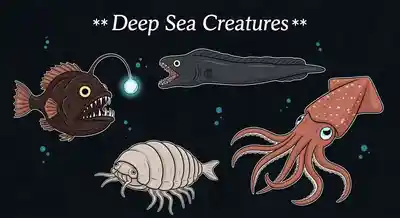 Deep Sea Creatures
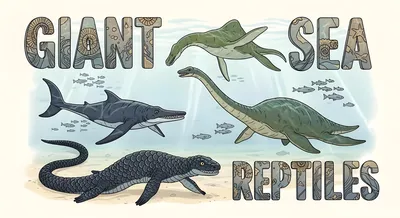 Giant Sea Reptiles
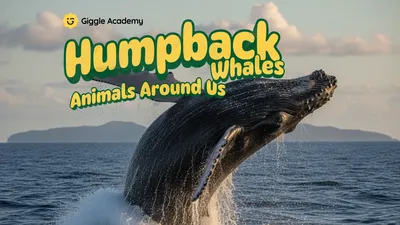 Humpback Whales
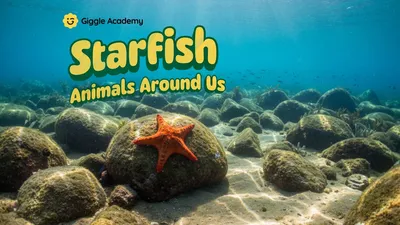 Starfish
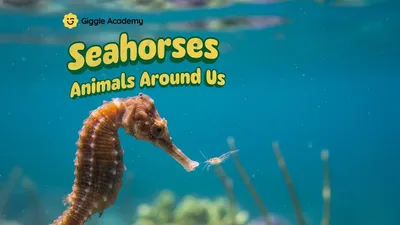 Seahorses
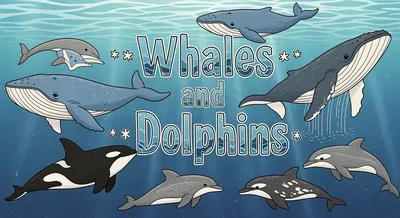 Whales and Dolphins
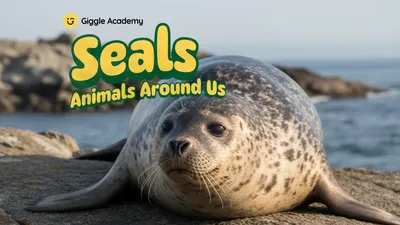 Seals
Seals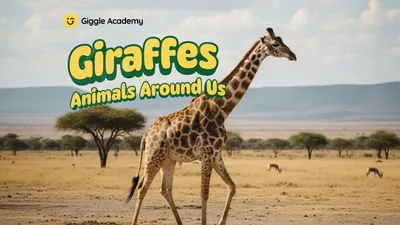 Giraffes
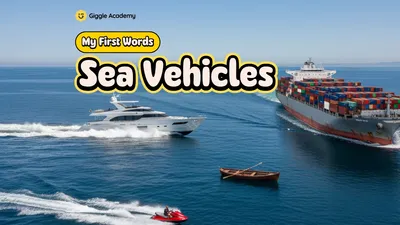 Sea Vehicles
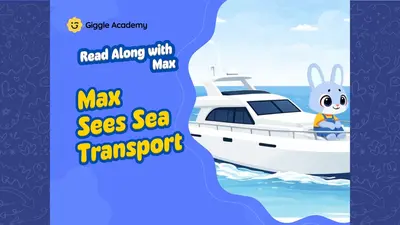 Max Sees Sea Vehicles
 A Glowing Seed
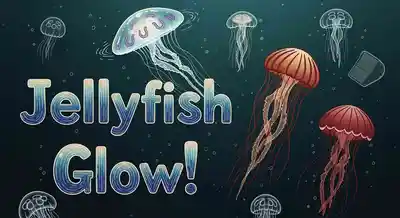 Jellyfish Glow!
An informative and engaging introduction to the mysterious deep sea, exploring its unique environment and diverse creatures through clear, simple language suitable for young readers.
This nonfiction story introduces children to the fascinating world of giant marine reptiles that lived alongside dinosaurs. It describes various species like ichthyosaurs, plesiosaurs, and mosasaurs, highlighting their physical features, behaviors, and habitats in a clear and educational style suitable for young readers interested in prehistoric life.
Discover the incredible world of humpback whales in this informative book for young readers. Learn about their habitat, physical characteristics like fins and tails, and how they live in the sea. Simple language and engaging facts make this an ideal introduction to marine life.
A simple, factual picture book introducing young readers to starfish, detailing their basic characteristics like arms, tube feet, and habitat in the sea.
A simple, factual picture book introducing young readers to seahorses, their physical characteristics, habitat, and basic behaviors in a calm, documentary-style narrative.
An informative and engaging exploration of whales and dolphins, detailing their biology, behavior, and ecological importance in the ocean. The story uses clear, accessible language suitable for young readers interested in marine life.
A simple, informative book introducing young readers to seals, their appearance, habitat, and basic behaviors. Part of the 'Animals in the Sea!' series, it focuses on common vocabulary and high-frequency words.
A simple, factual picture book introducing young readers to giraffes, describing their physical characteristics, habitat, diet, and social behavior.
A simple and repetitive story introducing young children to different types of boats and their speeds, distinguishing between 'fast' and 'slow' vessels.
Join Max, a curious light-blue rabbit, as he explores the seaside and discovers different sea vehicles. This interactive picture book introduces sea transport vocabulary and counting from one to six with a clear, repetitive sentence pattern and playful tone, perfect for early listening and speaking practice.
A little girl found a glowing seed, so she took it home, planted it, and took good care of it. But the seed still hadn’t sprouted. When she noticed all the plants outside her window were thriving, she finally realized what the seed needed. 小女孩发现了一颗会发光的种子,于是她把种子带回家种下并细心照顾,但是种子却迟迟不发芽。小女孩发现窗外的植物都生长得茂盛,终于明白了种子需要什么。
Este libro explica de manera clara y realista las características, el hábitat y el comportamiento de las medusas. Presenta información científica adecuada para niños en edad escolar, usando un lenguaje sencillo y descriptivo que invita a explorar la belleza y función ecológica de estos antiguos habitantes del océano.
© Copyright 2026 - Giggle Academy
上海吉咯教育科技有限公司
Copyright © 2026 - Giggle Academy