

HOYA - THE WAX PLANT
 Sluvk
SluvkDiscover the Hoya, often called the Wax Plant, a botanical marvel from Southeast Asian jungles. This plant boasts glossy leaves and geometric flowers, showcasing clever biological adaptations for survival. Learn about its star-shaped blossoms, protective waxiness, nocturnal fragrance, and nectar production. A fascinating look at a plant that symbolizes perseverance and purifies the air.
 8 - 12 years old
Twining around tree trunks in the humid jungles of Southeast Asia and Australia, the Hoya—often called the Wax Plant or Porcelain Flower (Hoa Cẩm Cù)—is a botanical masterpiece that looks like it was crafted by a jeweler. Its thick, glossy leaves and perfectly geometric flowers make it seem almost artificial, but every "waxy" detail is a clever biological adaptation designed for survival and attraction.
The most enchanting feature of the Hoya is its star-shaped blossoms. The flowers grow in rounded clusters called umbels, where up to 40 tiny blossoms can sit perfectly side-by-side to form a globe. If you look closely at a single flower, you will see a "star within a star." The outer star is the corolla, which is often fuzzy or velvety, and sitting inside it is a smaller, shiny star called the corona. This double-star structure is so precise and symmetrical that it serves as a wonderful example of geometry in nature.
Biologically, the "waxiness" of the Hoya is its protective armor. The leaves are thick, leathery, and covered in a heavy layer of cuticle (wax). This helps the plant store water, similar to a succulent. Because many Hoyas are epiphytes—meaning they grow high up on trees rather than in the ground—they don't always have access to a steady supply of water. Their waxy leaves prevent moisture from evaporating in the tropical heat, allowing them to stay hydrated even during dry spells.
One of the Hoya’s most famous "superpowers" is its nocturnal fragrance. If you walk past a blooming Hoya during the day, it might smell very faint. But once the sun goes down, the flowers release an incredibly strong, sweet scent that can fill an entire room or garden. This is a deliberate strategy to attract nocturnal moths. In the dark of the night, when colors are hard to see, the Hoya uses its perfume as a homing beacon to guide its pollinators.
The Hoya is also known for being a "nectar factory." It is common to see tiny, glistening drops of sweet liquid hanging from the center of the stars. These nectar drops are a high-energy reward for insects. In some cultures, the Hoya is called the "Honey Plant" because of this abundant, syrupy gift. Interestingly, unlike many other flowers, the Hoya blooms from the same spot (called a peduncle) year after year—so gardeners know never to cut off the old flower stalks!
In the world of climbing plants, the Hoya is a slow and steady traveler. It uses its flexible stems to wrap around branches, slowly reaching for the dappled sunlight of the canopy. It is a plant of extreme patience; a Hoya may take several years to produce its first cluster of stars. This has made the plant a symbol of long-lasting friendship and perseverance in many Asian cultures.
Scientifically, Hoyas are being studied for their ability to purify the air. Like many indoor plants, they are efficient at filtering out common household toxins, making them "green lungs" for our homes. They remind us that beauty can be functional, and that even a plant that looks like it's made of fragile porcelain can be tough, resilient, and life-sustaining.
The story of the Hoya is a narrative of precision and persistence. It teaches us that the best things in life often take time to grow, and that there is a hidden, symmetrical beauty in the world if we are patient enough to wait for it to bloom.
 H - H - Hats
 Max's Little Seed
 A Glowing Seed
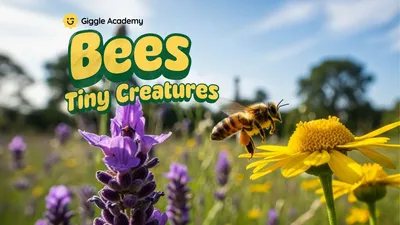 Bees
Bees Y- Y- Yes
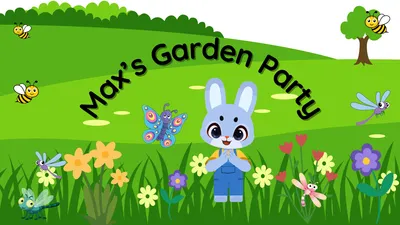 Max's Garden Party
 The Very Bright Little Light
 The Shop
 The Dog Who Went to Heaven
 Max and the Vanishing Pasta
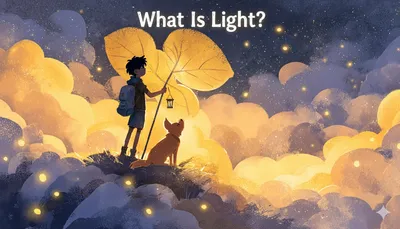 What Is Light?
A playful and repetitive story focusing on words starting with the /h/ sound, perfect for early phonics learning.
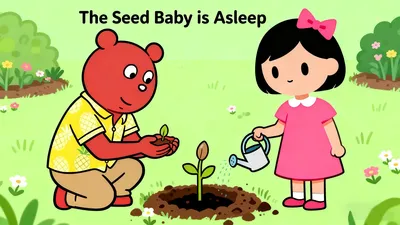
Max finds a tiny seed and, with a lot of impatience and a little help from Lily, learns that growing things (and good things in general) require sun, water, and most importantly, time. A charming story about patience and nature's processes.
A little girl found a glowing seed, so she took it home, planted it, and took good care of it. But the seed still hadn’t sprouted. When she noticed all the plants outside her window were thriving, she finally realized what the seed needed. 小女孩发现了一颗会发光的种子,于是她把种子带回家种下并细心照顾,但是种子却迟迟不发芽。小女孩发现窗外的植物都生长得茂盛,终于明白了种子需要什么。
This is an informative story that introduces young readers to the fascinating world of bees. It covers where bees live, their physical characteristics, how they work in a hive, the process of making honey, and their importance to plants.
This playful picture story follows Max as he relaxes on a yacht, happily eating his lunch, giving young readers lots of chances to hear and say the /y/ sound. Through the illustrations, children discover Max’s big y-surprise, making the /y/ sound fun, memorable, and easy to spot.
When Max notices fewer insects coming to his garden, he throws a party to encourage more to visit!
In the quiet of night, a tiny glow awakens. From two flowers to five bamboo stalks, the little light journeys through nature's wonders, gathering radiance with each discovery. In silence, it transforms—becoming the sun that illuminates all.
Max visits a toy shop with his dad, but soon his games make a big mess. In this fun, decodable story, early readers can hear and say rhyming -op words like mop, shop, and hop.
Cuz's Journey of Growth
A touching tale about a poor artist who shows kindness to a stray dog, illustrating themes of compassion, loyalty, and the spiritual power of kindness through a heartfelt story suitable for young readers.
When Max discovers that heavy bowls of pasta are getting lighter, it leads him on a noodle-filled adventure to solve the mystery of the vanishing pasta.
Join Lio and his dog Mimo on a curious adventure to discover what light truly is. From sunrises and rainbows to fireflies and shadows, this story explores the science of light and how kindness can be a light we share with others.
© Copyright 2026 - Giggle Academy
上海吉咯教育科技有限公司
Copyright © 2026 - Giggle Academy