

POMEGRANATE
 Sluvk
SluvkDiscover the incredible story of the pomegranate, a fruit known as the "Jewel of the Earth." Learn about its unique crown, its hundreds of juicy arils, and its powerful health benefits. This story explores the pomegranate's biology, cultural significance, and why it's considered a "superfood" and a symbol of resilience.
 8 - 12 years old
Deep in the ancient landscapes of modern-day Iran and the Mediterranean, a fruit grows that has been called the "Jewel of the Earth." The Pomegranate—scientifically known as Punica granatum—is a biological treasure chest. With its thick, leathery skin and a hidden interior filled with hundreds of glowing red gems, it is a fruit that has inspired poets, doctors, and scientists for thousands of years.
The most iconic feature of the pomegranate is its "crown." At the bottom of every fruit, there is a small, woody structure that looks like a miniature royal crown. This is actually the remains of the flower's calyx. While most fruits lose their flower parts as they grow, the pomegranate keeps its crown as a permanent reminder of its beauty, making it one of the most recognizable silhouettes in the entire plant kingdom.
Biologically, the pomegranate is classified as a berry. However, unlike a blueberry or a grape, you don't eat the flesh of the fruit. Instead, the pomegranate produces hundreds of individual arils. An aril is a seed surrounded by a juicy, translucent pulp. In a single pomegranate, there are typically between 200 and 1,400 arils, each one a tiny explosion of sweet and tart juice.
The interior of the pomegranate is a masterpiece of efficient packing. If you cut one open, you will see that the arils are organized into several distinct chambers. These chambers are separated by thin, white, papery membranes. This structure is a brilliant way to protect the seeds; if one chamber gets damaged or infected, the others remain sealed and safe, ensuring the plant’s offspring survive.
The white membranes and the outer rind have a secret defense: they are incredibly bitter. This bitterness comes from a high concentration of tannins. While humans find the juice inside the arils delicious, hungry animals and insects that try to bite through the skin or membranes are met with a dry, puckering taste that makes them stop. This "bitter shield" ensures that the fruit is only eaten when it is perfectly ripe and ready to spread its seeds.
Scientifically, the pomegranate is a "superfood" powerhouse. It is famous for containing punicalagins, which are extremely potent antioxidants found almost nowhere else in nature. These compounds are known to protect the heart, reduce inflammation, and even fight off viruses. For ancient travelers, the pomegranate was the ultimate "health kit" to carry on long journeys across the desert.
The pomegranate tree is a symbol of extreme resilience. It is a drought-tolerant plant that actually prefers hot, dry summers. It can grow in poor, alkaline soil where other fruit trees would wither and die. Some pomegranate trees are known to live for over 200 years, standing as silent witnesses to history while continuing to produce their ruby-red harvest year after year.
In the world of botany, the pomegranate has a unique way of ripening. It is a "non-climacteric" fruit, which means that once it is picked from the tree, it stops ripening. It will not get any sweeter or juicier on your kitchen counter. Because of this, farmers must wait for the perfect moment when the fruit feels heavy and the skin becomes tight and glossy before they harvest it.
The way the arils are shaped is a lesson in natural geometry. Because they are packed so tightly together in the chambers, they aren't perfectly round. Instead, they press against each other to form polyhedral shapes (many-sided blocks). This allows the fruit to store the maximum amount of juice without wasting any space, much like a honeycomb built by bees.
Culturally, the pomegranate is a "global citizen." In ancient Greece, it was the fruit of Persephone and a symbol of the seasons. In many Eastern cultures, it represents fertility and abundance because of its many seeds. In Vietnam, it is often grown in front of houses to bring luck and harmony to the family, with its bright red flowers signaling joy and vitality.
The seeds of the pomegranate are also very special. They are rich in punicic acid, a rare type of fatty acid that is used in high-end skincare products. Even after you have enjoyed the juice, the crunchy seed provides fiber and essential oils. It is a "zero-waste" fruit where every single cell is designed to provide energy, protection, or a new beginning.
The story of the pomegranate is a narrative of hidden wealth and protection. It teaches us that true beauty and value are often found beneath a tough, humble exterior. It stands as a reminder that nature can pack a thousand tiny miracles into a single "crowned" sphere, waiting patiently for someone to crack the code and discover the gems inside.
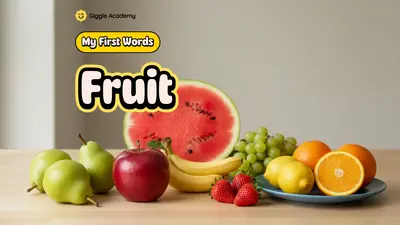 Fruit
Fruit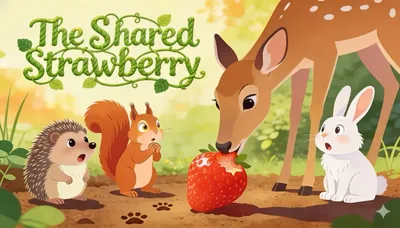 The Shared Strawberry
 Let’s Clap the Word! (Food)
 The Five Color Vowels
 Kitchen Items
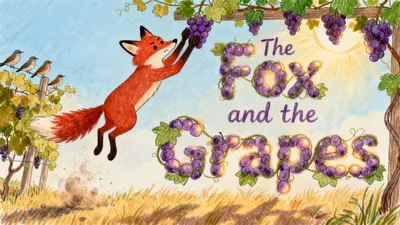 The Fox and the Grapes
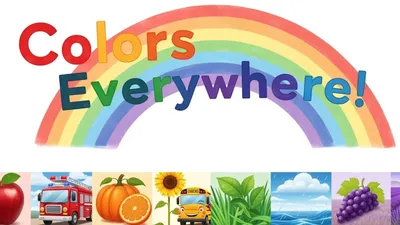 Colors Everywhere for Beginning Readers
 Max and Fruit
 My Day With Light
 Where is the Hat?
 Light is Here!
 I Did Things Today! (-it Words)
A simple and direct early reader designed to introduce young children to common fruits. Each page features a clear illustration of a single fruit, helping children identify and name them. Perfect for building early vocabulary.
Hedgehog, Squirrel, and Rabbit all want a big, red strawberry. They argue about who saw it first, but when a hungry Deer eats it, they learn that friendship and sharing are more important than a delicious treat.
This playful story introduces young children to various foods and their characteristics, while incorporating a fun clapping activity to help with phonological awareness.
A vibrant and playful rhyming story that introduces young readers to the five vowels (A, E, I, O, U) through colorful characters and engaging actions. Each vowel is associated with a distinct color and a simple, repetitive sound, making it a perfect tool for early literacy and phonics learning.
This early reader book introduces common kitchen items such as plates, knives, forks, and spoons. Each page clearly presents one item with a simple phrase to help young children recognize and name them. The focus is on observation and word recognition, perfect for building foundational vocabulary.
A hungry fox tries repeatedly to reach a cluster of juicy grapes, only to declare them sour when he fails. This retelling of Aesop's fable explores themes of pride, honesty, and rationalization, perfect for young readers to learn a timeless lesson.
Beginning Reader Level: This book takes young learners on a vibrant journey through the world of colors. Each page introduces a different color, showcasing familiar objects, foods, and natural scenes where that color appears, helping children understand and appreciate colors in their everyday lives.
Join Max, a friendly bunny, as he explores different fruits! This simple, repetitive story uses a Q&A format to introduce fruit vocabulary and practice common phrases like "Do you like...?" and "Yes, I like..." or "No, I do not like...". Perfect for early learners.
For an early reader. A sweet, rhyming story that gently guides young children through the different parts of a day—from a bright morning to a starry night—focusing on the changing light of the sun and moon.
A simple and repetitive story perfect for early readers, introducing basic vocabulary and concepts of location with a hat, a cap, and a bat.
An early reader science picture book designed to build color vocabulary, observation skills, and reading confidence — by exploring how light makes the colorful world visible through rhythm, repetition, and joyful discovery.
A simple and repetitive story perfect for early readers, describing everyday actions in short, easy-to-understand sentences.
© Copyright 2026 - Giggle Academy
上海吉咯教育科技有限公司
Copyright © 2026 - Giggle Academy