

Cranberry
 Sluvk
SluvkDiscover the incredible superpowers of the cranberry, from its unique floating ability to its role in health and its fascinating farming methods. This story explores how this tiny fruit thrives in challenging environments and its surprising scientific secrets.
 8 - 12 years old
In the low-lying, misty wetlands and acidic bogs of North America, a resilient little fruit grows on trailing evergreen vines. While many fruits prefer sunny hillsides or rich garden soil, the Cranberry—scientifically known as Vaccinium macrocarpon—is a specialist of the marsh.
It has evolved a series of incredible biological "superpowers" that allow it to survive in water-soaked ground and even use the power of the flood to ensure its future.
The most extraordinary scientific feature of the cranberry is hidden deep inside its crimson skin: air pockets. If you were to slice a cranberry in half, you wouldn't find solid flesh like a grape. Instead, you would see four tiny, hollow chambers filled with air. These internal "balloons" provide the fruit with buoyancy, allowing it to float perfectly on the surface of the water.
This buoyancy is a brilliant evolutionary strategy for seed dispersal. In the wild, cranberries grow in areas that frequently flood during the autumn and spring. When the water rises, the ripe berries detach and float away like tiny red boats. This allows the seeds to travel across the wetlands to new locations where they can sprout, rather than just falling directly beneath the mother plant where the soil might already be crowded.
The air pockets also led to the most spectacular method of farming in the world: wet harvesting. In the autumn, farmers flood the cranberry bogs with several feet of water. They then use giant machines to gently shake the vines, causing the ripe berries to pop off. Because of their internal air chambers, millions of red berries float to the surface, creating a breathtaking "sea of red" that can be seen from space!
There is a fun scientific way to tell if a cranberry is fresh: it bounces. Because of the air pockets and the tension of its tough skin, a healthy, fresh cranberry will bounce just like a small rubber ball. In fact, back in the 1800s, a farmer named John "Peg-Leg" Webb discovered that only the firmest, freshest berries would bounce down his wooden stairs, while the bruised ones stayed at the top. This led to the invention of "bounce separators" still used in factories today.
Biologically, cranberries are acid-loving plants. They thrive in soil with a very low pH, often in bogs made of peat, sand, and organic matter. These bogs are very harsh environments where most other plants would drown or starve. The cranberry has adapted by forming a "partnership" with special types of fungi in its roots. These fungi help the plant absorb nutrients from the poor soil, while the plant provides the fungi with sugar.
The deep, brilliant red color of the cranberry comes from anthocyanins. These are the same pigments found in blueberries and red cabbage. For the plant, these pigments act as a chemical shield, protecting the fruit from the intense sun and preventing it from rotting in the damp environment. For humans, these are powerful antioxidants that help keep our bodies healthy and fight off "bad" bacteria.
One of the cranberry’s most famous medical secrets is its high concentration of proanthocyanidins (PACs). These are special molecules that have an "anti-adhesion" effect. They prevent certain bacteria from sticking to the walls of the body, which is why cranberry juice is a world-famous natural remedy for maintaining a healthy urinary tract. It is a rare example of a fruit that acts like a natural shield for our internal systems.
If you’ve ever tasted a raw cranberry, you know it is incredibly tart and bitter. This is because it contains very little sugar and a high amount of organic acids and tannins. This tartness is a defense mechanism; it tells hungry animals that the fruit isn't ready or that it might be too sharp to eat in large quantities. This ensures that only the animals that are truly hungry will eat them and help spread the seeds.
The cranberry plant is a tough survivor. It is an evergreen, meaning its small, glossy leaves stay green even under a thick layer of winter snow. In the winter, farmers often allow a layer of ice to freeze over the bogs. This ice acts like a protective blanket, insulating the vines from the freezing winds and preventing the plants from drying out during the coldest months of the year.
Pollination of cranberries is a busy time in the bog. The flowers are small, pinkish-white, and look like the head and beak of a crane. This is actually where the name comes from—early settlers called them "crane-berries." To produce fruit, these flowers need "buzz pollination." Bumblebees are the stars of the show; they vibrate their bodies to shake the pollen out of the flower’s narrow tubes, a task that ordinary honeybees find much more difficult.
The story of the cranberry is a narrative of buoyancy and resilience. It teaches us that even in the most difficult, water-logged conditions, we can find a way to stay afloat and thrive. It stands as a reminder that nature is an engineer, designing "air balloons" and "rubber balls" in the form of fruit to ensure that life continues to move forward, even when the tide comes in.
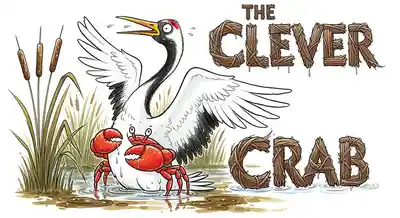 The Clever Crab
 Alphabet Actions - c, r, i, n and m
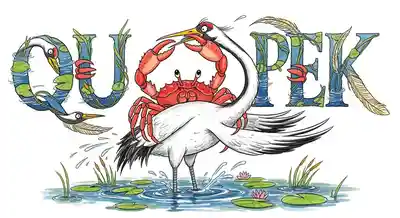 The Crane and the Crab
 Can I Please?
 Map of Light
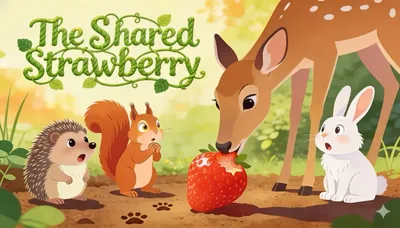 The Shared Strawberry
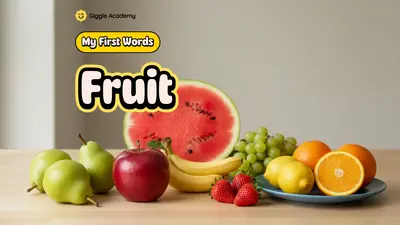 Fruit
Fruit Happpy Chinese New Year
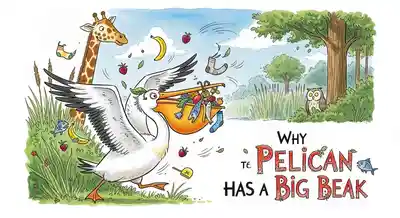 Why Pelican Has a Big Beak
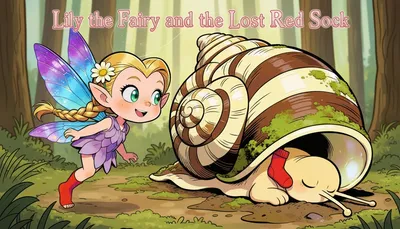 Lily the Fairy and the Lost Red Sock
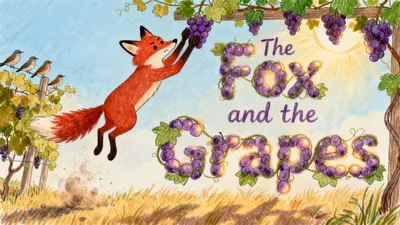 The Fox and the Grapes
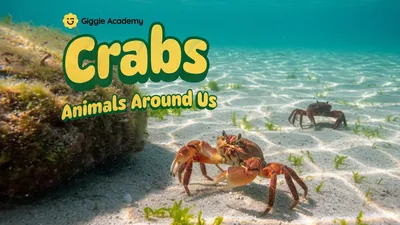 Crabs
CrabsA simple and engaging fable about trust and deception in a small pond struggling with low water and sad fish. The story follows a cunning crab who uncovers the crane's betrayal and protects the pond's inhabitants, delivering a moral lesson about the importance of honesty and skepticism.
This interactive phonics book helps children learn the letter sounds m, r, i, n, and c by recognising each letter, copying a simple hand action, and making the matching sound. With clear mouth-placement pictures and fun gesture cues, children build confident letter–sound connections through movement, speech, and play.
A simple fable about a drying pond and a cunning crane who tricks fish into being eaten. A clever crab outwits the crane, teaching a lesson about trust and caution. The story is told in clear, accessible language suitable for young children.
A very simple, repetitive story about asking for juice, perfect for very young children learning basic phrases. It has a surprise ending when the juice runs out!
Light is a universal language used by people around the world to express gratitude, celebrate harvests, and convey hope. On a lonely night, the little fox Happy embarked on a unique journey.
Hedgehog, Squirrel, and Rabbit all want a big, red strawberry. They argue about who saw it first, but when a hungry Deer eats it, they learn that friendship and sharing are more important than a delicious treat.
A simple and direct early reader designed to introduce young children to common fruits. Each page features a clear illustration of a single fruit, helping children identify and name them. Perfect for building early vocabulary.
Join Max, Lily, and Tom as they celebrate Chinese New Year with their loving family. From cleaning and decorating to making dumplings and watching dragon dances, this heartwarming story captures the joy and traditions of the festive season through the eyes of curious children.
A charming and playful tale about Pelican, whose beak grows big and stretchy from her eagerness to help others by carrying their food and belongings. Through fun mishaps and gentle lessons, the story highlights kindness and the joy of sharing in a lighthearted way, perfect for young children.
Join Lily the fairy on a sweet rhyming adventure as she searches for her lost red sock. With jingling wings, she peeks under mushrooms, behind daisies, and even inside a snail shell, until she finally finds her missing item.
A hungry fox tries repeatedly to reach a cluster of juicy grapes, only to declare them sour when he fails. This retelling of Aesop's fable explores themes of pride, honesty, and rationalization, perfect for young readers to learn a timeless lesson.
A simple and factual picture book designed for early readers, introducing basic facts about crabs, including their habitat, physical features like claws and shells, and behaviors such as walking and hiding. Part of the "Animals in the Sea!" series.
© Copyright 2026 - Giggle Academy
上海吉咯教育科技有限公司
Copyright © 2026 - Giggle Academy