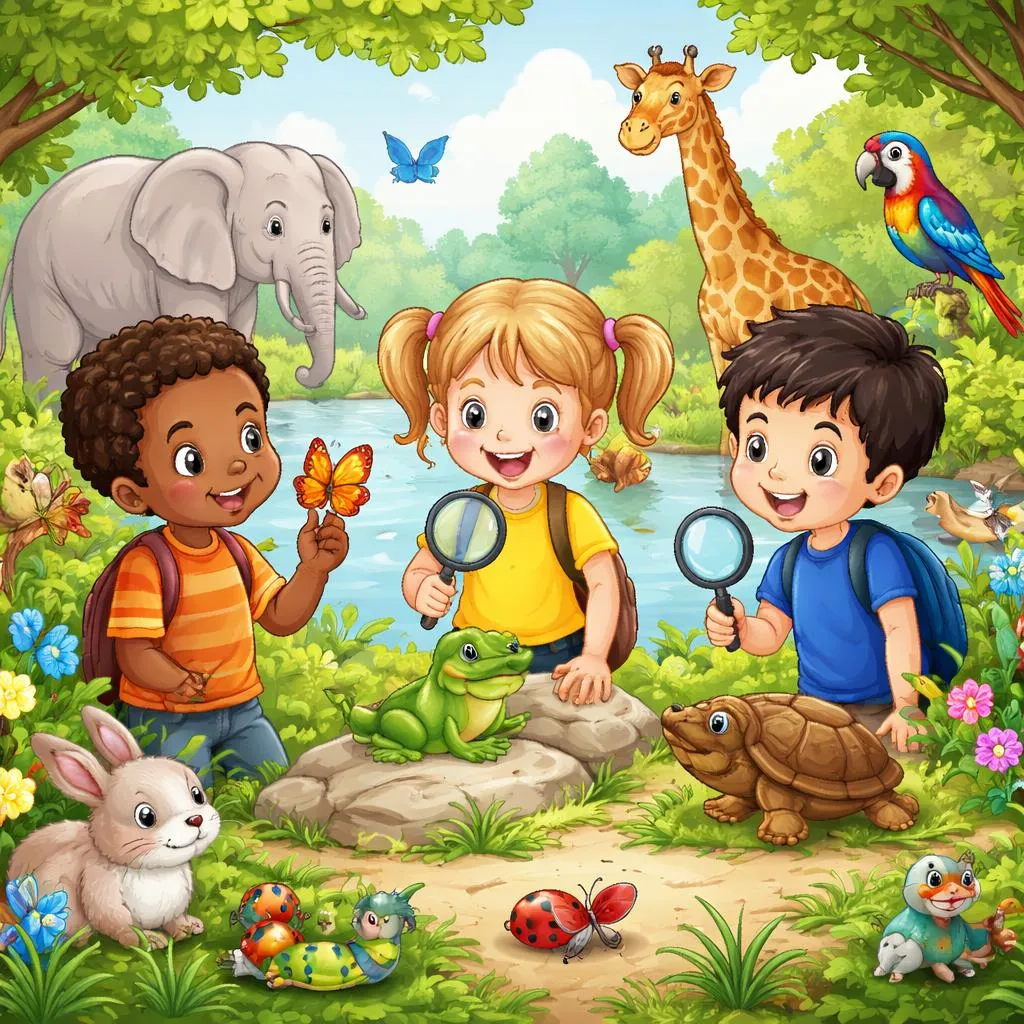

What is animals for children?
Animals for children refers to common animal names and basic facts taught in early English learning. This topic connects language with nature and real-world experiences. It also supports science awareness and emotional development.
In teaching practice, animal vocabulary provides concrete nouns and action verbs. It encourages observation, description, and storytelling. This theme often appears in songs, books, and classroom discussions.
Teachers introduce animals early because learners naturally show curiosity about living creatures.
Meaning and explanation
Animals are living creatures that move, eat, and grow. They live in different places such as farms, forests, oceans, and homes.
In English learning, animal words help build basic sentence patterns. For example: This is a dog. The cat is small.
Animal topics also support adjectives and verbs. The bird flies. The fish swims.
This language builds early subject-verb understanding.
Categories or lists
Animals can be grouped into meaningful categories. This grouping helps organize vocabulary and knowledge.
Farm animals include cow, pig, sheep, and chicken. Wild animals include lion, tiger, elephant, and bear. Pet animals include dog, cat, and hamster. Sea animals include fish, dolphin, and whale. Insect animals include butterfly, bee, and ant.
Teachers often introduce one category per lesson. This structured approach reduces cognitive load and supports retention.
Daily life examples
Daily routines offer many chances to use animal vocabulary. Pets at home provide direct observation opportunities. Stories and cartoons often feature animals as characters.
Teachers model simple daily sentences. I have a dog. I see birds in the park. The cow gives milk.
Classroom discussions can connect animals to habitats. The lion lives in the savanna. The fish lives in the ocean.
Field trips to farms or zoos strengthen real-world connections. Learners describe animals they see using simple English.
Printable flashcards
Printable flashcards are effective for animals for children instruction. Each card shows an animal picture and its English name.
Visual cards support recognition and pronunciation. Word cards support early reading skills. Sentence cards support speaking practice.
Teachers use flashcards for matching, sorting, and memory games. This repeated exposure strengthens vocabulary recall.
Flashcards can include animal sounds. Dog says woof. Cat says meow.
Sound association enhances phonological awareness and engagement.
Learning activities or games
Animal sound guessing games build listening skills. Teachers play sounds. Learners identify the animal in English.
Animal movement games integrate physical activity. Learners jump like a frog or walk like an elephant. They say the animal name while moving.
Picture sorting activities reinforce categories. Learners place animals into farm, wild, and sea groups.
Storytelling tasks develop narrative skills. Teachers start a story about a zoo or jungle. Learners add sentences about animals they see.
Board games with animal paths reinforce vocabulary. Players move across animal pictures and say sentences. “I am at the tiger.”
Art projects integrate creativity and language. Learners draw an animal and label body parts. They describe their drawing with simple sentences.
Digital animal games support listening and reading. Learners click on an animal and hear the word. They repeat and match words to images.
Project-based learning deepens understanding. Learners create a mini animal book. Each page shows one animal and a sentence.
Teachers assess through speaking and observation. What animal is this? Where does it live?
Animals for children is a foundational topic in early English education. It integrates vocabulary, science knowledge, and expressive language. Through guided instruction, visual materials, real-life connections, and interactive activities, animal learning becomes engaging and meaningful. This topic supports confident speaking, curiosity about nature, and long-term language development.