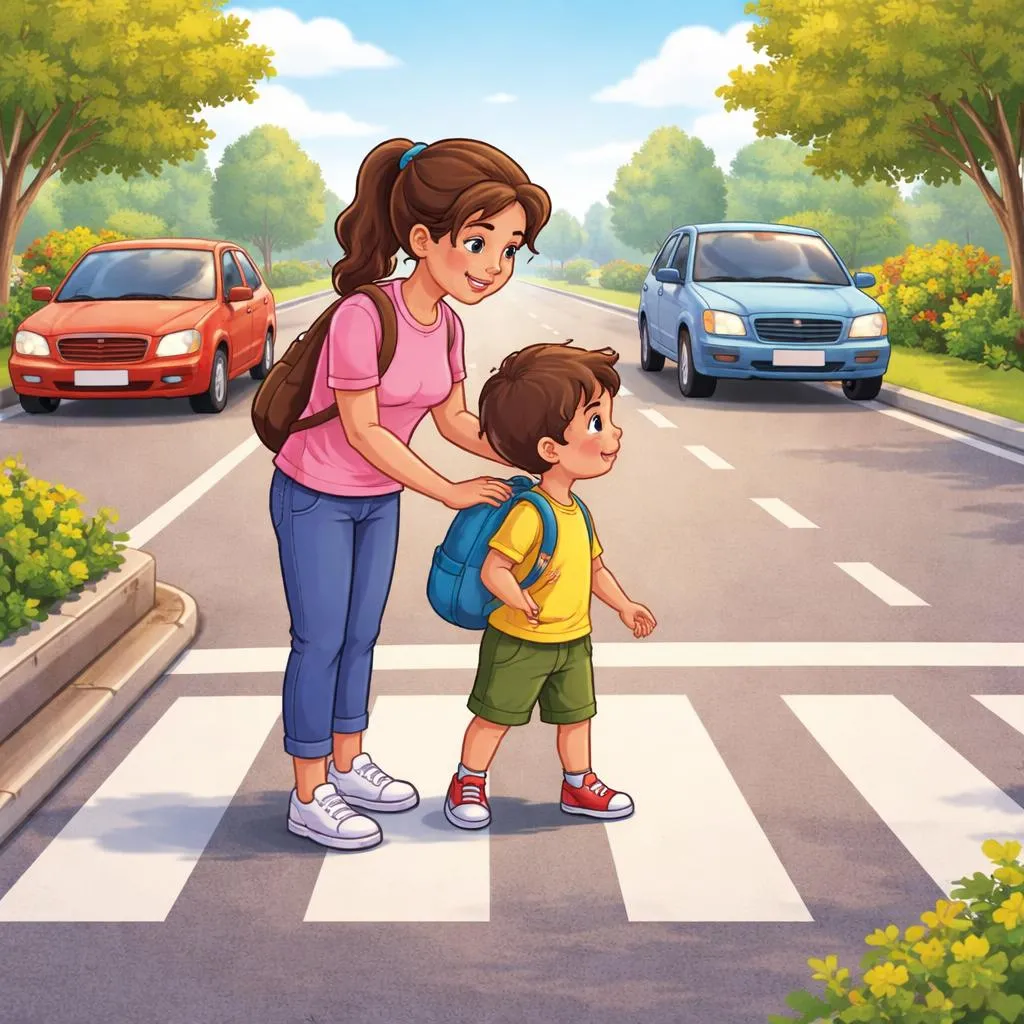

What Do These Expressions Mean? “Look both ways” and “check for cars” both teach a child to watch for traffic before crossing. They tell a child to use their eyes to see if vehicles are coming. Children hear these words before crossing streets, driveways, or parking lots. Both save lives.
“Look both ways” means turn your head left and right to see approaching traffic. It is the classic safety rule. A parent says it when teaching a child to cross. It is a complete action.
“Check for cars” means scan the street specifically for vehicles. It is more direct and specific. A parent says it before a child runs into a driveway. It names the danger directly.
These expressions seem similar. Both prevent children from stepping into traffic. Both are essential safety rules. But one is the classic phrase while one is more specific.
What's the Difference? One is the traditional, complete rule. One is a specific warning. “Look both ways” teaches the full action. Left, right, and left again. It is the rule children remember forever.
“Check for cars” is a quicker, more urgent reminder. It names the danger directly. It works well for a child about to run into a street. It is more immediate.
Think of a child at a crosswalk. “Look both ways before you cross” is the full lesson. “Check for cars” is a quick reminder as they step. Both work. One is the rule. One is the prompt.
One is for teaching. The other is for reminding. “Look both ways” is what you teach a beginner. “Check for cars” is what you say to a child who already knows. Use the first for learning. Use the second for quick reminders.
Also, “check for cars” does not mention looking both ways. A child might check only one direction. “Look both ways” is safer because it names both sides.
When Do We Use Each One? Use “look both ways” for teaching the full rule. Use it with young children learning street safety. Use it as a complete instruction. It fits teaching moments.
Examples at home: “Look both ways before you cross the street.” “Remember to look both ways, even on a quiet road.” “Look both ways. Left, right, then left again.”
Use “check for cars” for quick reminders. Use it when a child is about to cross. Use it as a short prompt. It fits urgent reminders.
Examples for reminders: “Check for cars before you step off the curb.” “Check for cars. The driveway is busy.” “Stop. Check for cars first.”
Children need both phrases. “Look both ways” for learning. “Check for cars” for quick reminders. Both prevent accidents.
Example Sentences for Kids Look both ways: “Look both ways before you cross the street.” “Always look both ways, even if the light is green.” “Look both ways. Left, right, and left again.”
Check for cars: “Check for cars before you run into the street.” “Stop here and check for cars.” “Check for cars. The parking lot is busy.”
Notice “look both ways” is the full safety rule. “Check for cars” is a quick, specific reminder. Children learn both. One teaches the habit. One prompts the action.
Parents can use both. Lesson time: “look both ways.” At the curb: “check for cars.” Children learn safety step by step.
Common Mistakes to Avoid Some children only look one way. Teach them “look both ways” means left AND right. Say “left, right, left again” to make it clear. Both sides matter.
Wrong: (looks left only) “No cars.” Right: “Look both ways. Now look left again.”
Another mistake: saying “check for cars” in a quiet area. Even quiet streets can have cars. Always check. Always look both ways. Habit saves lives.
Wrong: “No need to check. It's a quiet street.” Right: “Always check for cars, even on quiet streets.”
Some learners forget that cars are not the only danger. Bikes, scooters, and buses also move. “Look both ways” covers all moving things. “Check for cars” is specific. Teach the general rule first.
Also avoid letting children cross alone before they are ready. Practice together many times. Hold hands. Say the phrases out loud. Repetition builds safety.
Easy Memory Tips Think of “look both ways” as a turning head. Head turns left. Head turns right. The full movement. The complete rule.
Think of “check for cars” as scanning eyes. Eyes search for danger. Quick and urgent. A short reminder.
Another trick: remember the age. “Look both ways” for teaching young children. “Check for cars” for quick reminders to older kids. Young gets “look both ways.” Quick reminder gets “check for cars.”
Parents can say: “Both ways for the lesson. Check cars for a quick impression.” That means teaching gets “look both ways.” Quick reminders get “check for cars.”
Practice at the curb. Teach a 4-year-old: “look both ways.” Remind a 7-year-old: “check for cars.” Two phrases. Same safety.
Quick Practice Time Let us try a small exercise. Choose the better phrase for each situation.
A parent is teaching a 5-year-old how to cross the street for the first time. a) “Check for cars.” b) “Look both ways. Left, right, and left again.”
A parent is walking with a 9-year-old to school. At the curb, the parent gives a quick reminder. a) “Look both ways left and right and left again.” b) “Check for cars before you step off the curb.”
Answers: 1 – b. A young child learning needs the full rule “look both ways.” 2 – b. An older child who knows the rule needs a quick reminder “check for cars.”
Fill in the blank: “When I teach my child street safety for the first time, I say ______.” (“Look both ways” is the classic, complete teaching rule.)
One more: “When my child is about to cross a driveway, I say ______ as a quick reminder.” (“Check for cars” is the short, specific prompt.)
Looking both ways saves lives. “Look both ways” teaches the habit. “Check for cars” prompts the action. Teach your child both. A child who looks both ways grows up safe.
Wrap-up “Look both ways” is the complete safety rule that teaches a child to check left, right, and left again. “Check for cars” is a quick, specific reminder to look for vehicles. Use “look both ways” when teaching young children the full habit. Use “check for cars” as a quick prompt for children who already know the rule. Both phrases prevent accidents. A child who looks both ways is a child who comes home safe.