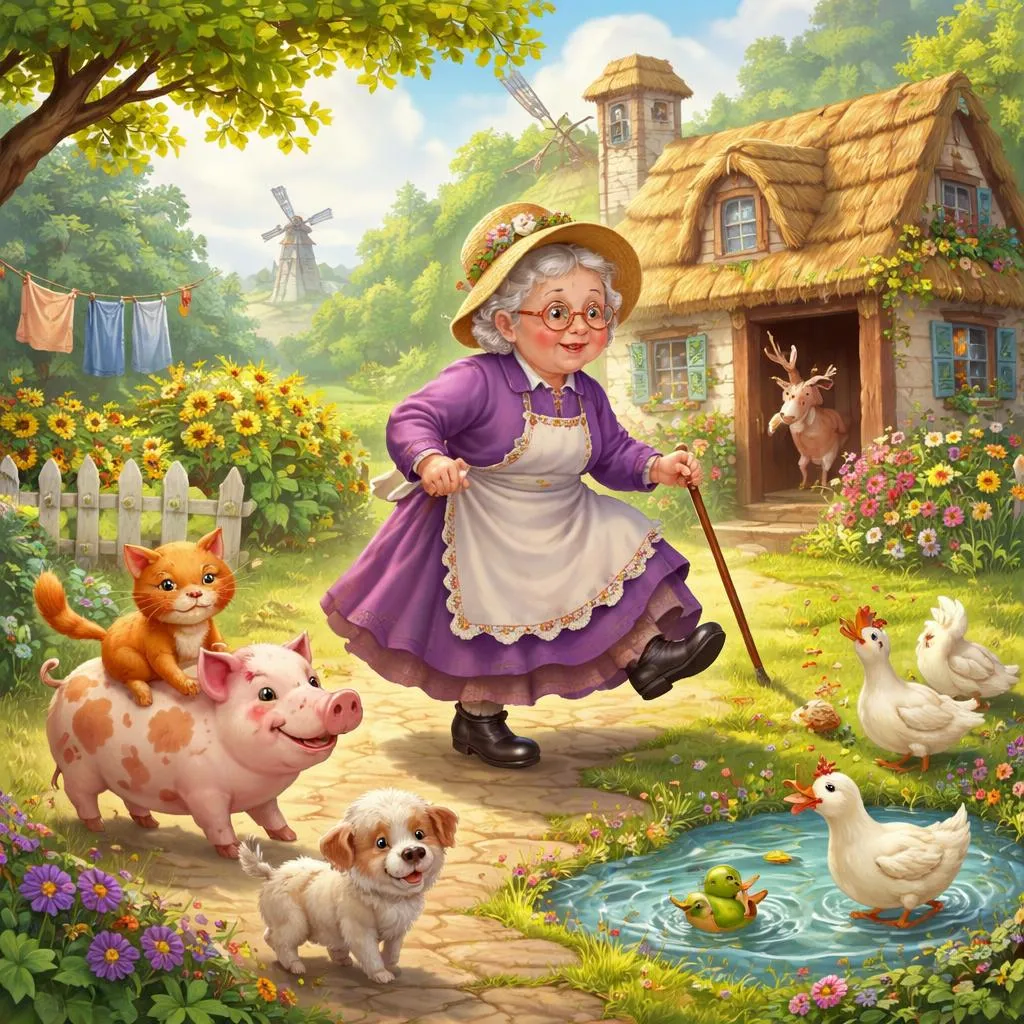

Hello, wonderful teachers and curious young learners! Today we explore a delightful nursery rhyme. It tells a funny story about an old lady. She has a very unusual problem. Something keeps happening, and she does not know why. The rhyme is "Old Lady Mack." The old lady Mack lyrics are playful and repetitive. Children love the mystery and the rhythm. This song teaches question words and action verbs. It builds anticipation and memory. Let us discover this classic nursery rhyme together. Let us find out what happens to Old Lady Mack.
What Is the Old Lady Mack Rhyme? "Old Lady Mack" is a traditional children's nursery rhyme and clapping game. It tells the story of an old woman who experiences something strange. The rhyme uses repetitive phrases and actions. Children clap and move along with the words.
The rhyme likely started as a playground game. Children would stand in a circle and act out the story. The clapping pattern builds coordination. The mystery keeps children engaged. They want to know what happens next.
The rhyme has a simple structure. Each verse introduces a new action. The old lady does not know why things are happening. This repetition builds anticipation. Children love shouting the answers. They feel clever when they remember what comes next.
The Lyrics of the Nursery Rhyme Let us look at the complete old lady Mack lyrics. Several versions exist. Here is the most common version.
Old lady Mack, old lady Mack, What is that behind your back? I don't know, I cannot see, But whatever it is, it's bothering me!
Old lady Mack, old lady Mack, What is that behind your back? Is it a spider? Is it a snake? Oh my goodness, for goodness sake!
Old lady Mack, old lady Mack, What is that behind your back? Is it a mouse? Is it a rat? What is that, what is that?
Old lady Mack, old lady Mack, Turn around and don't look back! Now we see what is behind, A little puppy, gentle and kind!
Some versions have different animals. The surprise at the end can change. Sometimes it is a kitten. Sometimes it is a bird. The pattern stays the same. The mystery builds until the final reveal.
Vocabulary Learning from the Song This playful song teaches many useful words. Let us explore them together.
People words: The song introduces "old lady" and "Mack." Children learn words for describing people. "Old" describes age. "Lady" means a woman.
Question words: The song teaches "what" and "is." These form a common question. "What is that?" Children learn to ask about things they see. This is essential for curiosity and learning.
Body words: The song mentions "back." Children learn this body part. They can point to their own back. They understand what "behind your back" means.
Animal words: The song introduces several animals. Spider, snake, mouse, rat, puppy. Children learn to name different creatures. They learn which animals might be scary and which are friendly.
Feeling words: The song teaches "bothering me." This expresses discomfort. Children learn to say when something is bothering them. This helps with emotional expression.
Phonics Points in the Rhyme The Old Lady Mack song offers good phonics practice. Let us look at some important sounds.
Listen to the short "a" sound. It appears in "Mack" and "back" and "rat." The short "a" is in the word "cat." Practice together. "M-ack." "B-ack." "R-at." This sound appears in many common words.
Listen to the "s" sound. It appears in "spider" and "snake." The "s" sound is a soft hiss. Practice together. "S-s-spider." "S-s-snake." This sound creates tension in the song.
Listen to the long "i" sound. It appears in "I" and "spider" and "behind." The long "i" says its name. Practice together. "Sp-igh-der." "Beh-igh-nd." This sound appears throughout English.
The rhyming words are clear and fun. Mack and back. See and me. Snake and sake. Rat and that. This builds phonemic awareness. Children learn to recognize words that sound the same at the end.
Grammar Patterns in the Song The song contains useful grammar patterns for young learners.
Questions: The song asks repeated questions. "What is that behind your back?" This is a common question pattern. Children learn to form questions using "what" and "is."
Negative statements: The old lady says "I don't know." This teaches the negative form. "I cannot see" teaches another negative. Children learn to express when they do not know or cannot do something.
Possibility words: The song uses "Is it a..." to guess possibilities. This teaches children to make guesses. They learn to ask about what something might be.
Imperative verbs: The song ends with "Turn around." This is a command. Children learn to understand and follow directions.
Learning Activities for the Song The song lends itself to many activities. Here are some ideas to extend learning.
Behind the Back Game: One child stands with hands behind back. Another child places an object in their hands. The first child tries to guess what it is by feeling. They ask questions. "Is it soft?" "Is it round?" This builds descriptive language and sensory skills.
Animal Guessing: After singing the song, play an animal guessing game. Describe an animal without naming it. "This animal has eight legs. It makes webs. What is it?" Children guess "spider!" This builds listening and reasoning.
Mystery Bag: Place an object in a bag. Children ask questions to guess what it is. "Is it an animal?" "Is it something to eat?" They use the question patterns from the song. This builds language and critical thinking.
Draw the Ending: Before revealing the ending, ask children to draw what they think is behind Old Lady Mack's back. They share their drawings and explain their choices. This builds creativity and prediction skills.
Printable Materials for the Song Printable resources support learning from the song. They provide visual reinforcement.
Lyrics Poster: Create a colorful poster with the full lyrics. Add simple pictures for key words. Old lady, back, spider, snake, mouse, rat, puppy. Display the poster during singing time. This supports reading development.
Animal Flashcards: Create flashcards for all the animals mentioned. Spider, snake, mouse, rat, puppy. Each card has a picture and the word. Use these for vocabulary review. Match them to verses in the song.
Mystery Cards: Create cards showing different objects or animals. Place them in a bag. Children draw a card and try to describe it without showing. Others guess what it is. This builds descriptive language.
Coloring Pages: Create coloring pages showing Old Lady Mack and the surprise animal. Children color the picture while listening to the song. This reinforces the vocabulary quietly.
Educational Games for the Song Games make learning from the song even more fun.
What's Behind Your Back?: Play this game in pairs. One child puts hands behind back. The other places an object in their hands. The first child asks yes or no questions to guess. "Is it a toy?" "Is it soft?" "Can you eat it?" This practices question formation.
Animal Charades: Act out the animals from the song. Slink like a snake. Creep like a spider. Scurry like a mouse. Others guess the animal. This builds movement and vocabulary.
Memory Circle: Sit in a circle. Start with "Old Lady Mack had a spider behind her back." The next child repeats and adds a new animal. "Old Lady Mack had a spider and a snake behind her back." Continue around the circle. This builds memory and vocabulary.
Story Sequencing: Create picture cards showing the sequence of the song. Old Lady Mack with hands behind back. Spider appears. Snake appears. Mouse appears. Rat appears. Puppy appears. Children put them in order. This builds comprehension of story structure.
New Ending Creation: Ask children to create a new ending for the song. What else could be behind Old Lady Mack's back? A kitten? A bird? A turtle? Sing the new verses together. This builds creativity and language skills.
Through this playful song, children learn about questions and animals. They practice guessing and describing. They build memory and sequencing skills. The old lady Mack lyrics create mystery and fun. Children love the repetition and the surprise ending. Every time they sing, they anticipate the reveal. The song builds language skills and joyful participation. Old Lady Mack becomes a friend they visit again and again.