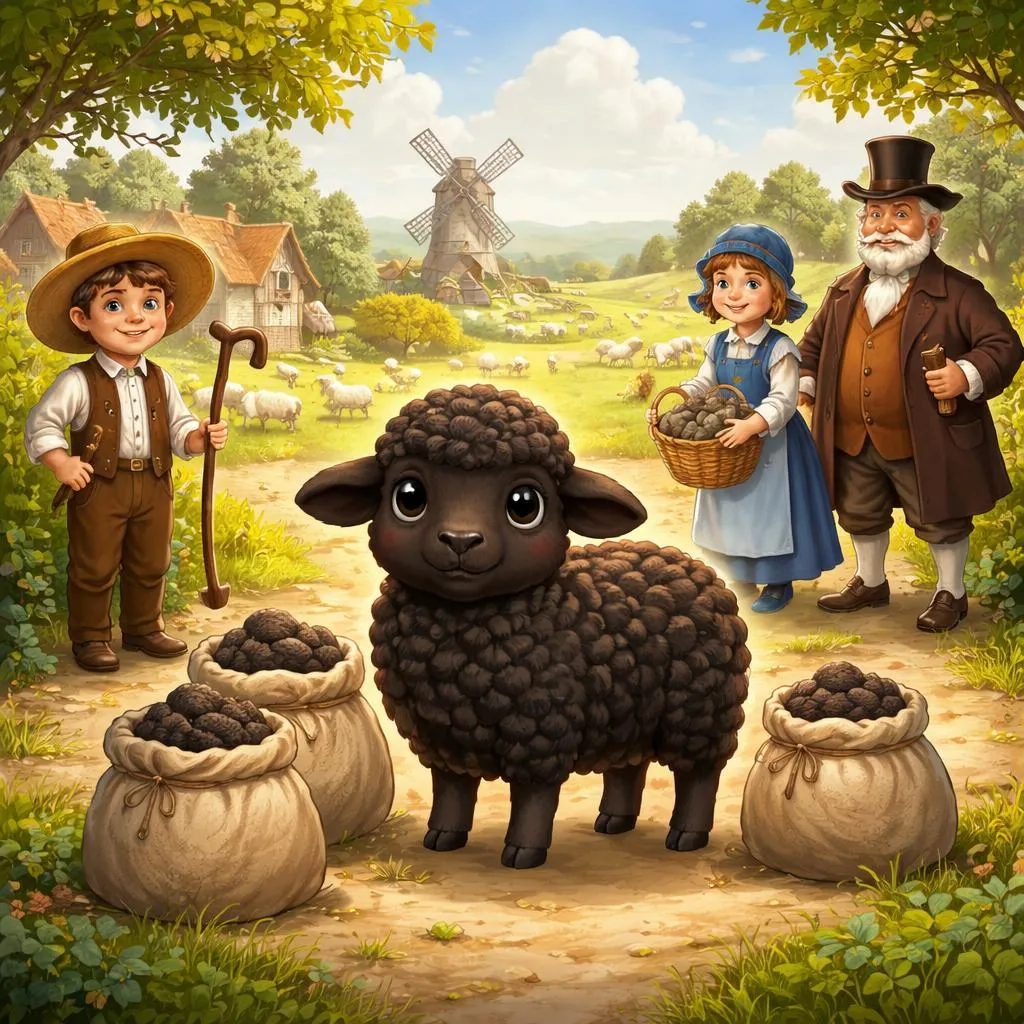

There is a certain charm to the rhymes we pass down through generations. They feel timeless. They feel simple. But sometimes, the baba black sheep song words carry a little history with them. As teachers, we can use this simple rhyme to build many skills. We can explore vocabulary. We can practice phonics. We can even introduce basic math concepts like counting. Let us look at how to turn this classic into a rich learning experience.
What is the Baba Black Sheep Rhyme? This is a popular English nursery rhyme. It has been sung to children for centuries. The rhyme tells a short story. A person asks a black sheep if it has any wool. The sheep replies politely. It confirms it has wool. It then explains that the wool is for three different people: the master, the dame, and the little boy who lives down the lane.
The tune is simple and repetitive. This makes it easy for young children to learn and remember. The baba black sheep song words introduce a simple conversation. They also teach a lesson about sharing and kindness. The sheep is willing to give its wool to others. This is a nice starting point for classroom discussions.
The Lyrics of the Nursery Rhyme Let us look at the full text of the rhyme. We will break it down line by line. This helps us see the structure clearly.
Baa, baa, black sheep, Have you any wool? Yes sir, yes sir, Three bags full.
One for the master, One for the dame, And one for the little boy Who lives down the lane.
The dialogue is clear. There is a question and an answer. The counting is clear too. The sheep has three bags of wool. This simple structure makes the baba black sheep song words a wonderful tool for teaching.
Vocabulary Learning: Key Words in the Rhyme This rhyme contains several useful nouns. We can introduce them to the class.
Sheep: This is the main animal. We can show pictures of sheep. We can talk about where they live. We can discuss the sounds they make.
Wool: This is a key concept. Wool is the soft, fluffy coat of a sheep. We can bring in a wool sweater or a ball of yarn. Let the children feel the texture. This connects the word to a real sensation.
Master: This is an old word. It can mean the man of the house or the boss.
Dame: This is also an old word. It means the woman of the house.
Lane: This is a small, narrow road. We can talk about the roads near the school.
Teaching these words gives depth to the song. The baba black sheep song words are not just sounds. They have rich meanings we can explore.
Phonics Points: Focusing on Sounds The rhyme is full of excellent phonics practice. We can isolate specific sounds.
The "B" sound: The word "Baa" is perfect for practicing the /b/ phoneme. We can have students say "Baa, baa, black sheep" together. We emphasize the /b/ at the start of each word.
The "L" sound: Words like "little" and "lane" offer practice with the /l/ sound. We can feel how our tongue touches the roof of our mouth.
The long "E" sound: The word "sheep" contains the long /e/ sound. We can compare it to the short /e/ in "bed". This is a simple phonemic awareness exercise. The baba black sheep song words provide a natural context for this practice.
Grammar Patterns: Seeing Language in Action We can find simple grammar patterns in this rhyme. It is a great way to introduce concepts naturally.
Questions: The song starts with a question. "Have you any wool?" We can contrast this with a statement. "You have wool." We can explain that questions often start with "have" or "do". We can practice asking each other questions. "Do you have a pencil?" This connects the song to real life.
Possession: The rhyme shows possession. The wool is for the master. The boy lives down the lane. We can talk about what belongs to us. "This is my book." "That is her crayon."
Adjectives: The word "black" describes the sheep. It is an adjective. We can talk about other colors. We can describe things in the classroom. "This is a red apple." The baba black sheep song words model this descriptive language perfectly.
Learning Activities: Bringing the Rhyme to Life We can do more than just sing. Here are some activities to deepen understanding.
Activity 1: Role Play the Conversation We can assign roles. One student is the questioner. One student is the sheep. They act out the dialogue. The sheep can hold three bags (or pretend bags). This brings the baba black sheep song words into a dramatic context. It helps with memory and confidence.
Activity 2: Counting with Bags This activity focuses on the math connection. We need three small bags. We can put a number of objects in each bag. We count them together. "One for the master. One for the dame. One for the boy." We can also count the total. "How many bags are there? Three!" This integrates counting skills.
Activity 3: Textile Exploration This activity focuses on the sense of touch. We gather different fabrics. We need wool, cotton, silk, and polyester. We let the students feel each one. We ask them to describe the texture. Which one is softest? Which one is roughest? This connects the word "wool" from the rhyme to a real, tactile experience.
Printable Materials: Visuals for the Classroom Visual aids support learning. They help children connect words to images.
Flashcards: We can create flashcards for key vocabulary. One card shows a sheep. One card shows a ball of wool. One card shows a lane. We can use these for review games.
Story Sequencing Cards: We can create simple cards that show the events of the rhyme. Card one shows the person asking the sheep. Card two shows the sheep answering. Card three shows the three bags. Card four shows the master, dame, and boy. Students can put the cards in order. This builds comprehension.
Coloring Pages: We can provide a simple line drawing of a sheep. Students can color it. They can practice writing the word "sheep" at the bottom. This combines art with literacy.
Educational Games: Making Practice Fun Games encourage repetition without boredom. They make the learning stick.
Game 1: Wool Hunt We hide three small bags (or three balls of white yarn) around the room. We sing the baba black sheep song words together. When we finish, students go to find the "wool". They must bring the wool back to the "sheep" (a stuffed animal or a picture). This combines music, movement, and the counting theme.
Game 2: Yes Sir, No Sir This is a variation of "Simon Says." We give commands. If we say "Yes sir" before the command, students do it. If we do not, they stay still. For example, "Yes sir, touch your nose." They touch their nose. "Clap your hands." They should not clap. This game uses the polite language from the baba black sheep song words in a new context.
Game 3: Rhyming Match We take words from the song. We write them on cards: "sheep," "wool," "full," "dame," "lane." We then have students find words that rhyme with them. "Sheep" rhymes with "jeep" and "beep." "Lane" rhymes with "rain" and "plane." This extends the phonics learning.
By using these methods, we transform a simple nursery rhyme. We create a unit of study. We explore history, vocabulary, phonics, grammar, and math. The baba black sheep song words become a gateway to a wider world of learning. We guide our students through each step, making the old song new again.