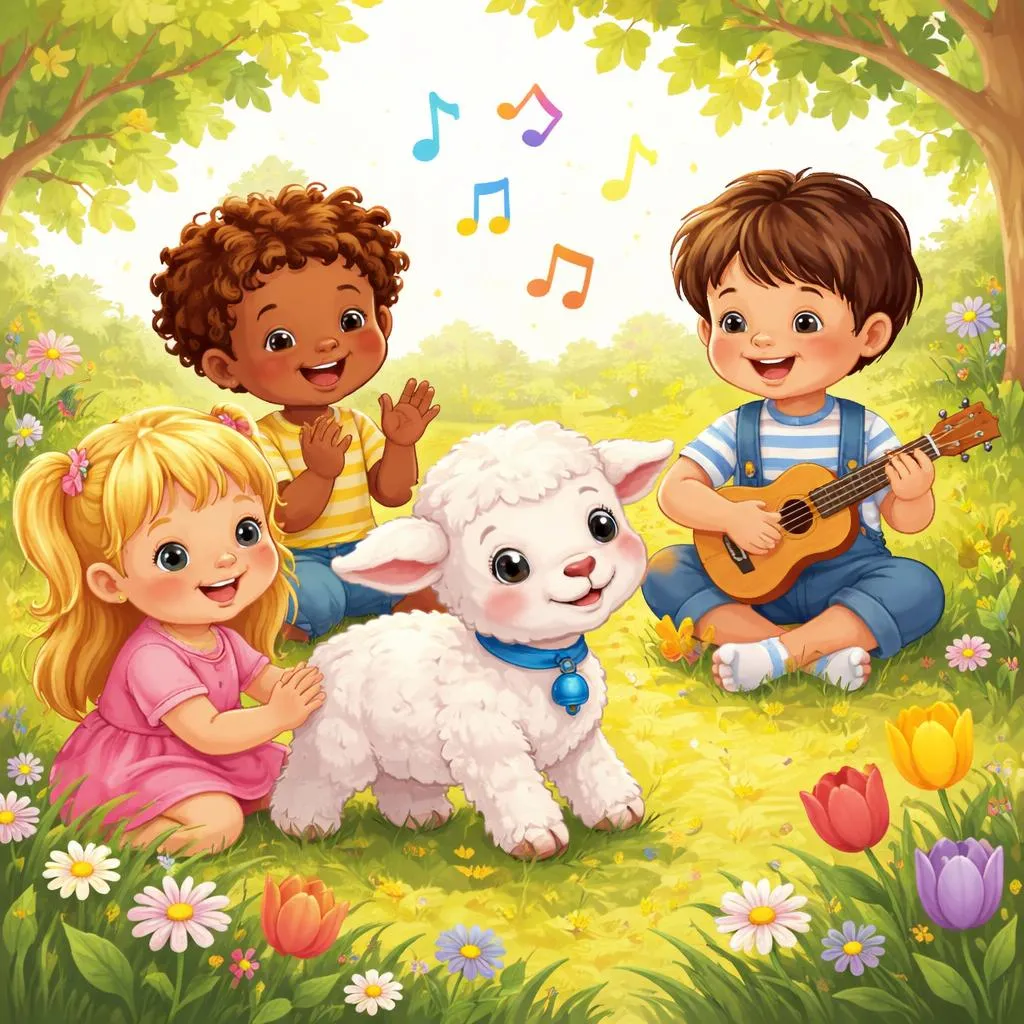

Hello, gentle teachers and caring parents! Today we explore a tender and beloved nursery rhyme. It speaks of a soft, woolly creature. It follows a child and their animal friend. The song is "Mary Had a Little Lamb." The little lamb lyrics are simple and heartwarming. Children have loved this rhyme for nearly two centuries. It tells a story of friendship and loyalty. It teaches vocabulary about animals and school. The gentle rhythm soothes and delights. Let us discover this classic song together. Let us explore its words, meaning, and learning possibilities.
What Is the Little Lamb Rhyme? "Mary Had a Little Lamb" is one of the most famous nursery rhymes in English. It tells the story of a girl named Mary. Her pet lamb follows her everywhere. One day, it follows her to school. This causes surprise and laughter. But the lamb waits patiently until Mary comes out.
The rhyme has a special place in history. It was first published in 1830. A young girl named Mary Sawyer really had a pet lamb. A man named John Roulstone wrote the first verses after seeing Mary and her lamb at school. The rhyme became popular immediately. It has been loved ever since.
The song has a gentle, flowing melody. It feels calm and sweet. Children love to sing it softly. The story is simple but touching. A little animal loves its owner so much. It waits patiently outside the school. This loyalty touches children's hearts. They understand the bond between a child and a pet.
The Lyrics of the Nursery Rhyme Let us look at the complete little lamb lyrics. Several versions exist. Here is the most common and complete version.
Mary had a little lamb, Little lamb, little lamb. Mary had a little lamb, Its fleece was white as snow.
And everywhere that Mary went, Mary went, Mary went, Everywhere that Mary went, The lamb was sure to go.
It followed her to school one day, School one day, school one day, It followed her to school one day, Which was against the rules.
It made the children laugh and play, Laugh and play, laugh and play, It made the children laugh and play, To see a lamb at school.
And so the teacher turned it out, Turned it out, turned it out, And so the teacher turned it out, But still it lingered near.
And waited patiently about, Patiently about, patiently about, And waited patiently about, Till Mary did appear.
"Why does the lamb love Mary so?" Love Mary so? Love Mary so? "Why does the lamb love Mary so?" The eager children cry.
"Why, Mary loves the lamb, you know." Loves the lamb, you know, loves the lamb, you know. "Why, Mary loves the lamb, you know." The teacher did reply.
Vocabulary Learning from the Song This rich song teaches many useful words. Let us explore them together.
Animal words: The song introduces lamb vocabulary. Lamb, fleece. Children learn what a baby sheep is called. They learn that "fleece" means the woolly coat. These are specific animal words that expand vocabulary.
Color words: The song teaches the word "white." It compares the lamb's fleece to snow. This creates a vivid image. Children learn that snow is white. They learn to make comparisons. "White as snow" becomes a phrase they understand.
School words: The song introduces school vocabulary. School, rules, teacher, children, class. These words help children talk about their own school experiences. They connect the song to their daily lives.
Emotion words: The song teaches feeling words. Love, laugh, patient, eager. These words help children express emotions. They learn that love makes the lamb follow Mary. They learn that patience means waiting calmly.
Action words: The song includes many verbs. Follow, go, laugh, play, turn out, linger, wait, appear, cry, reply. These are common action words. Children learn them in a meaningful story context.
Phonics Points in the Rhyme The song offers wonderful phonics practice. Let us look at some important sounds.
Listen to the "l" sound. It appears throughout the song. Little, lamb, fleece, love, laugh, linger. The "l" sound is made with the tongue on the roof of the mouth. Practice together. "L-l-little." "L-l-lamb." This sound appears in many important words.
Listen to the long "e" sound. It appears in "fleece" and "eager" and "appear." The long "e" says its name. It sounds like "ee." Practice together. "Fl-ee-ce." "Ee-ger." This sound appears in many words children use.
Listen to the "ow" sound in "snow" and "know." These words rhyme. They have the same long "o" sound. Point out this pattern. Show other words with the same sound. "Show," "blow," "grow." This builds phonemic awareness.
The repetitive nature of the song reinforces these sounds. Children hear them many times. They practice them through singing. This builds strong phonics foundations.
Grammar Patterns in the Song The song contains useful grammar patterns for young learners.
Past tense verbs: The song tells a story about the past. "Mary had a little lamb." "It followed her." "The teacher turned it out." Children learn to use past tense naturally through the song. They hear how verbs change to talk about yesterday.
Questions and answers: The song includes a wonderful question and answer exchange. "Why does the lamb love Mary so?" The answer explains. "Mary loves the lamb, you know." This teaches question formation. It shows how conversations work.
Adverbs: The song teaches adverbs that describe how actions happen. "Waited patiently." "Lingered near." These words add detail to verbs. Children learn to describe not just what happened, but how it happened.
Possessive forms: The song uses "Mary's lamb" implicitly. It shows ownership. Children learn that the apostrophe shows belonging. This is an important grammar concept.
Learning Activities for the Song The song lends itself to many activities. Here are some ideas to extend learning.
Story Sequencing: Create picture cards showing scenes from the song. Mary with her lamb at home. The lamb following Mary. The lamb at school. Children laughing. The teacher sending the lamb out. The lamb waiting patiently. Mary coming out. Children put the cards in order. This builds comprehension and narrative skills.
Draw Mary and Her Lamb: Give children paper and crayons. Ask them to draw Mary and her lamb. They can show where they are. At home? At school? In the playground? As they draw, talk about the story. "What is Mary doing?" "Where is the lamb?" This connects art and language.
Puppet Play: Create simple puppets. A Mary puppet and a lamb puppet. Children act out the story with the puppets. They can say the lines from the song. They can create new adventures. This brings the story to life. It builds speaking confidence.
Why Questions: Practice asking and answering "why" questions. "Why did the lamb follow Mary?" "Why did the children laugh?" "Why did the teacher send the lamb out?" This builds reasoning skills. It helps children understand cause and effect in stories.
Printable Materials for the Song Printable resources support learning from the song. They provide visual reinforcement.
Lyrics Poster: Create a colorful poster with the full lyrics. Add simple pictures for key scenes. Mary with her lamb. The lamb at school. The teacher. Display the poster during singing time. This supports reading development. Children begin to connect written words to the song they know.
Vocabulary Cards: Create flashcards for key vocabulary. Lamb, fleece, snow, school, teacher, children, rules. Each card has a picture and the word. Use these for review games. Hold up a card and children find it in the song. Match words to pictures.
Character Cards: Create cards for Mary and the lamb. Use them for storytelling. Move the characters around a scene. Describe what they are doing. This builds narrative skills.
Coloring Pages: Create coloring pages showing scenes from the song. Mary with her lamb. The lamb at school. Children laughing. Coloring reinforces the vocabulary quietly. It gives children time to think about the story.
Educational Games for the Song Games make learning from the song even more fun.
Follow the Leader: Play a game inspired by the lamb following Mary. One child is Mary. Others are lambs. Mary walks around. The lambs must follow exactly where she goes. This builds observation and movement skills. It connects to the song's theme.
Lamb, Lamb, Where's Mary?: Play a version of hide and seek. One child is the lamb. Others hide. The lamb looks for them, saying, "Where is Mary?" When finding someone, that person becomes the new lamb. This builds language and social skills.
Feelings Guessing Game: Talk about how characters feel. How does Mary feel when the lamb follows her? How do the children feel seeing the lamb? How does the lamb feel waiting? Children make faces showing those feelings. Others guess the feeling. This builds emotional vocabulary.
New Adventures Game: Imagine new places Mary and the lamb might go. To the park? To the store? To Grandma's house? Children take turns suggesting a place. Everyone acts out going there with the lamb. This builds creativity and language.
Through this gentle song, children learn about friendship and loyalty. They learn animal vocabulary and school words. They learn to ask and answer questions. They connect with a story that has touched hearts for nearly two hundred years. The little lamb lyrics carry simple but powerful messages. Love brings loyalty. Patience brings reward. Kindness matters. These lessons stay with children as they grow. The lamb and Mary become friends they will never forget.