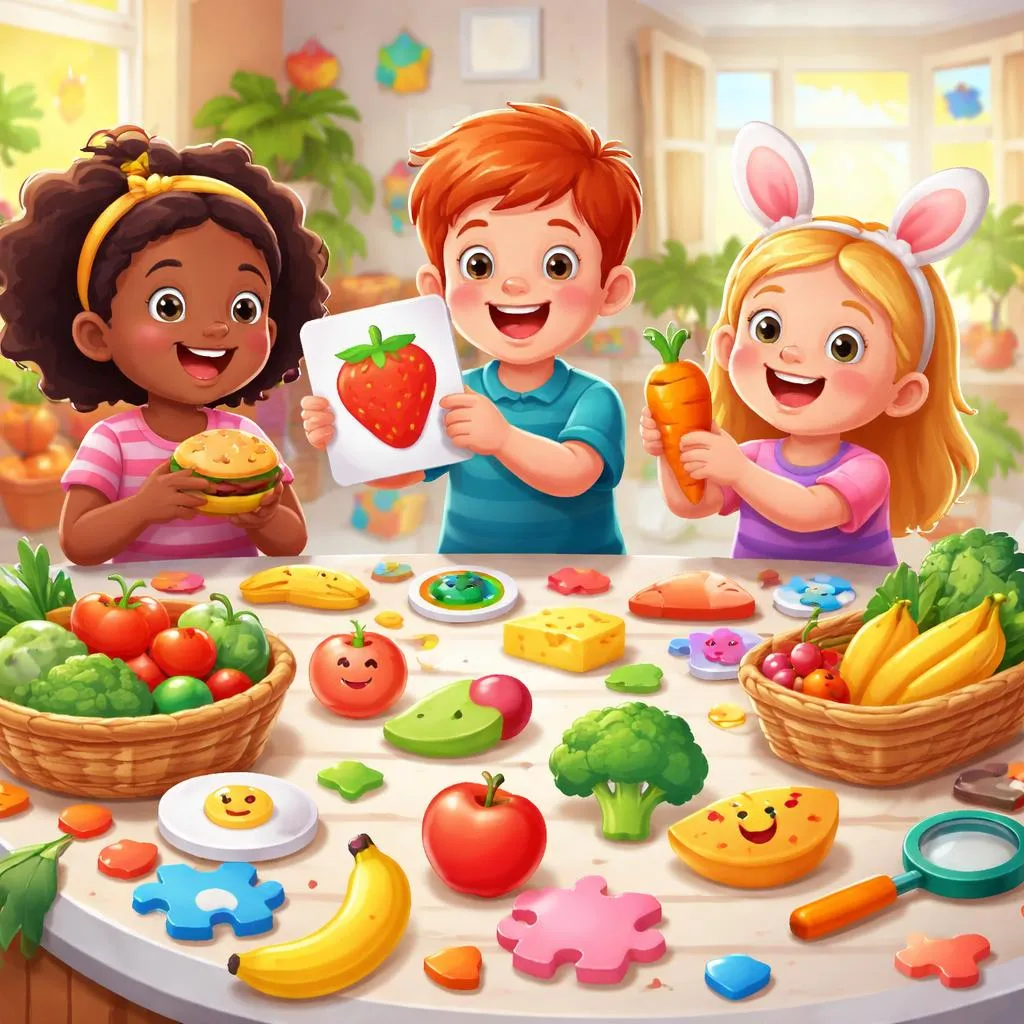

Hello, hungry learners and wonderful teachers! Today we explore a delicious topic. Food is part of everyday life. We talk about it at breakfast, lunch, and dinner. We describe what we like and dislike. We share meals with family and friends. Learning food in English helps children communicate about something they love. It builds vocabulary for real situations. It makes language learning tasty and fun. Let us discover the wonderful world of food words together. Let us learn names of fruits, vegetables, meals, and treats.
What Is Food Vocabulary in English? Food vocabulary includes all the words we use to talk about things we eat and drink. It covers fruits and vegetables. It covers meats and grains. It covers meals and snacks. It covers dishes and recipes.
Learning food words helps children in many situations. At the grocery store, they can name what they see. At the table, they can ask for what they want. In restaurants, they can order their own food. In conversations, they can share what they like.
Food words also connect to culture. Different foods are popular in different places. Learning about food teaches about other cultures. Children discover new tastes and traditions.
Meaning and Explanation of Food Categories Organizing food into categories helps children learn. Each category has common characteristics.
Fruits grow on plants and trees. They are often sweet. Examples include apples, bananas, oranges, strawberries, grapes, and watermelon. Children learn to name their favorite fruits.
Vegetables are also plants. They can be eaten raw or cooked. Examples include carrots, broccoli, tomatoes, potatoes, peas, and lettuce. Children learn that vegetables are healthy.
Grains come from grasses. They include wheat, rice, oats, and corn. Foods made from grains include bread, pasta, cereal, and crackers. These are often part of meals.
Protein foods help build strong bodies. They include meat, fish, eggs, beans, and nuts. Chicken, beef, fish, and eggs are common protein foods.
Dairy foods come from milk. They include milk, cheese, yogurt, and butter. These foods are good for bones and teeth.
Drinks are what we consume in liquid form. Water, milk, juice, and soda are common drinks. Learning to ask for drinks is very useful.
Meals have names too. Breakfast is the morning meal. Lunch is the midday meal. Dinner is the evening meal. Snacks are small foods between meals.
Categories or Lists of Food Words Let us organize food words into clear lists. This helps children build vocabulary systematically.
Fruits: Apple, banana, orange, strawberry, grape, watermelon, pear, peach, cherry, lemon, lime, pineapple, mango, blueberry, raspberry
Vegetables: Carrot, broccoli, tomato, potato, onion, lettuce, cucumber, pepper, corn, pea, bean, spinach, cabbage, celery, mushroom
Protein Foods: Chicken, beef, pork, fish, egg, bean, nut, peanut, almond, turkey, ham, bacon, shrimp, tofu
Dairy Foods: Milk, cheese, yogurt, butter, ice cream, cream, cottage cheese
Grains: Bread, rice, pasta, cereal, oatmeal, cracker, bagel, muffin, pancake, waffle
Drinks: Water, milk, juice, soda, tea, coffee, hot chocolate, lemonade
Meals and Dishes: Breakfast, lunch, dinner, snack, soup, salad, sandwich, pizza, burger, taco, pasta, rice, curry, stew
Desserts and Sweets: Cake, cookie, pie, ice cream, candy, chocolate, cupcake, donut, pudding
Daily Life Examples of Food Words Food words appear throughout daily life. Pointing them out helps children learn naturally.
At breakfast time, name the foods. "We are eating cereal with milk." "Would you like toast or pancakes?" "This orange juice is sweet." These simple phrases teach food words in context.
At lunch, talk about what is on the plate. "Here is your sandwich. It has bread, cheese, and ham." "The apple slices are crunchy." "Do you want yogurt for dessert?" Children learn to name what they eat.
At the grocery store, point to items. "Let's buy some bananas." "Can you find the carrots?" "We need milk and eggs." This builds vocabulary in a real setting.
During snack time, name the foods. "Here are some grapes." "Would you like crackers with cheese?" "This yogurt is strawberry flavor." Children associate words with tastes.
Cooking together provides rich language. "We need to chop the onion." "Stir the soup." "Pour the milk into the bowl." Children learn action words along with food names.
Printable Flashcards for Food Words Flashcards help children learn food vocabulary visually. They provide clear images with words.
Fruit Flashcards: Create colorful cards showing different fruits. Apple, banana, orange, strawberry, grapes. Each card has a clear picture and the word. Children learn to recognize and name each fruit.
Vegetable Flashcards: Create cards for common vegetables. Carrot, broccoli, tomato, potato, onion. Use bright, appealing pictures. This helps children learn healthy food names.
Meal Flashcards: Create cards showing different meals. Breakfast, lunch, dinner, snack. Show typical foods for each meal. This helps children talk about daily routines.
Food Group Sorting Cards: Create cards for different food groups. Children sort them into fruits, vegetables, proteins, dairy, grains. This builds categorization skills.
Use the cards for games. Hold up a card and name the food. Ask children to find the card for a food you name. Play memory match with two sets. Sort cards into food groups. The possibilities are endless.
Learning Activities or Games for Food Words Games make learning food vocabulary fun and interactive.
Grocery Store Play: Set up a pretend grocery store. Use empty food boxes and containers. Children take turns being shopkeeper and customer. They practice asking for items. "Can I have an apple?" "How much is the milk?" This builds real conversation skills.
Restaurant Play: Set up a pretend restaurant. Create simple menus with food pictures. Children order food from the menu. "I would like a hamburger and fries." "May I have some water?" This practices polite requests.
Food Bingo: Create bingo cards with food pictures. Call out food names. Children cover the matching picture. When someone gets BINGO, they name all the foods in their winning row. This builds listening and vocabulary.
What's Missing?: Place several food flashcards on the table. Children close their eyes. Remove one card. They open their eyes and guess what is missing. "The banana is missing!" This builds observation and memory.
I Spy Food: Play I Spy with food. "I spy something yellow that monkeys like." Children guess "banana!" "I spy something red that is a fruit." Children guess "apple!" This builds descriptive language.
Food Tasting Party: If possible, have a food tasting party. Provide small samples of different foods. Children taste and describe them. "The apple is sweet." "The lemon is sour." This connects words to real sensory experiences.
Food Collage: Give children magazines and catalogs. They cut out pictures of food and glue them onto paper. They can sort by food group or meal time. They name each food as they glue. This combines art and vocabulary.
Through these activities, food in English becomes part of children's active vocabulary. They learn to name what they eat. They learn to ask for what they want. They learn to describe tastes and preferences. Food connects to daily life in delicious ways. Every meal becomes a language lesson. Every snack builds vocabulary. The words become as familiar as the foods themselves.