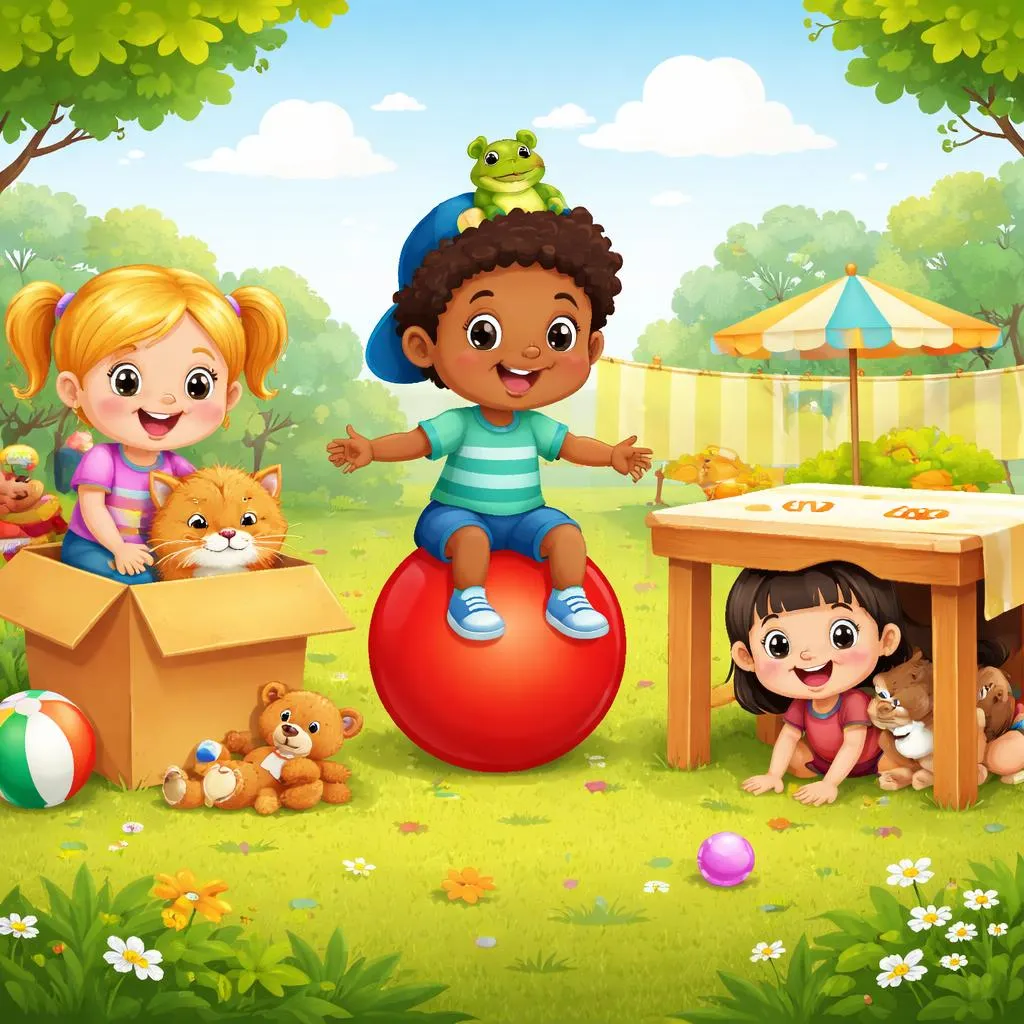

Teaching grammar to young children requires creativity. We cannot simply give them a rule book. We need to show them how language works in the physical world. Prepositions are perfect for this. Words like in, on, under describe where things are. They are easy to demonstrate. They are fun to practice. As teachers, we can turn the classroom into a living language lab. Let's explore how to guide students through these essential building blocks of English.
Meaning: What Do In, On, and Under Tell Us? These three words are prepositions of place. They show the position of one thing in relation to another. We use them all the time to describe our world. It is important to start with a clear, physical demonstration.
We can hold up a pencil and a box.
We put the pencil in the box. The pencil is inside the box. The box contains the pencil.
We put the pencil on the box. The pencil is resting on top of the box. It touches the surface.
We put the pencil under the box. The pencil is below the box. The box is above the pencil.
This simple demonstration gives a clear visual meaning. We repeat it with different objects. We use a book and a table. We use a crayon and a chair. Repetition with variety helps solidify the concept. Understanding the meaning of in, on, under is the first step to using them correctly.
Conjugation: Do These Words Change? This is an easy point for young learners. We explain that some words change form. For example, "I" changes to "my" or "me". But prepositions are different. They are special words that do not change.
We tell the class that in, on, under are always the same. We do not say "inned" or "underer". They stay in their original form no matter what. This makes them easier to remember. We use them with any noun. We can say "in the house" or "in the garden". The word "in" stays the same. This stability is reassuring for beginners.
Present Tense: Describing Where Things Are Now We use in, on, under most often in the present tense. We describe where things are right now. This is the best place to start with students.
We can look around the classroom and make sentences.
The teacher is in the classroom.
The book is on the desk.
The crayon is under the chair.
We encourage students to look and listen. We point to objects and describe their location. We use full sentences. This models correct grammar. It shows how in, on, under work in real time. The present tense is immediate and easy to verify. Students can look and see if the sentence is true.
Past Tense: Talking About Where Things Were Once students understand the present, we can introduce the past. This adds a new layer of complexity. We explain that sometimes we talk about where things were before.
We use the same prepositions. But we change the verb "to be".
The pencil was in the box yesterday.
The book was on the table this morning.
The cat was under the bed.
We can play a simple memory game. We show an object in a place. Then we hide it. We ask the class, "Where was the ball?" They answer, "It was under the chair." This connects the grammar point to a fun activity. It teaches them to use in, on, under in the past tense naturally.
Future Tense: Planning Where Things Will Go We can also use these prepositions to talk about the future. This involves the verb "will". We explain that we are making a plan or a prediction.
We can ask questions about the day ahead.
Where will we put our coats after lunch? They will go on the hooks.
Where will the fish swim? It will swim in the water.
Where will we find our shoes? They will be under the table.
We can also make predictions during story time. We look at a picture and guess. "Where will the bird go?" "It will go in the nest." This encourages creative thinking. It shows that in, on, under are useful for talking about all times, not just the present.
Questions: Asking About Location Asking questions is a key communication skill. We teach students how to ask where things are. The main question word we use is "Where".
We model the question form clearly.
Where is the pencil?
Where are the books?
Then we show how to answer using in, on, under.
It is in the case.
They are on the shelf.
We practice this back and forth. We hide an object. A student asks, "Where is the eraser?" Another student answers. This builds conversational skills. It makes the grammar point interactive. It shows that in, on, under are not just for memorization. They are for real communication.
Other Uses: Beyond Physical Space These words have other meanings too. As students progress, we can introduce these gently. It shows the richness of the language.
We can talk about time. We say someone is "in the morning" or "in April". This is a different use of "in".
We can talk about states or conditions. A house can be "on fire". A person can be "under pressure". These are more advanced. For young learners, we simply introduce them as phrases. We do not need to explain the grammar deeply. We just expose them to the idea that in, on, under are very common words with many jobs.
Learning Tips: Strategies for the Classroom Here are some practical tips for teaching these prepositions effectively.
Use Total Physical Response (TPR). This means linking language to movement. We say a command like "Put your hand on your head." Students do it. We say "Put your pencil under your book." They follow along. This connects the words to physical actions. It helps kinesthetic learners.
Use real objects. Avoid flashcards for this topic. Real objects are better. A real cup and a real spoon are more meaningful than a picture. Students can manipulate the objects themselves. They can put the spoon in the cup. They can put the spoon under the cup. This hands-on experience is powerful.
Repeat often. Prepositions need frequent review. We can weave them into daily routines. During cleanup, we give directions. "Put the crayons in the box." "Put the book on the shelf." This constant, natural repetition solidifies learning without pressure.
Educational Games: Making Practice Playful Games turn grammar practice into a joyful experience. Here are some games designed for teaching in, on, under.
Game 1: Simon Says This classic game is perfect for TPR. We give commands using the prepositions. "Simon says put your hand on your nose." "Simon says put your pencil under your chin." Students love it. It gets them moving. It checks their listening comprehension in a fun way.
Game 2: The Missing Object We place several objects around the room. We name them clearly. Then students close their eyes. We hide one object. When they open their eyes, they must guess where it is. "Is the ball under the desk?" "Is it in the bin?" This encourages question formation and preposition use.
Game 3: Drawing Dictation We give each student a blank piece of paper. We give them instructions for a simple drawing. "Draw a sun in the sky." "Draw a flower under the sun." "Draw a bird on the flower." At the end, we compare pictures. They all followed the same instructions. This shows how prepositions create clear meaning.
By using these strategies, we guide students to a solid understanding. We move from simple meaning to confident use. We show that grammar is not a set of boring rules. It is a tool for describing our world. Words like in, on, under help us share where things are, were, and will be.