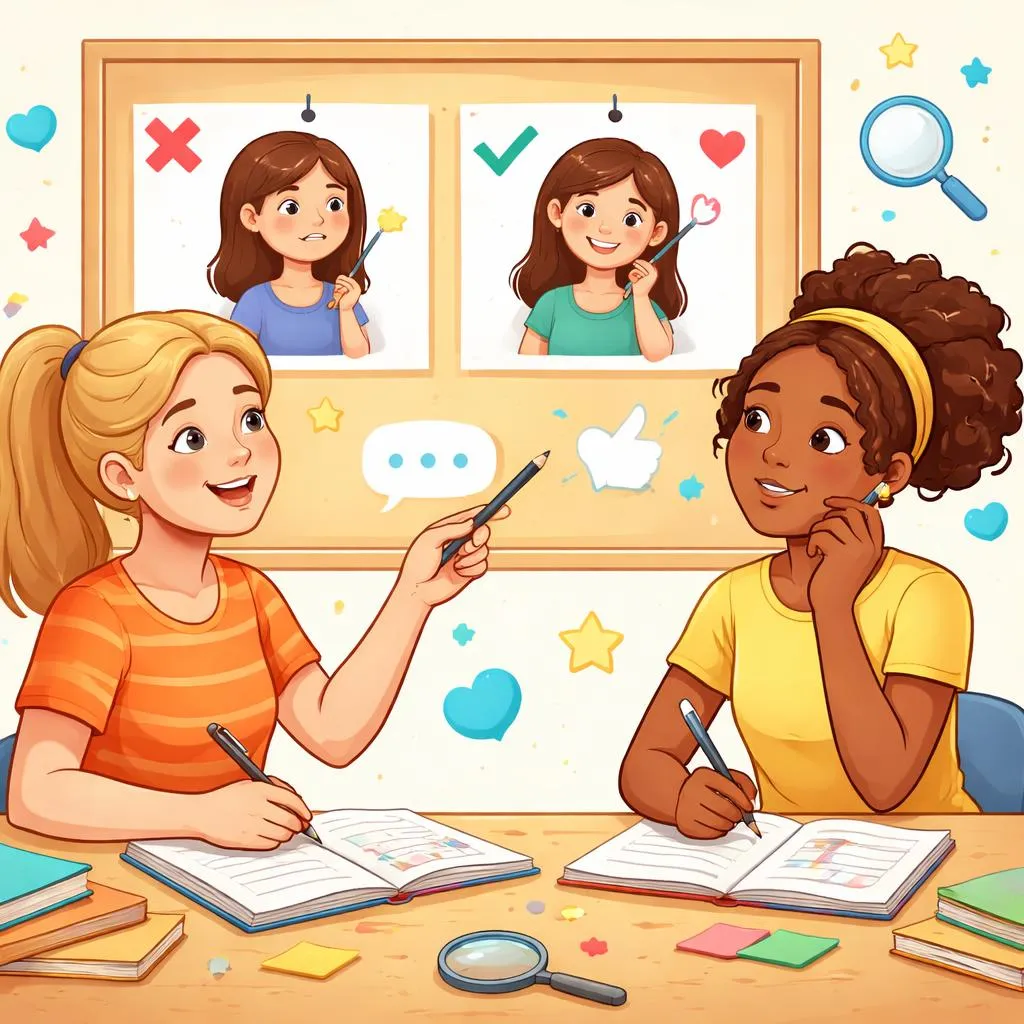

Meaning Let's explore a very common and useful verb: "to like." This verb helps us express our feelings about things. We use it to talk about the things that bring us joy. We also use it to share our preferences. When we say "I like ice cream," we share a happy fact about ourselves. The phrase "she like it" often appears when learners are speaking or writing. It sounds close to correct. However, it's missing a small but very important letter. Understanding why this happens is our first step to mastering this essential verb.
Conjugation Conjugation means changing the verb to match the subject. The verb "to like" changes its form depending on who is doing the liking. For the pronouns I, you, we, and they, we use the base form: "like." Look at these examples. I like dogs. You like reading. We like games. They like music. For the pronouns he, she, and it, we must add an "s" to the verb. This is the key rule. He likes soccer. She likes singing. It likes the sun. This is why "she like it" needs a change. The correct form is "She likes it."
Present Tense We use the present simple tense for habits and general truths. This is the most common tense for the verb "to like." We state facts about what people enjoy. The rule we just learned applies here. Remember the "s" for he, she, and it. Let's practice with more complete sentences. My father likes coffee. The cat likes its toy. Maria likes her new school. For other subjects, we keep it simple. You and I like the park. Our friends like this movie. Practice saying these sentences aloud. Listen for the "s" sound at the end of "likes."
Past Tense Talking about past likes is simple. We do not add an "s" for he, she, or it in the past tense. We use the same word for everyone: "liked." This word is the past tense form of "to like." Yesterday, she liked the story. Last week, he liked that game. A long time ago, I liked carrots. The rule is consistent. You liked, we liked, they liked. The "s" only appears in the present tense for he, she, and it. So, for past events, we always say "liked." This makes the past tense easier for many learners.
Future Tense We express future likes with the helping verb "will." We use "will like" for everyone. No "s" is needed here. The verb "like" stays in its base form after "will." Tomorrow, she will like the surprise. I think he will like this book. They will like the party next weekend. We can also use "going to like." The same rule applies. She is going to like the gift. We are going to like the show. Using the future tense helps us make predictions. We share what we believe someone will enjoy later.
Questions Forming questions with "like" is a fun challenge. We often use the helper "do" or "does." "Do" goes with I, you, we, they. "Does" goes with he, she, it. Notice a very important change. When we use "does," the main verb "like" loses its "s." The "s" moves to "does." Do you like chocolate? Does she like chocolate? Let's correct our key phrase as a question. Instead of "She like it?" we ask, "Does she like it?" This is the correct question form. Other examples include: Do they like swimming? Does your brother like homework?
Other Uses We can use "like" in other common patterns. We can talk about liking to do an activity. She likes to dance. They like to read. We also use the "-ing" form. He likes swimming. We like playing games. Both are correct. Another useful pattern is with nouns. We ask "What is it like?" to ask for a description. That movie was fun. What was it like? We can also compare things using "like." The pillow is soft, like a cloud. These patterns make our speech more descriptive and interesting.
Learning Tips A great tip is to create a simple chart. Write the pronouns in one column. Write the correct verb form next to them. Keep this chart visible. Practice with a family member. Say sentences about each other. "Mom likes tea. Dad likes sports." Listen to English songs. Notice how singers use "likes" for he and she. Read simple books. Point out every "likes" you see. Remember the phrase "He, She, It – the 'S' must fit!" This rhyme can act as a quick mental reminder during conversation.
Educational Games Games make practice fun. Try the "Like Detective" game. One person names a subject like "my grandma" or "this robot." The other player must quickly say a correct sentence. "My grandma likes gardening" or "This robot likes oil." Another game is "Sentence Sort." Write many cards with subjects (He, The dog, We) and verbs (like, likes). Draw one from each pile. Create a logical sentence. "The dog likes bones." For group play, "Question Ball" works well. Toss a ball. The catcher must ask a "Do you like...?" question. Then they toss it to the next person.
Mastering "she likes it" is more than fixing an error. It's about unlocking a core rule of English. This rule applies to hundreds of everyday verbs. Think about "eat," "play," "read," and "sleep." They all follow the same pattern. He eats. She plays. It sleeps. Every time we practice this with "like," we build a stronger foundation. We become more confident speakers. The goal is for the correct form to sound natural. Soon, "she likes it" will come out automatically. Keep listening, keep practicing, and enjoy sharing what you and others like