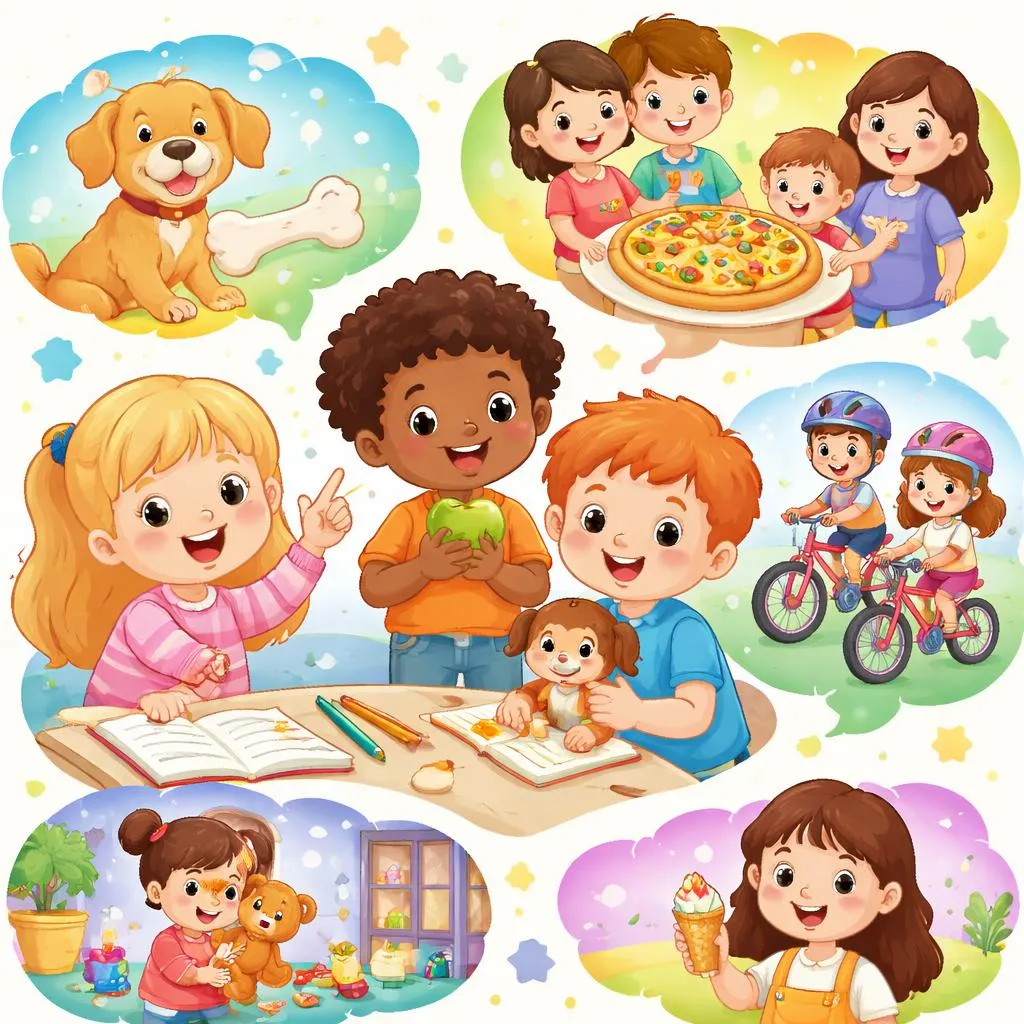

Meaning Let's talk about a very important word: the have verb. We use this verb all the time. It helps us talk about things we own or hold. We also use it to talk about our family and friends. The have verb connects us to the world around us. It tells people about our possessions and our experiences. Think of a sentence like "I have a book." This simple statement shares a fact. It shows ownership. The have verb is a key to unlocking everyday conversation. It is one of the first and most useful verbs we can master.
Conjugation Conjugation means changing the verb to match the subject. The have verb changes in the present tense. For the pronouns I, you, we, and they, we use "have." Look at these examples. I have a red ball. You have a big smile. We have a fun class. They have new pencils. For the pronouns he, she, and it, we use "has." This is the special rule. He has a bicycle. She has a brother. The cat has soft fur. Remembering this difference is the most important step. We say "have" for most subjects, but "has" for he, she, and it.
Present Tense We use the present simple tense with the have verb for things that are true now. We talk about what we own or what is part of our life today. Let's practice with "have." I have two hands. You have a name. We have a home. They have ideas. Now, let's practice with "has." She has a blue backpack. My dad has a car. The tree has green leaves. This dog has a long tail. We use these sentences to describe the world. We state facts about people, animals, and objects right now. The verb must match the subject every time.
Past Tense Talking about the past is simple with this verb. We do not use "has" in the past tense. For everyone—I, you, he, she, it, we, they—we use "had." This is the past tense form. Yesterday, I had toast for breakfast. Last year, she had short hair. The dog had a bath on Saturday. We all had a good time. The word "had" is the same for every subject. This makes the past tense easier to remember. We use "had" to talk about things we owned or experiences we finished in the past.
Future Tense To talk about the future, we use the helper "will." We say "will have" for everyone. No change is needed for he, she, or it here. Tomorrow, I will have a test. She will have a birthday party next month. They will have a new puppy soon. We can also use "going to have." I am going to have a snack. He is going to have a turn. Using the future tense helps us make plans. We share what we expect to own or experience later. The main verb "have" always stays in its base form after "will" or "going to."
Questions Asking questions with the have verb is very common. We often use "do" or "does" as helpers. We use "do" with I, you, we, they. We use "does" with he, she, it. When we use "does," the main verb changes back to "have." The "s" moves to "does." Do you have a pencil? Does he have a sister? Do they have a pet? Does the school have a library? To answer, we can say, "Yes, I do," or "No, she doesn't." We can also answer with the full sentence. "Yes, I have a pencil." Practicing these questions and answers is great for conversation.
Other Uses The have verb is also used in other important ways. We use it to talk about eating meals. "I have breakfast at 7 o'clock." We use it to describe illness. "She has a cold." We use it in the phrase "have to" which means must. "I have to finish my work." We also use it in present perfect tenses with a past participle, like "have eaten." This is for more advanced learning. For now, focusing on ownership ("I have a book") and basic experiences ("We have fun") builds a very strong foundation.
Learning Tips A great tip is to play the "I Have, You Have" game. Look around the room. Say what you see. "I have a window. You have a desk. She has a ruler." This links the verb to real objects. Create a simple chart with two columns. Label one "I, You, We, They = HAVE" and the other "He, She, It = HAS." Keep it on the wall. Listen for the verb in songs and stories. A helpful rhyme is: "For I, you, we, and they, HAVE is what we say. For he and she and it, HAS is always it." Practice makes the correct choice feel automatic.
Educational Games Games make mastering the have verb fun. Play "Classroom Scout." One child is the scout. They say, "I see someone who has glasses." Others look and point. The scout then says, "Yes, Maria has glasses!" Another game is "Bag of Mystery." Fill a bag with items. A child pulls one out and says, "I have a key. Who has a toy car?" The child with that item holds it up and says, "I have a toy car." For a worksheet game, use "Has/Have Sort." Provide pictures of people and animals with items. Children write the correct sentence below each picture. "The boy has a ball."
Using the have verb correctly opens many doors. It allows for clear descriptions of our world. From "I have an idea" to "The planet has oceans," this verb helps us share and connect. The key is consistent practice with the simple present rule. The journey from practicing "she has" and "they have" to using it naturally in speech is exciting. Every correct sentence builds confidence. Keep describing what you see, what you own, and what you experience. Soon, using "have" and "has" will be as easy as saying your own name, and your English will feel stronger and more precise because of it.