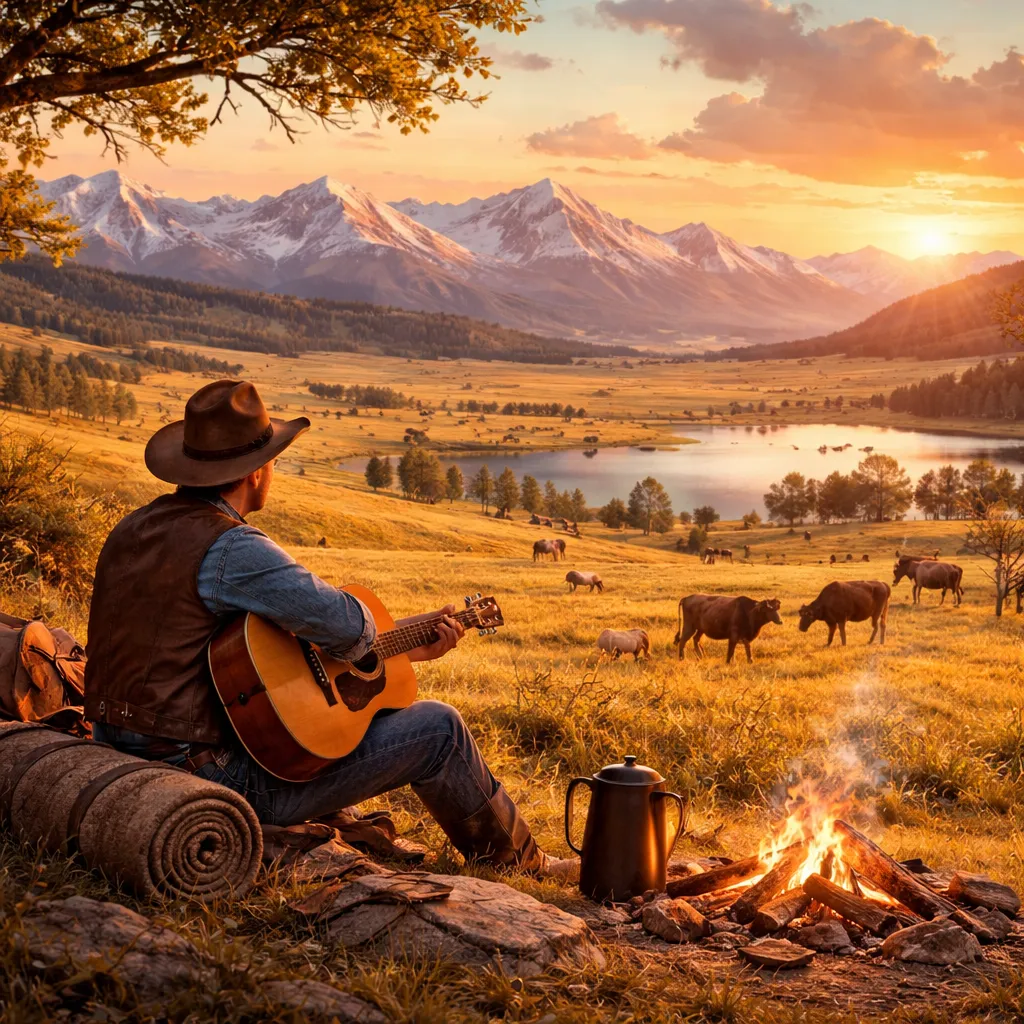

What is the Story "Home on the Range"? "Home on the Range" is one of the most beloved American folk songs ever written. It became the official state song of Kansas in 1947. The song paints a beautiful picture of life on the open prairie where deer and antelope play. The English song: Home on the Range describes a peaceful place where the skies are not cloudy all day. For generations, this song has captured the American spirit of wide-open spaces and freedom. Children love the gentle melody and the images of wildlife. The song teaches about a way of life that was common in the 1800s when cowboys and settlers moved across the great plains. It celebrates nature, home, and the simple pleasures of life away from crowded cities.
The Complete Lyrics of the Nursery Rhyme Let us look at the words together. The song has several verses celebrating prairie life.
Oh, give me a home where the buffalo roam, Where the deer and the antelope play, Where seldom is heard a discouraging word, And the skies are not cloudy all day.
Chorus: Home, home on the range, Where the deer and the antelope play, Where seldom is heard a discouraging word, And the skies are not cloudy all day.
Where the air is so pure, the zephyrs so free, The breezes so balmy and light, That I would not exchange my home on the range For all of the cities so bright.
How often at night when the heavens are bright With the light of the glittering stars, Have I stood there amazed and asked as I gazed If their glory exceeds that of ours.
Vocabulary Learning from the Song This English song: Home on the Range introduces children to words about nature, animals, and the American West. Each word builds their understanding of history and the natural world.
First, the song teaches about a "range." A range is a large area of open land where animals can graze. Cowboys rode across the range taking care of cattle. This was common in the American West.
The song introduces wild animals. "Buffalo" are large, shaggy animals that once roamed the plains in huge herds. "Deer" and "antelope" are graceful animals that still live in many parts of America. You can show your child pictures of these animals.
"A discouraging word" means something sad or negative. The song says these are "seldom heard" in this peaceful place. Everyone is happy and kind.
"Zephyrs" are gentle winds. "Balmy" means mild and pleasant. These words describe the lovely weather on the range.
The song compares the range to "cities so bright." Cities are exciting but crowded. The range is peaceful and open. This teaches children about different ways of living.
Phonics Points to Practice Let us listen for special sounds in the song. Phonics helps children connect letters to the sounds they hear. This English song: Home on the Range gives us many sounds to explore.
Listen to the "h" sound at the beginning of "home." It is a gentle breath sound. Put your hand in front of your mouth and say "home." Feel the air. Practice other "h" words like "happy," "house," and "hello."
The "r" sound appears in "range" and "roam." It is a rolling sound made with the tongue. Practice other "r" words like "rabbit," "red," and "run."
Listen to the "b" sound in "buffalo" and "bright." It is a strong sound made by pressing lips together. Practice other "b" words like "ball," "book," and "baby."
The long "o" sound in "home" and "roam" says its own name. You can hear it in words like "go," "no," and "hello." The long "e" sound in "deer" and "free" is also common.
The "z" sound in "zephyrs" is a buzzing sound. Practice other "z" words like "zebra," "zipper," and "buzz."
Grammar Patterns We Can Learn This peaceful song teaches important grammar in a very natural way. The English song: Home on the Range introduces descriptive adjectives, comparisons, and the phrase "give me."
The song uses many descriptive adjectives. "Discouraging word" describes words that make us sad. "Pure air" means clean air. "Glittering stars" means stars that sparkle. These words help children describe the world around them.
The song makes comparisons. "I would not exchange my home on the range for all of the cities so bright." This compares two things and shows a preference. You can practice making comparisons. "I would not trade my teddy bear for any other toy." "I would rather play outside than watch TV."
The phrase "give me" is a request. "Oh, give me a home where the buffalo roam." This expresses what the singer wants. You can practice making requests. "Give me a hug." "Give me a turn, please."
Learning Activities to Do at Home Bringing this English song: Home on the Range into your daily life is simple and joyful. Here are some activities you can try with materials you already have.
A wonderful activity is the "Prairie Scene" drawing. Give your child paper and crayons. Draw a wide-open prairie with grass, sky, and animals. Add buffalo, deer, and antelope. Talk about what it would be like to live there. This builds creativity and comprehension.
Another activity is the "Animal Sounds" game. Make the sounds of animals from the song. What sound does a buffalo make? What about a deer? Antelope? Look up real animal sounds online. This builds phonemic awareness through play.
You can also have a "Stargazing" night. On a clear night, go outside and look at the stars. Talk about how people on the range saw the same stars. Sing the song quietly under the night sky. This creates a magical connection to the song.
Printable Materials for Learning Creating simple printables can make this English song: Home on the Range more visual and engaging. You can make these materials together with your child.
A prairie scene coloring page is perfect. Draw a wide landscape with grass, a few trees, and animals. Add a cowboy on horseback if you like. Let your child color the scene. Write "Home on the Range" at the top. Display their artwork proudly.
Animal flashcards help with vocabulary. Draw or print pictures of buffalo, deer, and antelope. Learn their names and facts about each animal. This builds science knowledge.
You can also create simple word cards. Write words from the song on cards. "Home," "range," "buffalo," "roam," "deer," "antelope," "play," "discouraging," "skies," "cloudy," "zephyrs," "breezes," "cities," "stars." Show each card as you sing that word. This builds early reading skills.
A comparison chart helps with the song's message. Draw two columns. One for "Range" and one for "City." List things about each. Range has animals and open space. City has buildings and many people. This builds critical thinking.
Educational Games for Deeper Learning Games make learning active and exciting. They encourage children to use the language from the English song: Home on the Range in new and creative ways.
The "New Home" game encourages creativity. Ask your child, "What would your perfect home be like?" By the ocean? In the mountains? In a treehouse? Create new verses. "Oh, give me a home by the rolling sea, where the dolphins and seagulls play." This shows children how to adapt the song pattern.
The "Animal Matching" game pairs animals with their habitats. Where do buffalo live? On the range. Where do fish live? In the water. Where do birds live? In trees. This builds science knowledge.
The "Weather Watch" game connects to "skies not cloudy all day." Look at the sky each day. Is it cloudy? Sunny? Draw pictures of the sky. Count how many sunny days versus cloudy days. This builds observation skills.
The "Cowboy Gear" craft is creative fun. Make a simple cowboy hat from paper. Make a bandana from fabric. Dress up and pretend to be cowboys on the range. This builds imagination and fine motor skills.
The "Star Counting" game practices numbers. On a starry night, try to count stars. You cannot count them all! Talk about how many stars there are. This builds number sense and wonder.
The "Peaceful Place" discussion builds emotional vocabulary. The song describes a place with no discouraging words. Where do you feel peaceful? What makes you feel calm? This builds self-awareness.
The "City vs. Country" conversation explores different lifestyles. What is good about cities? What is good about the country? Which would you choose? This builds critical thinking.
The "Nature Walk" activity brings the song to life. Go for a walk in a park or natural area. Look for animals. Feel the breeze. Look at the sky. Sing the song together outdoors. This connects the song to real experiences.