
What is this topic about?
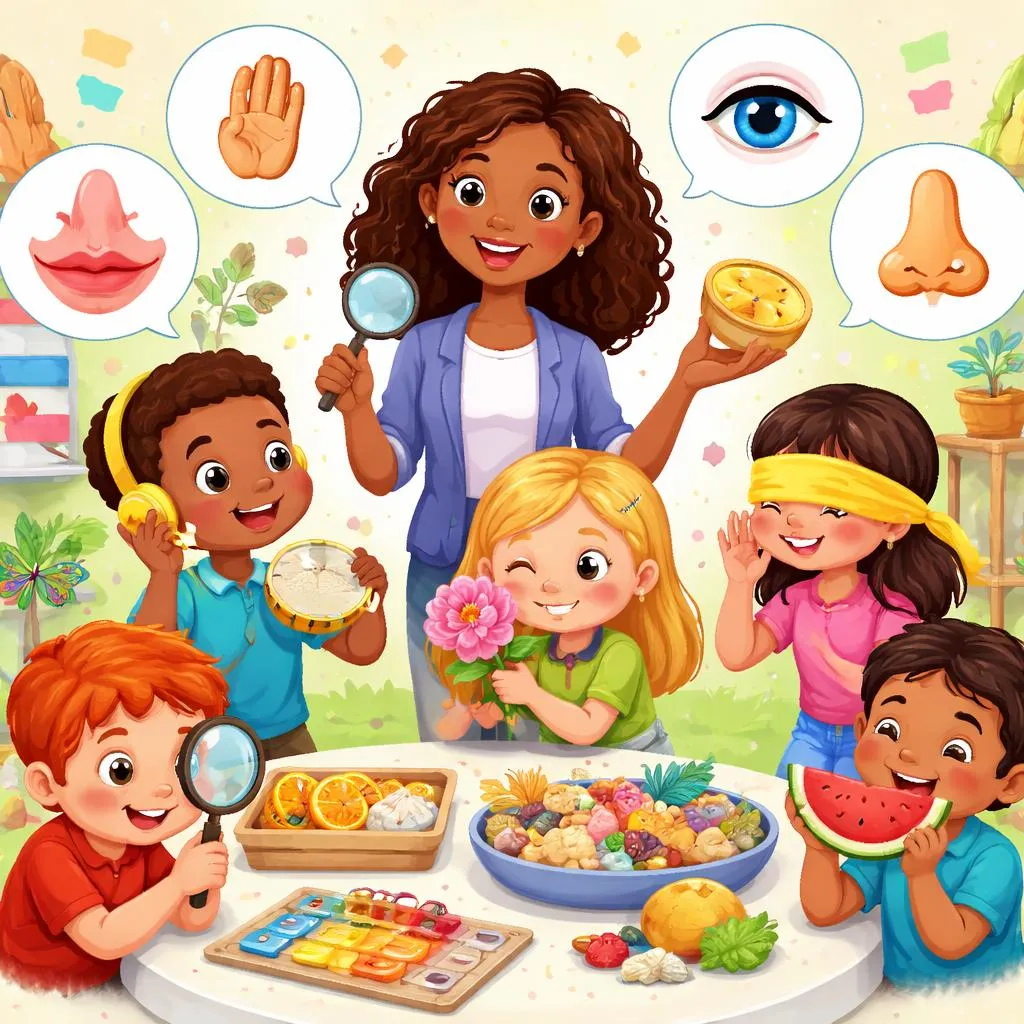
Let's begin a wonderful journey of discovery. Today, we focus on a fundamental part of how we understand the world. The topic of our five senses activities explores the tools our bodies use every single moment. These tools are sight, hearing, smell, taste, and touch. They are our personal guides to everything around us.
Engaging in our five senses activities means moving beyond just naming these senses. It involves designing playful, hands-on experiments that allow for direct experience. These activities help young scientists connect abstract concepts to real, tangible feelings and observations. It's a perfect way to blend science, vocabulary, and curiosity into one joyful learning adventure.
Meaning and explanation
Why do we dedicate time to our five senses activities? The answer is deeply rooted in how we learn. Sensory exploration is one of the first and most natural ways children investigate their environment. By consciously focusing on each sense, we build mindfulness and observational skills. We learn to describe our experiences with richer, more precise language.
These activities explain that each sense has a special organ and a specific job. Our eyes see light and color. Our ears capture sound vibrations. Our nose detects scents in the air. Our tongue identifies flavors. Our skin feels texture and temperature. Our five senses activities help isolate and celebrate each of these incredible functions, showing how they work together to give us a complete picture of our surroundings.
Categories or lists
We can think about our five senses activities in two helpful ways. First, we can categorize them by the specific sense they target. We have Sight Activities like "I Spy" or color scavenger hunts. Hearing Activities might include sound bingo or listening walks. Smell Activities involve scent guessing jars. Taste Activities (with safety first!) explore sweet, sour, salty, and bitter. Touch Activities feature mystery boxes or texture sorting.
Secondly, we can list them by the type of learning they promote. Some activities are Exploratory and Open-Ended, like a sensory bin. Others are Guided and Comparative, such as matching sounds to pictures. Some are Creative and Expressive, like drawing what they hear in a piece of music. Having a mix ensures our five senses activities remain fresh, engaging, and developmentally appropriate.
Daily life examples
The beauty of this topic is that our five senses activities are everywhere. We don't need special kits to practice. A morning routine offers examples: feeling the warm water in the shower (touch), smelling the shampoo (smell), hearing the breakfast sizzle (hearing), seeing the sunny window (sight), and tasting the orange juice (taste).
A walk in the park becomes a full sensory lab. We can listen for different bird calls. We can touch the rough bark of a tree and the smooth surface of a rock. We can see the shapes of clouds. We can smell the damp earth after rain. Pointing out these everyday moments trains the mind to observe actively. It shows that science isn't just in a book; it's in our daily interactions with the world.
Printable flashcards
Printable materials are excellent anchors for our five senses activities. A well-designed set of flashcards can visually reinforce each sense. One side of the card shows a clear, engaging picture: a large eye for "sight," an ear for "hearing," a nose for "smell," a tongue for "taste," and a hand for "touch."
The reverse side names the sense, lists the body part, and gives three simple examples. For "touch," it might say: "Touch: We use our skin. We can feel: soft fur, cold ice, rough sandpaper." These cards can be used for quick review, sorting games, or as prompts. For instance, hold up the "hearing" card and ask learners to close their eyes and identify three sounds they hear. This connects the abstract symbol to a real-time sensory experience.
Learning activities and games
Now, let's dive into the heart of the exploration: the activities themselves. The best our five senses activities are simple, safe, and full of wonder. Here are structured yet playful ideas for each sense and for combining them.
For a focused Sight activity, try "Color Mixing Discovery." Provide primary colored cellophane sheets or plastic lenses. Let learners overlap them and look through them at white paper or a light table. Ask what new colors they can create. This turns sight into an active investigation of light and color, moving beyond passive looking.
A classic Hearing game is "Sound Canister Matching." Take pairs of small, opaque containers (like film canisters). Fill each pair with the same material (rice, beans, paper clips, salt). Seal them securely. The challenge is to shake the canisters and find the two that make the same sound, using only the sense of hearing. This sharpens auditory discrimination.
A wonderful Smell activity is the "Scented Painting" station. Add a drop of food-grade essential oil or extract (like peppermint, lemon, or vanilla) into pots of washable paint. As learners paint, they will engage both sight and smell. Discuss the scents. Is the lemon paint smell different from the real lemon? This integrates senses and art.
For Taste, always prioritize safety and allergies. A simple "Flavor Map" activity is insightful. Provide small samples of foods representing basic tastes: a sugar crystal (sweet), a drop of lemon juice (sour), a grain of salt (salty), a bit of unsweetened cocoa (bitter), and a piece of mushroom or tomato (umami). Have learners place each on different parts of their tongue to discuss where they sense the flavor most strongly.
An engaging Touch game is the "Texture Walk." Create a path on the floor using different materials: bubble wrap, a damp towel, fake grass, aluminum foil, and a soft rug. Have learners walk barefoot or in socks and describe each sensation. Is it bumpy, cold, scratchy, smooth, or soft? This makes touch a full-body experience.
The most powerful our five senses activities combine multiple senses. Host a "Descriptive Snack Time." Choose a snack like popcorn or an apple slice. Before eating, investigate it with all senses. What does it look like? What sound does it make when broken? How does it smell? What is its texture? Finally, how does it taste? This practice builds incredible descriptive vocabulary and mindful observation.
Another integrative activity is a "Sensory Story Bag." Place a few related items in a bag that tell a simple story through the senses. For a "Beach Day" bag, include a shell (sight/touch/sound when held to the ear), a small bottle of sunscreen (smell), and a piece of smooth sea glass (touch). Pull out each item and build a story together, describing each sensory detail.
The goal of our five senses activities is to cultivate mindful explorers. These activities teach more than science; they teach attention, rich description, and a deep appreciation for the complex ways we interact with our world. By providing structured yet open-ended opportunities for sensory play, we build neural pathways, expand vocabulary, and foster a lifelong sense of wonder. The world is full of details waiting to be noticed, and with these activities, we give young learners the tools and the joy to discover them all.