
What is this topic about?
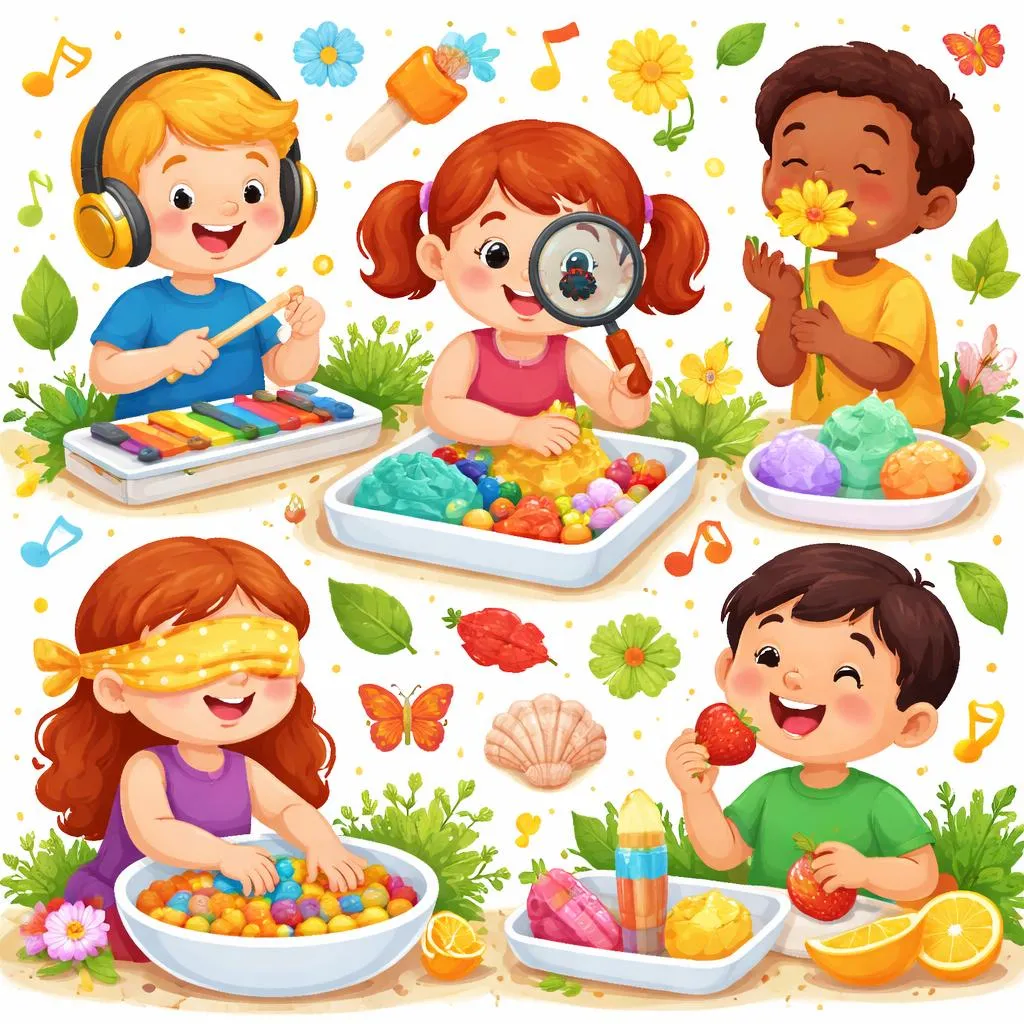
Let's begin a wonderful journey of discovery. The topic of 5 senses activities focuses on playful, hands-on learning about how we experience the world. Our senses—sight, hearing, smell, taste, and touch—are our body's tools for exploration. These activities help young learners understand and name these tools through direct experience.
This topic is more than just a science lesson. Engaging in 5 senses activities builds critical thinking, rich vocabulary, and mindful observation. It turns everyday moments into opportunities for investigation. Children learn to describe their experiences with more precise language, connecting abstract concepts to real feelings and perceptions.
Meaning and explanation
Why dedicate time to 5 senses activities? Young children are natural scientists. They learn best by doing, touching, and experiencing. Structured sensory activities channel this natural curiosity in focused ways. They help isolate each sense, building awareness of how our bodies gather different types of information.
These activities explain that each sense has a special organ and a specific job. Our eyes see light and color. Our ears collect sound waves. Our nose detects scents. Our tongue identifies flavors. Our skin feels textures and temperatures. 5 senses activities make these ideas concrete. They show how our senses work together to create a complete understanding of our surroundings.
Categories or lists
We can organize 5 senses activities in helpful ways. The most straightforward method is to group them by the sense they highlight. We have Sight Activities like color scavenger hunts and shadow tracing. We have Hearing Activities such as sound bingo and listening walks. Smell Activities include scent matching games.
Taste Activities (with strict safety measures) explore basic flavors. Touch Activities feature mystery boxes and texture boards. We can also categorize them by skill: Sorting and Classifying activities, Descriptive Language activities, and Creative Expression activities. Having a variety ensures that 5 senses activities remain engaging and address different learning styles.
Daily life examples
The beauty of this topic is that 5 senses activities are all around us. A morning routine is full of examples. We see the sunlight (sight), hear the alarm clock (hearing), smell breakfast (smell), taste toothpaste (taste), and feel the water in the shower (touch). A walk in the park becomes a sensory adventure. We can listen for birds, touch tree bark, see cloud shapes, and smell flowers.
Cooking together offers rich sensory experiences. Children can see ingredients change color, hear sizzling sounds, smell herbs, taste a safe ingredient, and feel different textures like flour or dough. Pointing out these daily moments shows that science is part of everyday life. It teaches children to be mindful observers of their world.
Printable flashcards
Printable flashcards are excellent visual aids for 5 senses activities. Create a simple set with clear images. One side shows a picture representing a sense: a large eye for "See," an ear for "Hear," a nose for "Smell," a tongue for "Taste," and a hand for "Touch."
The reverse side names the sense, lists the body part, and gives two simple examples. For "Touch," it might read: "Touch. We use our skin. We can feel: soft fur, rough sandpaper." Use these cards to introduce the day's activity or for quick review games. For instance, hold up the "Hear" card and have a minute of silent listening, then share what sounds were noticed. This connects the symbol to a real-time sensory experience.
Learning activities and games
Now, let's explore specific, engaging 5 senses activities. These ideas use simple materials and prioritize safe, hands-on exploration.
For Sight, try "Light and Color Discovery." Provide color paddles or clear cellophane in primary colors. Let children overlap them and look through them at various objects. Ask what new colors they create and how the world looks different. This turns sight into an active investigation of light properties.
A classic Hearing activity is "Sound Canister Matching." Take pairs of identical opaque containers (like film canisters). Fill each pair with the same material (rice, beans, paperclips, bells). Seal them securely. The challenge is to shake the containers and find the matching pairs using only the sense of hearing. This sharpens auditory discrimination skills.
For Smell, set up a "Scented Painting Station." Add a drop of food-safe essential oil or extract (peppermint, lemon, vanilla) into separate cups of white, washable paint. As children paint, they engage both sight and smell. Discuss the scents. Ask if the lemon paint smells like a real lemon. This integrates senses with artistic expression.
A safe and simple Taste activity is "The Flavor Map." Discuss how different parts of our tongue might sense flavors differently. Provide tiny samples on spoons: a drop of lemon juice (sour), a sprinkle of sugar (sweet), a grain of salt (salty). Have children place each on different areas of their tongue and describe the experience. Always check for allergies first.
An excellent Touch game is the "Texture Walk." Create a path on the floor using different materials: bubble wrap, a damp towel, fake grass, aluminum foil, soft carpet squares. Have children walk barefoot or in socks and describe each sensation. Is it bumpy, cold, scratchy, smooth, or soft? This makes touch a whole-body experience.
The most powerful 5 senses activities combine multiple senses. Host a "Descriptive Snack Time." Choose a snack like an apple slice or popcorn. Before eating, investigate it together. What does it look like? What sound does it make when broken? How does it smell? What is its texture? Finally, how does it taste? This practice builds incredible descriptive vocabulary and mindful observation.
Another integrative activity is a "Sensory Story Bag." Place a few related items in a bag that tell a simple story through the senses. For a "Rainy Day" bag, include a small spritz bottle for mist (touch/sight), a recording of rain sounds (hearing), a stone (touch), and a damp cotton ball with a clean, earthy scent (smell). Pull out each item to build a story. This connects vocabulary to narrative and sensory memory.
The goal of 5 senses activities is to cultivate curious, mindful explorers. These activities teach more than biology; they teach attention, rich description, and appreciation for our complex interaction with the world. By providing structured yet open-ended sensory play, we build neural pathways, expand vocabulary, and foster a lifelong sense of wonder. The world is full of details waiting to be noticed, and with these activities, we give young learners the joy and tools to discover them.