
What is the story?
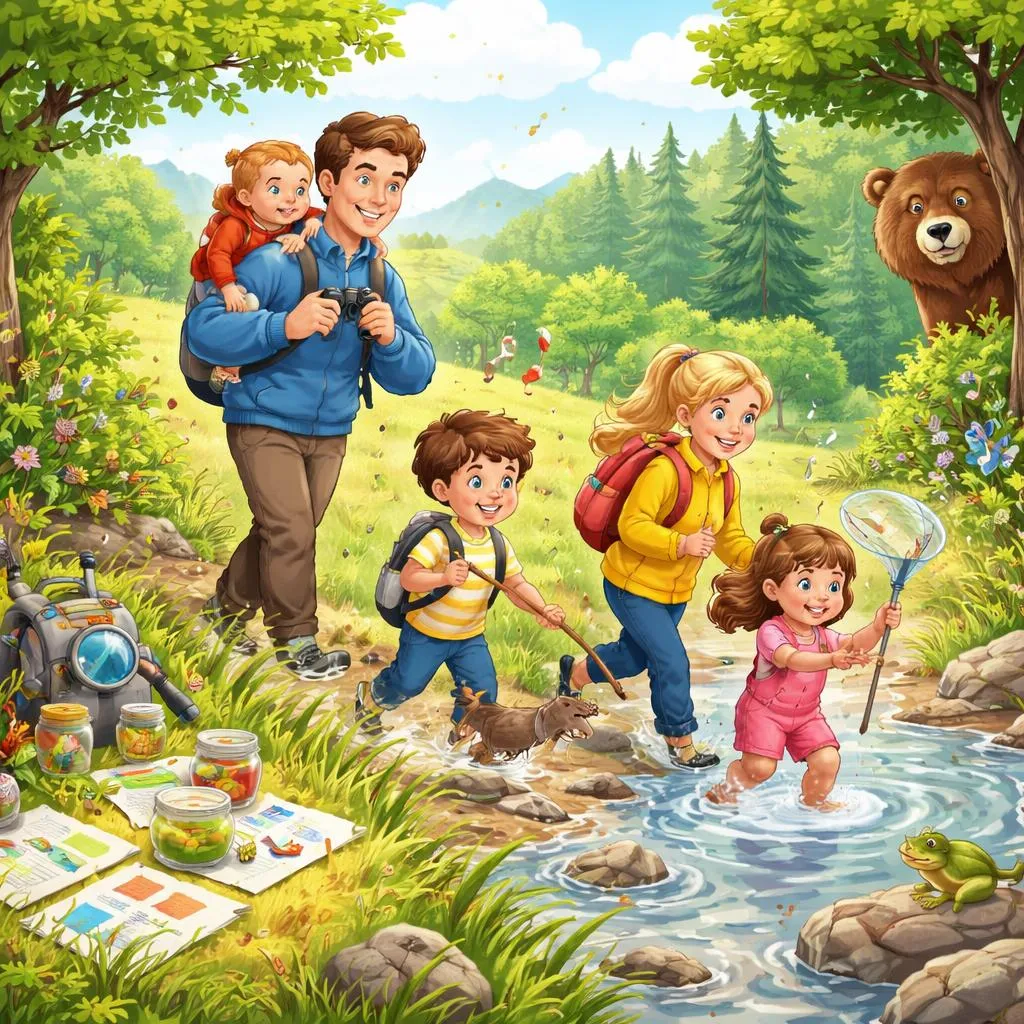
Let's embark on an adventure today. We are going on a bear hunt! This is not just a song; it's a beloved participatory story set to rhythm and movement. Based on Michael Rosen's wonderful book, "We're Going on a Bear Hunt," this musical narrative takes us on a journey. We encounter various obstacles like tall grass, a deep river, and thick mud.
The magic of the Going on a Bear Hunt song lies in its call-and-response structure and repetitive phrases. It invites everyone to join in, using their voices and bodies to act out the story. It transforms listening into a whole-body experience. This makes it a perfect tool for engaging young learners, building sequence memory, and exploring language in a joyful, dynamic way.
The lyrics of the story
The lyrics follow a predictable and cumulative pattern, which is key to its learning power. The adventure begins with the cheerful declaration: "We're going on a bear hunt. We're going to catch a big one. What a beautiful day! We're not scared." Then, we meet each obstacle.
For example: "Oh no! Long, wavy grass!" The group responds: "We can't go over it. We can't go under it. Oh no! We've got to go through it!" Then, we make the sound effects: "Swishy swashy! Swishy swashy! Swishy swashy!" This pattern repeats for the river ("Splash splosh!"), the mud ("Squelch squerch!"), the forest ("Stumble trip!"), and the snowstorm ("Hooo wooo!"). The climax in the cave leads to a swift, funny retreat back through all the obstacles. This structure makes the Going on a Bear Hunt song easy to learn and incredibly satisfying to perform.
Vocabulary learning
This story is a treasure chest of rich, descriptive vocabulary. We encounter specific nouns for landscapes and weather: grass, river, mud, forest, snowstorm, cave. These are great for expanding thematic word banks. More importantly, we learn fantastic sound words (onomatopoeia) that describe actions: swishy swashy, splash splosh, squelch squerch.
These words are fun to say and they vividly connect sound to meaning. We also use strong action verbs: go over, go under, go through, stumble, trip, tiptoe. Acting these out physically cements their meaning. The repetitive nature of the Going on a Bear Hunt song ensures these words are practiced multiple times in a meaningful context, making them memorable.
Phonics points
The Going on a Bear Hunt song offers brilliant, natural phonics practice. The sound-effect words are perfect for focusing on consonant blends and digraphs. Let's listen to the sounds. We have the "sw" blend in swishy swashy, the "spl" blend in splash splosh, and the "squ" blend in squelch squerch.
We can also highlight the "sh" digraph in swishy and squishy. The "oo" vowel sound appears in go through and the wind sound "Hooo wooo!". Clapping the syllables in longer words like beautiful or snowstorm helps develop phonological awareness. By emphasizing these sounds as we chant, we turn a fun performance into an effective phonics lesson.
Grammar patterns
This story beautifully illustrates several useful grammar patterns through repetition. The most prominent is the present continuous tense used for describing an ongoing action: "We are going on a bear hunt." "We are going through the grass." This tense is central to the narrative and is practiced throughout.
We also see the model verb "can" for ability in the repeated structure: "We can't go over it. We can't go under it. We have got to go through it." This introduces a common way to express necessity. Furthermore, the story uses imperative sentences during the retreat: "Back through the forest! Back through the mud!" These patterns are absorbed naturally through the rhythmic storytelling of the Going on a Bear Hunt song.
Learning activities
The learning extends far beyond singing. A fantastic follow-up activity is "Story Mapping." After learning the song, draw a large map of the journey. Learners can illustrate each obstacle (grass, river, mud, etc.) in sequence and place them along a path. This visual representation strengthens comprehension and sequencing skills.
Another engaging task is "Obstacle Course Drama." Create a physical obstacle course in the room using pillows (snowstorm), a blue blanket (river), and a cardboard box (cave). As you recite the Going on a Bear Hunt song, learners physically navigate the course, acting out each "swishy swashy" and "splash splosh." This kinesthetic activity connects language, imagination, and movement perfectly.
Printable materials
Printable resources can solidify these concepts. Create a "Story Sequencing Sheet." This printable has six boxes in a row. Learners cut out pictures of the grass, river, mud, forest, snowstorm, and cave. They then glue them in the correct order as they appear in the Going on a Bear Hunt song. This builds narrative skills.
A "Sound Words Matching Worksheet" is also very effective. On one side, list the obstacles: "long grass," "deep river," "thick mud." On the other side, list the sound words: "swishy swashy," "splash splosh," "squelch squerch." Draw lines to match each obstacle with its corresponding sound. This focuses on that rich onomatopoeic vocabulary.
Educational games
Let's turn this into playful practice with games. Play "Bear Hunt Charades." Write the key actions and obstacles from the song on cards (e.g., "swim through the river," "tiptoe in the cave"). A learner picks a card and acts it out silently while the others guess. This tests vocabulary recall and comprehension.
For a listening and memory game, try "What Comes Next?" Sit in a circle. Start telling the story: "We're going on a bear hunt... We see long, wavy grass!" The next person must state the correct response: "We can't go over it..." and add the next obstacle. Continue around the circle, building the story sequence together. If someone gets stuck, the group can help with the lyrics from the Going on a Bear Hunt song. This collaborative game builds confidence and collective recall.
The power of the Going on a Bear Hunt song is its ability to make language learning an unforgettable adventure. By combining music, movement, storytelling, and targeted activities, we engage multiple senses and learning styles. Learners don't just memorize words; they experience them. They become part of the narrative, running from the bear with giggles and excitement, all while internalizing essential English sounds, words, and patterns. This joyful, shared experience is where deep and lasting learning truly begins.