
What is this topic about?
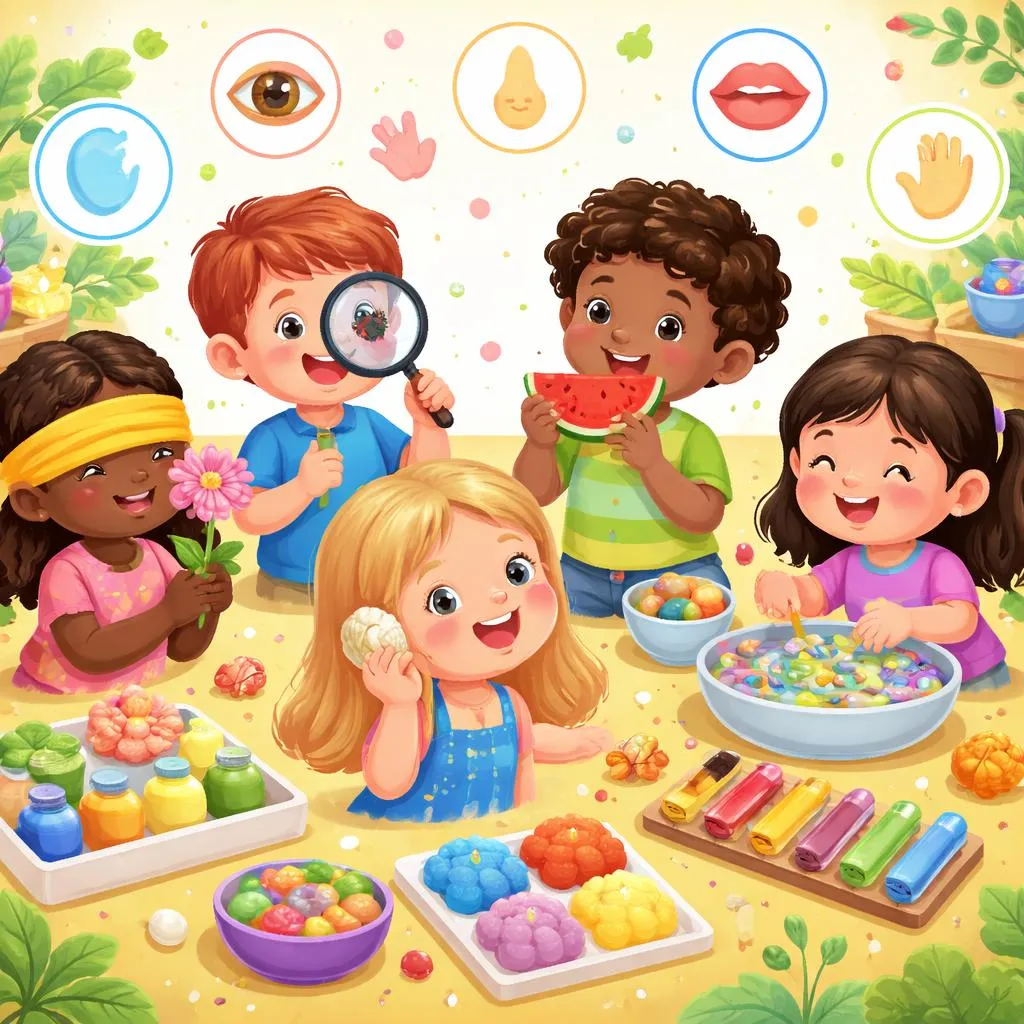
Let's start a wonderful adventure in discovery. The search for 5 senses activities for preschoolers focuses on playful, hands-on experiences. These activities help young children explore how they understand the world. They learn through their eyes, ears, nose, mouth, and hands.
This topic is about making science tangible and fun. We move beyond simple definitions. We create moments for direct sensory investigation. The right 5 senses activities for preschoolers build vocabulary, observation skills, and scientific curiosity. They turn everyday moments into exciting learning opportunities.
Meaning and explanation
Why do we design special 5 senses activities for preschoolers? Young children are natural explorers. They learn best by doing, touching, and experiencing. Structured sensory activities channel this natural curiosity. They help children focus on one sense at a time. This builds mindful awareness of their own bodies and the environment.
These activities explain that each sense has a job. Our eyes see colors and shapes. Our ears hear loud and soft sounds. Our nose smells good and bad scents. Our tongue tastes different flavors. Our skin feels textures and temperatures. 5 senses activities for preschoolers make these ideas real through play. They show how our senses work together to give us information.
Categories or lists
We can think about 5 senses activities for preschoolers in two helpful ways. First, by the specific sense we highlight. We have games for Sight like color hunts and shadow play. We have games for Hearing like sound matching and music painting. We have games for Smell like scent jars and smelly painting.
We have games for Taste like flavor sorting and sweet/sour tests. We have games for Touch like mystery bags and texture walks. Secondly, we can list them by the skills they build. Some activities focus on Sorting and Matching. Others encourage Description and Vocabulary. Some promote Creative Expression. A good mix keeps learning fresh and engaging for young minds.
Daily life examples
The best 5 senses activities for preschoolers connect to daily life. We can find examples all around us without special materials. During mealtime, we can talk about the colors on the plate (sight). We can listen to the crunch of a carrot (hearing). We can smell the warm soup (smell). We can taste the difference between yogurt and applesauce (taste). We can feel the smooth shell of a hard-boiled egg (touch).
A bath time becomes a sensory lab. Children can feel the water's temperature (touch). They can see the bubbles (sight). They can hear the splash (hearing). They can smell the soap (smell). Pointing out these moments teaches children that learning happens everywhere. It shows that their senses are always active, helping them understand their world.
Printable flashcards
Printable resources offer great visual support for 5 senses activities for preschoolers. Create simple, bold flashcards. Each card should feature one sense. Use a large, clear image like a big eye for "See" or a hand for "Touch."
On the back, include the sense name and two or three simple, familiar examples. For "Hear," you could have pictures of a bell, a drum, and a bird. Use these cards as prompts before an activity. Show the "Smell" card and say, "Today, we are going to use our noses like scientists!" They can also be used for sorting games, matching objects or pictures to the correct sense card.
Learning activities and games
Now, let's explore specific, tried-and-true 5 senses activities for preschoolers. These ideas are safe, simple, and use common materials. They are designed for active participation and joy.
For Sight, set up a "Light and Shadow Table." Drape a white sheet over a low table. Place a bright lamp underneath or to the side. Provide various translucent and opaque objects: colorful plastic cups, cardboard shapes, toy animals, lace doilies. Let preschoolers place items on the sheet and observe the shadows they create. They can explore how moving the object changes the shadow's size and shape.
A wonderful Hearing activity is "Sound Shakers." Provide empty, secure plastic bottles or containers. Offer different fillers like rice, dried beans, popcorn kernels, and jingle bells. Let children help fill two bottles with the same material. Once sealed with strong glue, they become maracas. Children can match the shakers by sound, create rhythms, or march in a parade. This connects sound creation to physical action.
For Smell, create "Scented Play Dough." Make a batch of homemade play dough and divide it. Into each portion, knead a different safe scent. Use a few drops of food extracts like peppermint, lemon, or vanilla. You can also use unsweetened drink mix powder for color and scent. As children squeeze and shape the dough, they will engage touch and smell together. Encourage them to describe the smells.
A safe and simple Taste activity is "The Apple Test." Provide slices of different apple varieties, like red delicious, granny smith, and fuji. Talk about how they look similar but might taste different. Have children taste each one. Ask simple questions: "Is it sweet?" "Is it sour?" "Is it crunchy?" This teaches comparison and introduces descriptive food words in a familiar context.
An excellent Touch game is the "Texture Board." Glue squares of different materials onto a large, sturdy board. Use sandpaper, felt, aluminum foil, bubble wrap, velvet, and a smooth plastic lid. Let children explore it with their fingers. Ask them to find the "bumpiest" square or the "softest" square. This activity builds texture vocabulary and refines tactile discrimination.
To combine the senses, try a "Popcorn Investigation." Before making popcorn, let children feel and hear the hard kernels. As it pops, listen to the sounds and smell the aroma. Once cooled, let them feel the light, fluffy texture. Finally, taste it! Guide the conversation with questions for each sense. This activity shows how one experience involves all five senses working together.
Another integrative activity is a "Sensory Walk" indoors. Create a path using different materials taped to the floor: a strip of fuzzy fabric, a tray of cool gel packs, a bubble wrap runway, a box of dry rice to step into. Children walk through barefoot or in socks, describing each sensation. This is a whole-body touch experience that also involves balance and movement.
Remember, the core of successful 5 senses activities for preschoolers is the conversation. Use rich descriptive language. Ask open-ended questions like "What does that remind you of?" or "How does that make your nose feel?" There are no wrong answers in sensory exploration. The goal is to foster curiosity, build neural connections, and develop the vocabulary to share their amazing discoveries with the world. Every day is full of sensory wonders waiting to be noticed, and with these activities, we give our youngest learners the joy of finding them.