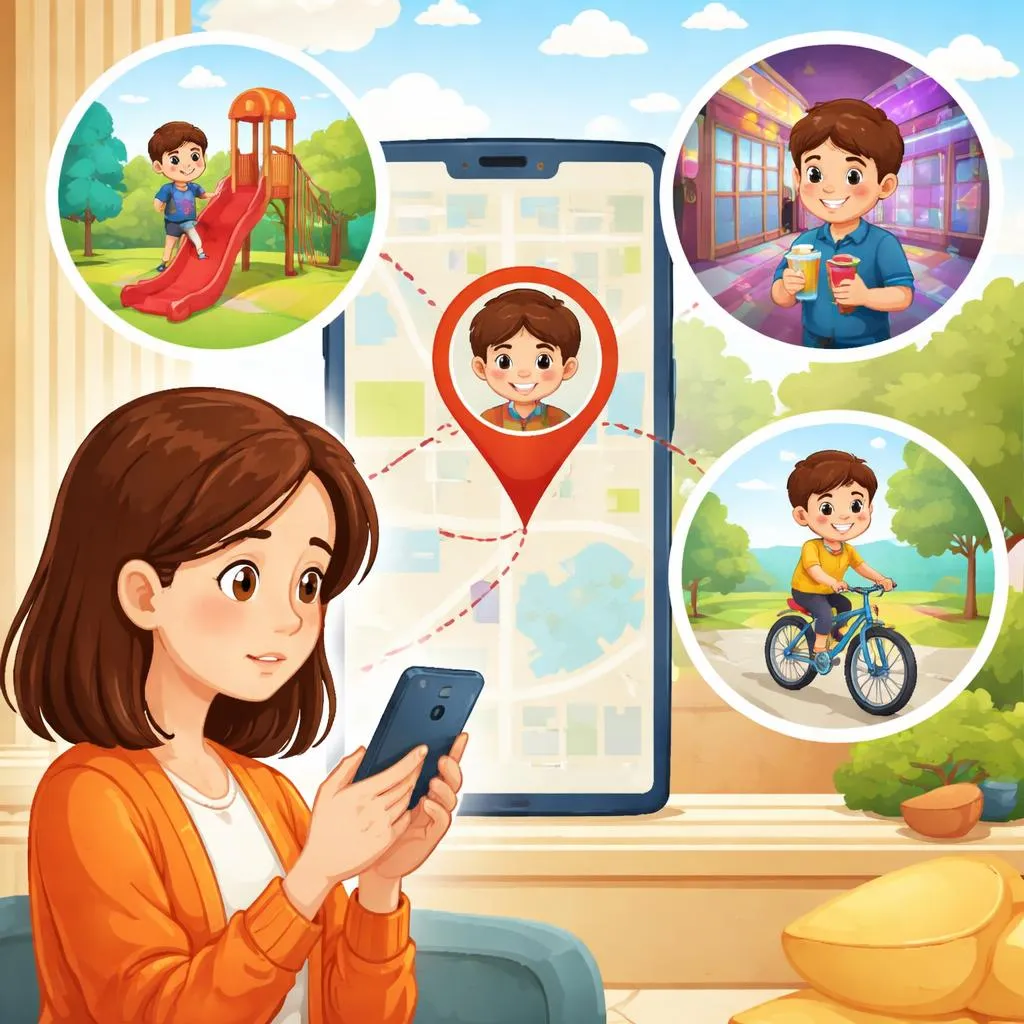

What Do These Expressions Mean? “Where are you?” and “what's your location?” both ask for a place. They seek to know where someone is right now. Parents ask these questions to find their children. Both phrases request position information.
“Where are you?” means tell me the place you are in. It is simple and everyday language. A parent calls it out in a supermarket. It works for close and far distances.
“What's your location?” means give me your specific position. It sounds more technical and precise. A person asks it on a phone call or GPS device. It focuses on coordinates or addresses.
These expressions seem very similar. Both find a missing person. Both solve the problem of separation. But one feels warm while the other feels formal.
What's the Difference? One is casual. The other is technical. “Where are you?” fits family and friends. It uses basic words. It expects a simple answer like “in the kitchen.”
“What's your location?” fits maps and devices. It sounds like a dispatcher or an app. It expects a precise answer like “42 Main Street.” It feels less personal.
Think of a child hiding at home. A parent calls out “Where are you?” playfully. That is a game. “What's your location?” would sound strange during hide and seek.
One is more emotional. The other is more factual. “Where are you?” can show worry or love. “What's your location?” shows only a need for data. Children respond better to the first in most cases.
Also, “where are you?” works for any distance. Across the room or across the city. “What's your location?” usually means far away. Use the second only when you need an address.
When Do We Use Each One? Use “where are you?” for everyday finding. Use it at home, in stores, or at the park. Use it when you lose sight of a child briefly. It fits normal parenting moments.
Examples at home: “Where are you? It is time for dinner.” “Where are you hiding? I cannot see you.” “Where are you? Your shoes are by the door.”
Use “what's your location?” for emergencies or technology. Use it on a phone call when a child is lost. Use it with older children who have phones. It fits serious or GPS-related situations.
Examples for safety: “What's your location? Send it to me on the map.” “I am picking you up. What's your location right now?” “The coach needs your location. Text it to me.”
Most parents rarely say “what's your location.” It sounds too formal for daily life. Save it for when technology helps you. Day-to-day life needs “where are you?”
Example Sentences for Kids Where are you? “Where are you? I cannot find you in the store.” “Where are you sitting? Save me a seat.” “Where are you going after school? Tell me.”
What's your location? “What's your location? I will send a car.” “Open your map app. What's your location exactly?” “The museum guard asks for your location if you get lost.”
Notice “where are you?” sounds like a normal question. “What's your location?” sounds like a robot or a radio. Children hear the first every day. They hear the second in movies or safety drills.
Parents can teach both. But teach “where are you?” first and most. It builds natural English. Save the second for when precision matters.
Common Mistakes to Avoid Some parents use “what's your location?” too often. They think it sounds responsible. But it sounds cold to a child. Use warm words for warm relationships.
Another mistake: using “where are you?” for GPS directions. If you need an exact street address, ask differently. Say “what is the address?” not “what's your location?” That is clearer.
Wrong: “What's your location?” during hide and seek. Right: “Where are you? I give up!”
Some adults forget to add politeness. Both questions can sound demanding. Add “please” or “can you tell me.” That softens the request.
Wrong: “Where are you?” (sharp voice) Right: “Can you tell me where you are, please?”
Also avoid asking “where are you?” when you see the child. That confuses them. Only ask when you truly do not know. Trust grows from honest questions.
Easy Memory Tips Think of “where are you?” as a friendly wave. You wave across a playground. You smile while you ask. It feels like playing.
Think of “what's your location?” as a phone screen. The screen shows a dot on a map. It has numbers and streets. It feels like technology.
Another trick: remember the words. “Where” asks for a description. “Location” asks for data. Description uses words like “behind the couch.” Data uses numbers like “123 Maple Street.”
Parents can say: “Where for close. Location for far.” That means use “where are you?” at home or the store. Use “what's your location?” for phone calls far away.
Practice with a map at home. Point to a room and ask “where are you?” Point to a city and ask “what's your location?” The difference becomes clear.
Quick Practice Time Let us try a small exercise. Choose the better phrase for each situation.
You are in a grocery store. You turn around and cannot see your child. a) “What's your location?” b) “Where are you? Come here please.”
Your teenager has a phone. They are walking home from a friend's house. a) “Where are you on the street?” b) “What's your location? Text it to me.”
Answers: 1 – b. A store needs a warm, quick question. 2 – b. A phone call with a teen can use the precise phrase.
Fill in the blank: “During a game of hide and seek, I ask my friend ______.” (“Where are you?” is the natural choice here.)
One more: “When I call my mom from the school bus, she asks ______ so she can pick me up.” (“What's your location?” works if she uses GPS.)
Neither question is wrong. But one builds connection. The other shares data. Choose based on your goal.
Wrap-up “Where are you?” asks for a place warmly. “What's your location?” asks for precise data. Use “where are you?” for daily life. Use “what's your location?” for phones and maps. Both keep children safe. Warm words build trust alongside safety.