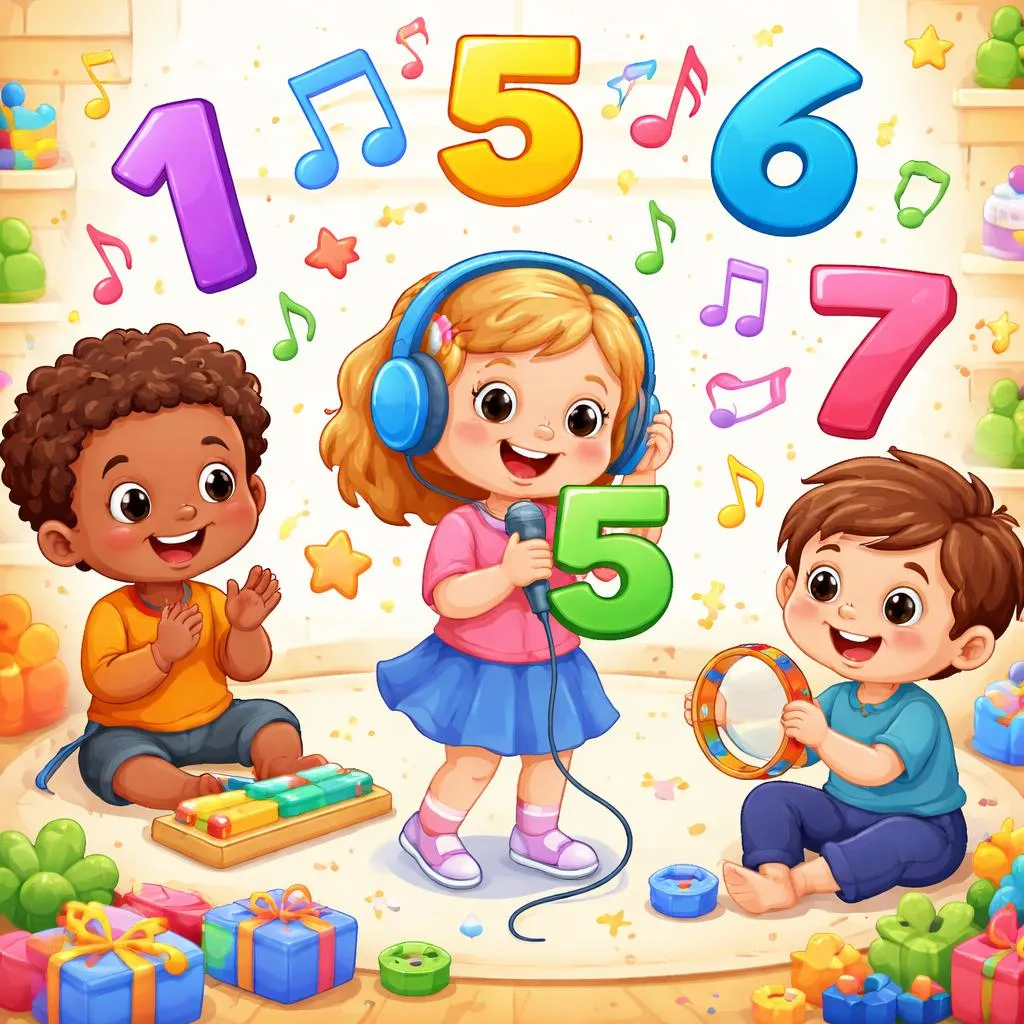

What Is The Rhyme? Many classic nursery rhymes focus on numbers learning for kids. Songs like "Five Little Ducks" or "Ten in the Bed" are perfect examples. These are not just songs. They are structured stories that count up or down. The melody is repetitive and catchy. The lyrics are simple and predictable. A typical counting song starts with a number. "Five little ducks went out one day." Each verse then reduces the number. This musical approach to numbers learning for kids makes abstract concepts concrete. It connects words, sounds, and sequences in a joyful, memorable way.
The Lyrics of Nursery Rhymes The lyrics of nursery rhymes for counting are brilliantly simple. They often follow a clear, repetitive pattern. Let's look at "Five Little Monkeys": "Five little monkeys jumping on the bed. One fell off and bumped his head." The next verse changes to "Four little monkeys..." The numbers are the core variable. Other rhymes, like "One, Two, Buckle My Shoe," list numbers in order with associated actions. The lyrics pair each number with a clear image or action. This dual-coding helps memory. The rhythm of the lyrics also provides a natural cadence for counting.
Vocabulary Learning The primary vocabulary is, of course, the number words themselves: one, two, three, four, five, six, seven, eight, nine, ten. We can expand this list to eleven, twelve, thirteen, up to twenty. Beyond the numbers, these songs teach related nouns and verbs. From "Five Little Ducks," we learn ducks, pond, hill, mother, quack. From "Ten in the Bed," we learn bed, roll over, goodnight. We can group number words with quantifiers: all, some, many, few, more, less. This builds a foundational vocabulary set for early math and description in English.
Phonics Points Number names are excellent for phonics. We focus on beginning sounds. The /w/ sound in one. The /t/ sound in two, three, ten. The /f/ sound in four, five. We practice the "th" digraph in three. We can also notice tricky silent letters, like the 'g' in eight. Many number words rhyme, which is great for phonemic awareness. Four and more. Six and sticks. Eight and straight. Clapping the syllables in longer number words like seven (sev-en) or eleven (e-lev-en) helps with pronunciation and breaking down words.
Grammar Patterns Counting songs introduce key grammatical structures. They model singular and plural nouns. "One duck" vs. "Five ducks." They use the simple past tense to tell a mini-story. "One fell off." "Mother duck said." They often include imperative sentences or requests. "Buckle my shoe." "Shut the door." They also introduce sequence words. First, then, next, after that. Furthermore, they provide a natural context for "There is/There are." "There were five in the bed." These patterns are absorbed naturally through repetition and song.
Learning Activities Active numbers learning for kids is the most effective. A fantastic activity is "Count and Move." Call out a number. Children perform an action that many times. "Jump three times." "Clap five times." Another is "Number Story Creation." Use props like stuffed animals. Act out a song, then change the story. "Six little teddy bears having tea..." Also, "Number Hunt" works well. Hide cards with numerals and dots around the room. Children find them and put them in order, saying each number name aloud.
Printable Materials Printable resources support visual and tactile learning. Create "Number Line" posters with numerals, words, and corresponding pictures (e.g., "3" next to three apples). "Counting Mats" are useful. A mat might have a pond picture. Children place the correct number of duck cut-outs on it. Design "Flip Books" for a song like "Five Little Pumpkins." Each page shows one less pumpkin, with the lyric line below. "Dot-to-Dot" worksheets that form a picture when numbers are connected in sequence are also excellent for number recognition.
Educational Games Games make practice joyful. "Musical Numbers" is fun. Place number cards in a circle. When the music stops, each child picks up a card and says the number. "Number Bingo" is a classic. Use cards with numerals or number words. The caller shows a quantity (e.g., holds up four fingers). "Roll and Count" uses a die. Children roll, identify the number, and then count out that many objects from a pile. For a tech option, use a simple drawing app to have children trace numerals with their finger while saying the word.
The journey of numbers learning for kids is about building a strong, confident foundation. It blends math readiness with crucial English language skills. The songs provide the joyful, repetitive core that makes numbers memorable. The associated activities and games build understanding from multiple angles—visual, auditory, physical, and social. This multi-sensory approach ensures that number words become more than a memorized sequence. They become tools for describing the world, telling stories, and solving problems. By integrating numbers into play, music, and daily routines, we help children own these words, setting the stage for a lifetime of confident learning in both math and English.