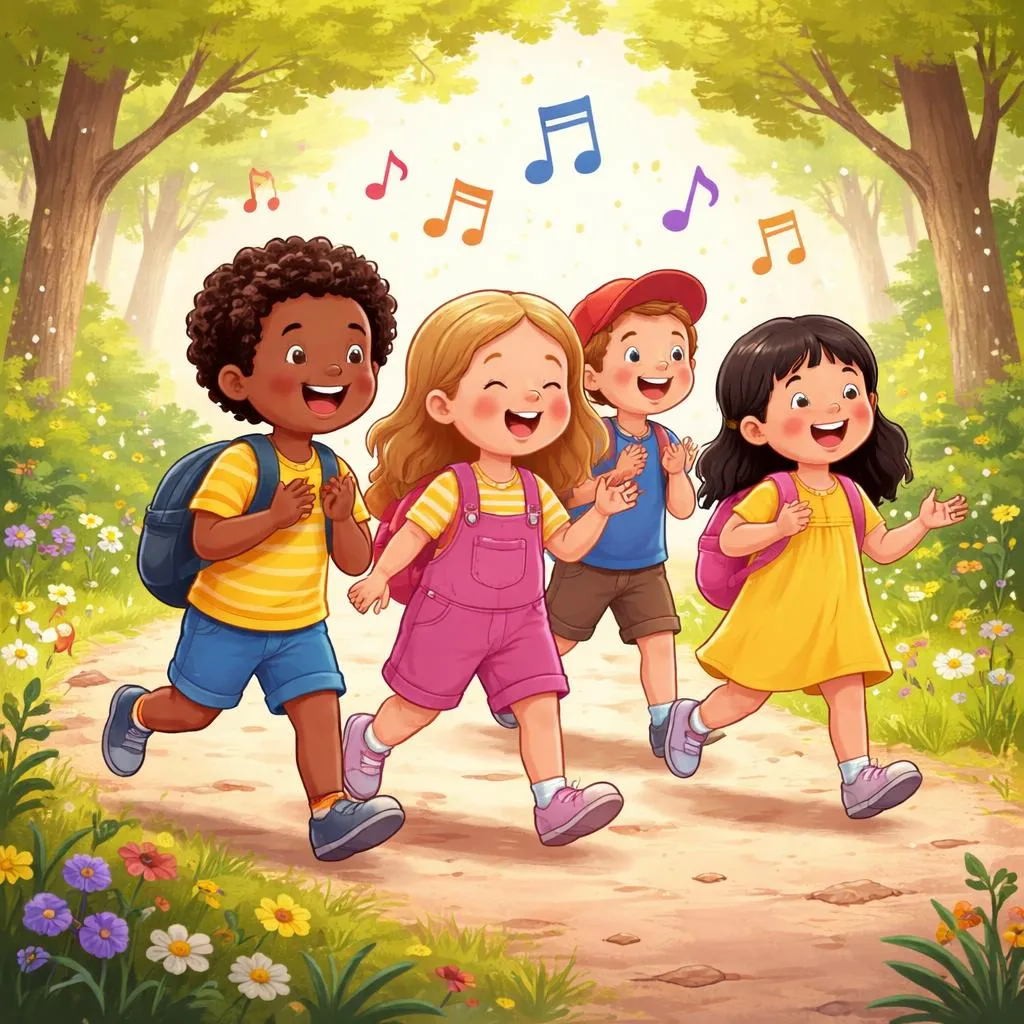

Movement songs are essential tools in early childhood education. They combine language learning with physical activity. Children remember words better when they connect them to actions. Today, we are going to explore different walking song lyrics that get children moving while building vocabulary, rhythm, and coordination.
What Is a Walking Song? A walking song is a type of action rhyme or song. Children sing it while walking or marching. The lyrics often tell them what to do. Walk fast, walk slow, walk on tiptoes, or stomp like giants. The music matches the action.
Walking songs serve many purposes in the classroom. They help transition children from one activity to another. They release energy during indoor days. They teach following directions. They build gross motor skills. They create community through shared movement.
The best walking songs have simple, repetitive lyrics. Children learn them quickly. They can focus on the movement instead of struggling with words. The repetition also builds confidence and language skills.
The Lyrics of Walking Songs Let us look at some classic walking song lyrics that work well with young children.
Walking, Walking: Walking, walking, walking, walking, Hop, hop, hop, hop, hop, hop, Running, running, running, running, running, running, Now we stop, now we stop.
This simple song uses a familiar tune. Children walk in place during the first line. They hop during the second. They run in place during the third. They freeze on "now we stop." The pattern repeats with different actions like tiptoe, jump, and march.
We Are Walking: We are walking, we are walking, Through the room, through the room, We are walking slowly, we are walking slowly, Now we stop, now we stop.
This version teaches the concept of tempo. Sing it slowly for walking slowly. Sing it faster for walking quickly. Children match their pace to the music.
The Ants Go Marching: The ants go marching one by one, hurrah, hurrah, The ants go marching one by one, hurrah, hurrah, The ants go marching one by one, The little one stops to suck his thumb, And they all go marching down to the ground To get out of the rain, BOOM, BOOM, BOOM!
This classic song continues through ten verses. Each verse introduces a new number and a new action. Children march in a line while singing. The "boom, boom, boom" at the end adds excitement.
Vocabulary Learning from Walking Songs Walking songs introduce important vocabulary through natural repetition. Children learn these words without formal instruction.
Action Words: Walking, marching, hopping, running, tiptoeing, stomping, skipping, galloping, creeping, and stopping appear in different songs. Children learn to distinguish between these movements.
Tempo Words: Slowly, quickly, fast, slow, hurry, and pause teach about speed. Children experience these concepts through their bodies, making the learning concrete.
Direction Words: Forward, backward, around, through, over, and under appear in some walking songs. Children move according to these words, building spatial awareness.
Number Words: Songs like "The Ants Go Marching" teach number words in sequence. One by one, two by two, three by three build counting skills along with movement.
Phonics Points in Walking Songs Walking songs provide excellent opportunities for phonics practice. The repetitive nature helps children focus on specific sounds.
The /w/ sound appears in "walking." Children can feel their lips round as they make the sound. Practice stretching it: "wwwwalking."
The /h/ sound appears in "hop" and "hurrah." This is a breath sound. Children put their hands in front of their mouths and feel the air.
The /r/ sound appears in "running" and "around." This sound can be tricky. Practice it slowly: "rrrrunning."
The /st/ blend appears in "stop" and "stomp." Children practice putting the two sounds together smoothly.
Grammar Patterns in Walking Songs Walking songs contain simple grammar structures that children absorb naturally.
Present Continuous Tense: "We are walking" teaches the present continuous form. Children learn to describe actions happening now. This appears throughout the songs.
Imperative Form: "Walk slowly" gives a command. Children learn to understand and follow instructions. They also learn to give commands when they lead the song.
Prepositional Phrases: "Through the room" and "down to the ground" teach prepositions of movement. Children experience these concepts physically.
Number Sequences: "One by one, two by two" teaches number order and the concept of sequence. Children learn that things happen in a specific order.
Learning Activities with Walking Songs Walking songs can be the center of many engaging activities. Here are some ways to extend the learning.
Follow the Leader: One child leads while singing a walking song. The leader chooses the movements. Walk fast, walk slow, hop, or tiptoe. The others follow and sing along. This builds leadership skills and creativity.
Obstacle Course: Set up a simple obstacle course with chairs, cushions, and tape lines. Sing a walking song while children navigate the course. They walk around chairs, over cushions, and along lines. This adds challenge to the movement.
Tempo Game: Sing a walking song at different speeds. Use a drum or tambourine to set the pace. Children match their walking speed to the drum. Fast drum means fast walking. Slow drum means slow walking. This builds listening and coordination.
Animal Walk: Adapt walking songs to include animal movements. "We are walking like elephants, slow and heavy. We are walking like rabbits, quick and light." Children love pretending to be animals.
Stop and Go Signs: Create red and green signs like traffic lights. Hold up green for walking, red for stopping. Sing the walking song while children watch for the signs. This builds attention and impulse control.
Printable Materials for Walking Songs Printable resources can enhance the walking song experience. Here are some materials to create.
Song Lyric Posters: Create large posters with walking song lyrics. Add simple pictures next to key words. A foot next to "walking." A stop sign next to "stop." Display these during song time for early literacy connections.
Movement Cards: Create cards showing different movements. A picture of someone walking, someone hopping, someone running. Hold up cards during the song to show which action comes next. This builds reading readiness.
Animal Movement Cards: Create cards with animals and how they move. Elephant for slow, heavy steps. Rabbit for quick hops. Snake for slithering on the floor. Children choose cards and move accordingly.
Walking Song Mini-Books: Create simple foldable books with the song lyrics and pictures. Children can "read" their books at home. This builds pride and extends learning beyond the classroom.
Educational Games with Walking Songs Games make walking songs even more engaging. Here are some games to try.
Freeze Dance Walking: Play a walking song. Children walk around the room. When the music stops, they freeze in place. When the music starts, they walk again. This builds listening and self-control.
Musical Squares: Place carpet squares or hoops on the floor, one fewer than the number of children. Children walk around singing. When the song stops, they must find a square to stand on. One child will be out each round. This adds excitement to the walking.
Follow the Path: Create a path on the floor with tape or string. Children walk along the path while singing. They must stay on the path. This builds balance and concentration.
Copy Cat Walk: One child leads with a unique way of walking. The others follow and copy. Then a new leader shows a different walk. This builds creativity and observation.
Connecting Walking Songs to Stories Walking songs connect beautifully to children's literature. Many books feature walking or marching themes.
"We're Going on a Bear Hunt" by Michael Rosen is perfect. The family walks through different environments. The repetitive text matches the feel of a walking song. Children can act out the story while chanting.
"From Head to Toe" by Eric Carle features animals doing different movements. Children can walk like each animal while reading. This connects the book to physical activity.
After reading, children can create their own walking stories. Where will they walk? What will they see? How will they move? This builds creativity and language skills.
Using Walking Songs for Transitions Walking songs are excellent for classroom management. They help children move smoothly between activities.
Before lining up, sing a walking song. Children walk to the door in an orderly way. The song keeps them focused and prevents chaos.
During cleanup, sing a walking song about putting things away. Children walk to different areas collecting items. The song makes cleanup feel like play.
When returning from the playground, sing a quiet walking song. Children walk calmly back to the classroom. The song helps them transition from active play to calm learning.
Creating Original Walking Songs Children love creating their own walking songs. This builds creativity and ownership.
Start with a familiar tune like "Row, Row, Row Your Boat." Brainstorm movement words together. Walk, walk, walk your feet. Stomp, stomp, stomp your feet. Tip, tip, tiptoe now.
Write the new lyrics on chart paper. Children illustrate them. Sing the new song together. The class feels proud of their creation.
Children can also create movements for their original songs. They become choreographers and leaders. This builds confidence and creativity.
As we explore walking song lyrics with young children, we see how much one simple activity can offer. Children build language skills through repetition and rhyme. They develop gross motor skills through movement. They learn to follow directions and work together. They experience the joy of music and motion combined. These walking songs, simple as they seem, create foundations for learning that will last throughout their school years.