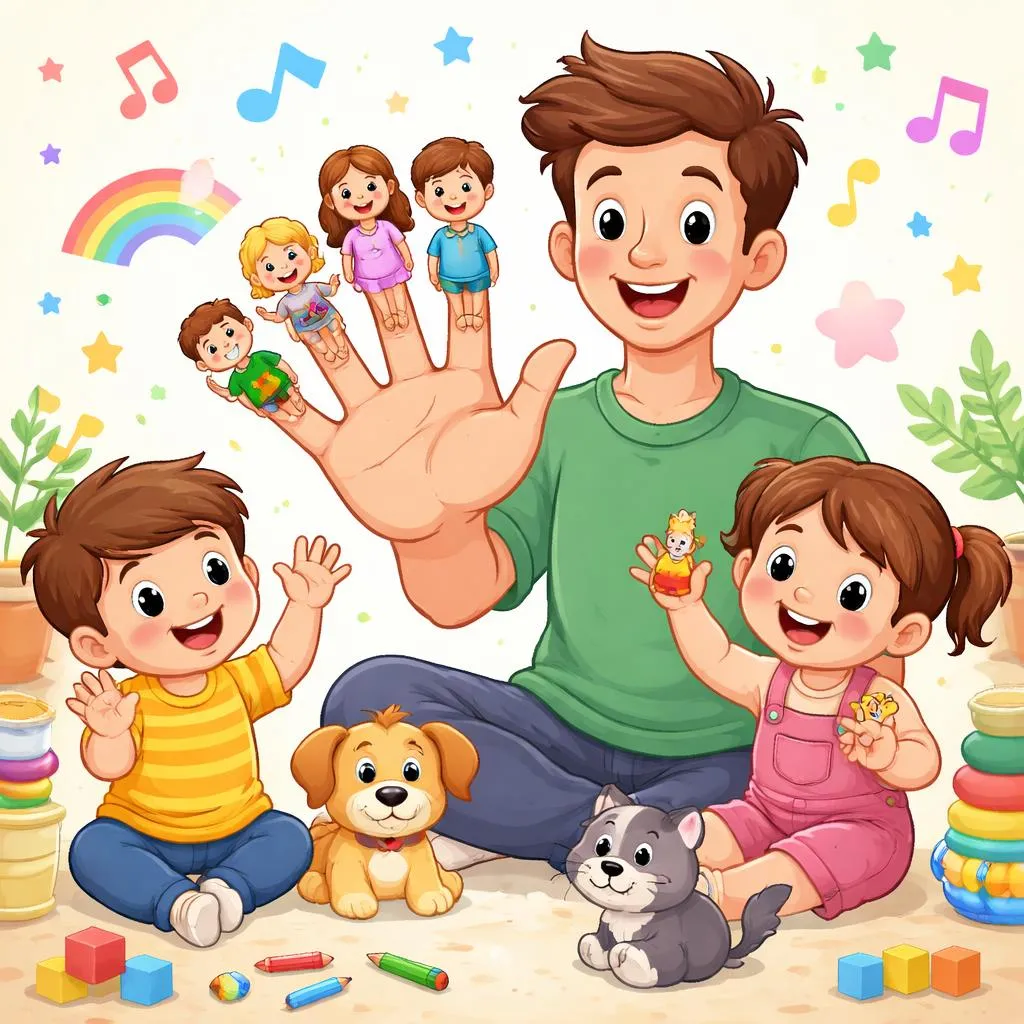

The Finger Family song is one of the most beloved nursery rhymes in early childhood education. Children around the world know and love this simple tune. Today, we are going to focus specifically on the finger daddy finger verse and explore how this song can teach language, family concepts, and fine motor skills to young learners.
What Is the Finger Daddy Finger Song? The Finger Daddy Finger song is part of the larger Finger Family rhyme. This song features each finger on a hand representing a different family member. Daddy finger is usually the thumb, the strongest and biggest finger on the hand.
The song follows a simple question and answer pattern. Daddy finger asks where everyone is. Then each finger responds with "Here I am" when called. This playful hide-and-seek concept delights young children and keeps them engaged.
The melody is gentle and easy to learn. Children can sing along after hearing it just a few times. The repetitive structure builds confidence. Even children with limited English can join in on the "Here I am" part.
The Lyrics of Finger Daddy Finger Let us look closely at the finger daddy finger lyrics. Here is the standard version we use in most classrooms:
Daddy finger, daddy finger, where are you? Here I am, here I am. How do you do?
That is the complete verse for daddy finger. In the full song, we sing the same pattern for each family member. We have daddy finger, mommy finger, brother finger, sister finger, and baby finger.
The lyrics are simple but rich with meaning. They contain a question, an answer, and a greeting. In just two lines, children encounter several important language structures. This efficiency makes the song perfect for young learners.
Vocabulary Learning from Finger Daddy Finger The finger daddy finger lyrics introduce several important vocabulary words. Let us look at what children can learn.
First, we have the family word "daddy." This is a term children know from their own lives. It connects the song to their personal experience. We can also teach variations like "father" or "dad" depending on what families use.
Second, we have the body part "finger." Children learn to identify this part of their hand. They learn that different fingers have different names. The thumb becomes "daddy finger" in this song.
Third, we have the question phrase "where are you?" This is a useful question for daily life. Children learn to ask about location. They learn to understand when someone asks where they are.
Fourth, we have the answer phrase "here I am." This is a natural response to the question. Children learn to announce their presence. They learn to respond when someone calls them.
Fifth, we have the greeting "how do you do?" This is a formal greeting, but it introduces the idea of polite language. We can explain it means "hello, nice to meet you."
Phonics Points in the Song We can use this song to practice specific sounds. The repetition helps children hear and produce these sounds correctly.
The /d/ sound appears in "daddy." This is a voiced sound made by tapping the tongue behind the teeth. Children can feel the vibration in their throat. We practice by stretching the sound: "ddddaddy."
The /f/ sound appears in "finger." This is a voiceless sound made with teeth on the bottom lip. Children can put their top teeth on their bottom lip and blow. We practice: "fffffinger."
The /w/ sound appears in "where." This requires rounded lips. We practice making a fish face. Then we add sound: "wwwwhere."
The /h/ sound appears in "here" and "how." This is a gentle breath sound. Children put their hands in front of their mouths and feel the air. We practice: "hhhhere, hhhhow."
Grammar Patterns in the Lyrics The finger daddy finger lyrics contain several important grammar patterns. Children absorb these through repetition without needing formal explanations.
The question form appears clearly. "Where are you?" follows the correct English question structure. Question word plus verb plus subject. Children hear this pattern and internalize it.
The present tense verb "are" appears in the question. This is the present tense of "to be" for "you." Children learn this form naturally.
The answer "Here I am" shows inverted word order for emphasis. Usually we say "I am here." In this answer, we put "here" first. Children learn that English can change word order for different effects.
The greeting "How do you do?" introduces another question pattern. It uses the auxiliary verb "do." This is a more advanced structure, but children can learn it as a fixed phrase first.
Learning Activities with Finger Daddy Finger The song can be the center of many engaging activities. Here are some ways to extend the learning.
Finger Puppet Making: Create simple finger puppets representing daddy. Use small paper strips. Draw a daddy face with a smile and maybe a mustache or glasses. Tape them into rings that fit on fingers. Children wear their daddy finger puppet and sing the song. They wiggle the puppet when it is time to say "Here I am."
Family Drawing: After learning the daddy finger verse, children draw a picture of their own daddy or father figure. They can add details about what their daddy likes to do. They can share their drawings with the class. This connects the song to their personal family.
Where Is Daddy? Game: One child closes their eyes. Another child hides a picture of a daddy somewhere in the room. The first child opens their eyes and looks for the picture. The class sings the daddy finger song slowly while they search. When the child gets close, we sing louder. This builds listening and searching skills.
Daddy Action Song: Add actions to the song. For "daddy finger," hold up the thumb. For "where are you," look around with a hand over the eyes. For "here I am," wiggle the thumb. For "how do you do," wave the thumb as if shaking hands. Actions make the song more engaging and memorable.
Printable Materials for Finger Daddy Finger Printable resources can enhance the learning experience. Here are some materials to create.
Daddy Finger Puppet Template: Create a template for finger puppets. Simple outlines of a daddy face that children can color and cut out. Add a strip to wrap around the finger. Children can make their own set at home.
Lyrics Poster: Create a colorful poster with the finger daddy finger lyrics. Add pictures next to key words. A picture of a daddy next to "daddy." A picture of a finger next to "finger." A question mark next to "where." Display this during song time for early literacy connections.
Coloring Page: Create a coloring page showing a hand with each finger labeled. The daddy finger (thumb) is highlighted. Children color the page while listening to the song. This reinforces the finger names and the family member connections.
Mini Book: Create a simple foldable book. Each page shows one family member. The daddy page has the lyrics. Children read their book with family at home. This builds pride and extends learning beyond the classroom.
Educational Games with the Song Games make learning playful and social. Here are some games using the daddy finger theme.
Daddy Finger Says: Play a version of Simon Says using the song. "Daddy finger says touch your nose. Daddy finger says stand up." If we do not say "Daddy finger says," children should not move. This builds listening and following directions.
Daddy Finger Hide and Seek: One child is "it" and closes their eyes. Another child hides a daddy finger puppet. The class sings the song softly while the child searches. As they get closer, we sing louder. As they move away, we sing softer. This teaches loud and soft concepts.
Daddy Finger Puppet Show: Children use their daddy finger puppets to put on a show. They can make their puppet talk to other puppets. They can use the song or make up new conversations. What would daddy finger say to baby finger? This builds language and creativity.
Find the Daddy: Place several finger puppets in a bag. Include daddy and other family members. Children reach in without looking and try to find the daddy puppet by feel. The thumb puppet feels different from the others. This builds tactile discrimination.
Connecting to Other Family Members Daddy finger is just one part of the Finger Family. After learning this verse, we can introduce the others.
Mommy finger is usually the index finger. It is the pointing finger. Brother finger is the middle finger, tall and strong. Sister finger is the ring finger, often decorated with rings. Baby finger is the smallest, the pinky.
We sing each verse with the same tune. Children quickly learn the pattern. They can sing the whole song independently. This builds confidence and a sense of accomplishment.
We can also extend to other family members children might have. Grandpa finger, grandma finger, aunt finger, uncle finger. Children love including their own family in the song.
Building a Classroom Routine The daddy finger song can become part of daily classroom routine. We might sing it during morning greeting when talking about families. We might use it when discussing different family structures.
We can sing it before art activities where children draw their families. We can sing it during transitions when children need to focus. The familiar tune provides comfort and predictability.
When new children join the class, the song welcomes them. They learn it quickly from their peers. It becomes part of the classroom culture, a shared experience that bonds the group.
Celebrating Families The daddy finger verse opens conversations about families. Every family is different and special. Some children live with their daddy. Some have two daddies. Some have a step-daddy. Some have a grandpa who is like a daddy.
The song gives us language to talk about these differences. We can ask children to tell us about the special people in their lives. Who takes care of them? Who plays with them? Who reads to them at night?
These conversations build respect for diversity. Children learn that families come in many forms. They learn to appreciate their own family and respect others' families.
As we explore the finger daddy finger lyrics with young learners, we see how much one small song can offer. It teaches vocabulary, grammar, and phonics. It connects children to their families and to each other. It brings joy to the classroom through music and play. These simple verses, sung with wiggling thumbs and smiling faces, create foundations for language learning and social understanding that will last a lifetime.