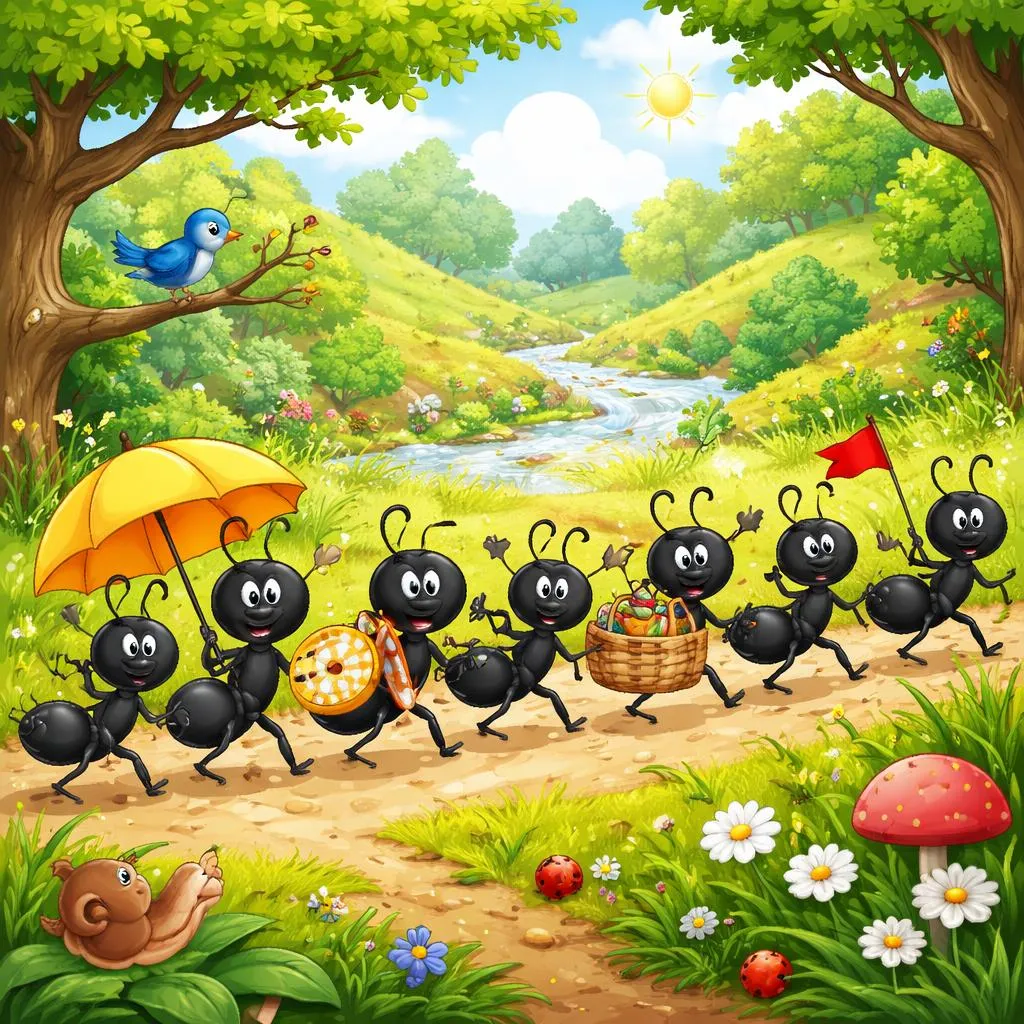

"The Ants Came Marching" is one of the most beloved children's songs of all time. Its catchy tune and cumulative structure make it a classroom favorite. Children love counting along and acting out the actions. Today, we are going to explore the the ants came marching lyrics and discover how this playful song teaches counting, rhyming, and sequencing to young learners.
What Is The Ants Came Marching Song? "The Ants Came Marching" is a traditional children's song that dates back to the early 20th century. It is also known as "The Ants Go Marching." The song tells the story of ants marching one by one into rain and out again.
The song has a cumulative structure. Each verse adds one more ant and a new action. The little ant stops to do something different each time. This pattern builds anticipation and helps children remember the sequence.
The song is perfect for teaching counting from one to ten. Each verse features a new number and a rhyming activity. Children love shouting out the "boom, boom, boom" at the end of each verse.
The Lyrics of The Ants Came Marching Let us look at the classic the ants came marching lyrics. Here is the standard version:
The ants came marching one by one, hurrah, hurrah. The ants came marching one by one, hurrah, hurrah. The ants came marching one by one, The little one stopped to suck his thumb, And they all went marching down to the ground To get out of the rain, boom, boom, boom!
The ants came marching two by two, hurrah, hurrah. The ants came marching two by two, hurrah, hurrah. The ants came marching two by two, The little one stopped to tie his shoe, And they all went marching down to the ground To get out of the rain, boom, boom, boom!
The pattern continues through ten:
Three by three - climb a tree Four by four - shut the door Five by five - take a dive Six by six - pick up sticks Seven by seven - pray to heaven Eight by eight - shut the gate Nine by nine - check the time Ten by ten - say "THE END"
Each verse follows the same pattern with a new number and a new rhyming action for the little ant.
Vocabulary Learning from the Song The the ants came marching lyrics introduce several important vocabulary categories.
Number Words: One, two, three, four, five, six, seven, eight, nine, ten. Children learn to count and recognize number words through repetition.
Action Words: Marching, stopped, suck, tie, climb, shut, take, pick, pray, check, say. These verbs describe what the ants do.
Rhyming Words: One/thumb, two/shoe, three/tree, four/door, five/dive, six/sticks, seven/heaven, eight/gate, nine/time, ten/end. These rhyming pairs build phonemic awareness.
Weather Words: Rain, ground, out. The song creates a simple weather story.
Sound Words: Hurrah, boom. These exclamations add excitement to the song.
Phonics Points in the Song We can use this song to practice specific sounds. The repetition helps children hear and produce these sounds correctly.
The /m/ sound appears in "marching." This nasal sound requires closed lips. Children practice by stretching: "mmmarching."
The /h/ sound appears in "hurrah." This is a gentle breath sound. Children put their hands in front of their mouths and feel the air.
The /b/ sound appears in "boom." This voiced sound requires lips together. Children feel the explosion of sound.
The rhyming words provide excellent phonics practice. One/thumb share the "um" sound. Two/shoe share the "oo" sound. Three/tree share the "ee" sound.
Grammar Patterns in the Lyrics The song contains several important grammar patterns that children absorb naturally.
Past Tense: "Came" and "stopped" are past tense verbs. Children learn to talk about completed actions.
Prepositional Phrases: "One by one," "down to the ground," "out of the rain" teach prepositions of sequence, movement, and location.
Cumulative Structure: Each verse builds on the previous pattern. This repetition builds confidence and language awareness.
Exclamations: "Hurrah, hurrah" and "boom, boom, boom" teach expressive language.
Number Agreement: "One by one" and "two by two" teach how we talk about groups and sequences.
Learning Activities with the Song The song can be the center of many engaging activities. Here are some ways to extend the learning.
Ant March: Children line up like marching ants. They march around the room while singing. For each verse, they march in groups of that number. Two by two, they find a partner. Three by three, they form trios.
Counting Fingers: Use fingers to show each number. One finger for one by one. Two fingers for two by two. Children hold up the correct number of fingers for each verse.
Action Verses: Add actions for each little ant's activity. Suck thumb, tie shoe, climb tree, shut door, take dive, pick up sticks, pray, shut gate, check time, say "THE END." Children do each action at the right time.
Ant Puppets: Create simple ant puppets on craft sticks. Children use them to act out the marching and stopping.
Rainstorm Sounds: Make rain sounds by patting legs and snapping fingers. At "boom, boom, boom," children stomp feet or clap hands.
Printable Materials for the Song Printable resources can enhance the learning experience. Here are some materials to create.
Number Cards: Create cards with numbers one through ten. Also create cards with the rhyming actions. Children match each number to its action. One matches with thumb, two with shoe, three with tree.
Ant Counting Page: Create a page with rows of ants. One row has one ant, next row has two ants, continuing to ten. Children count the ants in each row.
Lyrics Poster: Create a colorful poster with the the ants came marching lyrics. Add pictures next to key words. Ants marching, a thumb, a shoe, a tree.
Ant Masks: Create simple ant masks with antennae. Children wear them while singing and marching.
Mini Song Book: Create a simple foldable book with each verse on a page. Children can "read" their book at home.
Educational Games with the Song Games make the song even more engaging. Here are some games to try.
Ant March Freeze: Play the song. Children march like ants. When the music stops, they freeze in an ant pose. When the music starts, they march again.
Missing Number Game: Sing the song but leave out a number. Children guess which number is missing. This builds listening and number sense.
Ant Action Charades: One child acts out the little ant's action without speaking. Others guess what the ant is doing. Sucking thumb? Tying shoe? Climbing tree?
Number Order Line-Up: Give children cards with numbers one through ten. They line up in order. Then they march around the room in that order.
Ant Bingo: Create bingo cards with numbers or actions. Call out descriptions. "This little ant sucked his thumb." Children cover number one.
Counting Skills The song is perfect for developing counting skills. Children practice counting from one to ten in a fun, memorable way.
We can extend counting beyond the song. How many ants do we have in our classroom? How many legs does one ant have? How many legs do ten ants have?
We can use manipulatives like counters or ant toys. Children place them in groups as the song describes. One ant, two ants, three ants.
Rhyming Skills The rhyming pairs in the song build phonemic awareness. Children learn to hear and produce rhymes.
We can practice generating other rhymes for each number. One/sun/fun/run. Two/blue/true/shoe. Three/see/me/tree. Children create new verses with their own rhymes.
What else could the little ant stop to do? For one, stop to have some fun. For two, stop to tie her shoe. For three, stop to climb a tree.
Insect Learning The song naturally leads to learning about real ants. Children become curious about these fascinating insects.
Where do ants live? In underground colonies. What do ants eat? Many things, including crumbs and other insects. How do ants work together? They cooperate to carry food and build tunnels.
We can observe ants outdoors. We can read books about ants. We can create an ant farm in the classroom. This connects the song to science learning.
Teamwork Theme The song shows ants working together. They all march together. They all go down to get out of the rain. This teaches teamwork and cooperation.
We can talk about times we work together. Cleaning up, building with blocks, playing games. When we work together, we can do big things.
The little ant stops for different reasons, but the others keep marching. Then they all come together again. This shows that it is okay to be different but still be part of the group.
Creating New Verses Children love creating new verses for the song. This builds creativity and language skills.
What other numbers and rhymes can we create? Eleven/seven, twelve/shelf, thirteen/bean? We can go beyond ten for older children.
What other actions could the little ant do? Stop to smell a rose, stop to wiggle toes, stop to pick a leaf, stop to find relief.
Writing new verses together builds confidence. Children see that they can create with language.
The Ants Came Marching in Other Cultures The song exists in many cultures with local variations. In some versions, the ants are going to war. In others, they are going to a picnic.
We can share that children all over the world sing about ants. Ants are everywhere, and children everywhere notice them.
As we explore the the ants came marching lyrics with young children, we discover a song rich with learning potential. It teaches counting from one to ten through repetition. It builds phonemic awareness through rhyming pairs. It develops vocabulary through actions and descriptions. Most importantly, it brings joy through music and movement. Children march along, count along, and shout "boom, boom, boom" with delight. This classic song will continue to entertain and educate for generations to come.