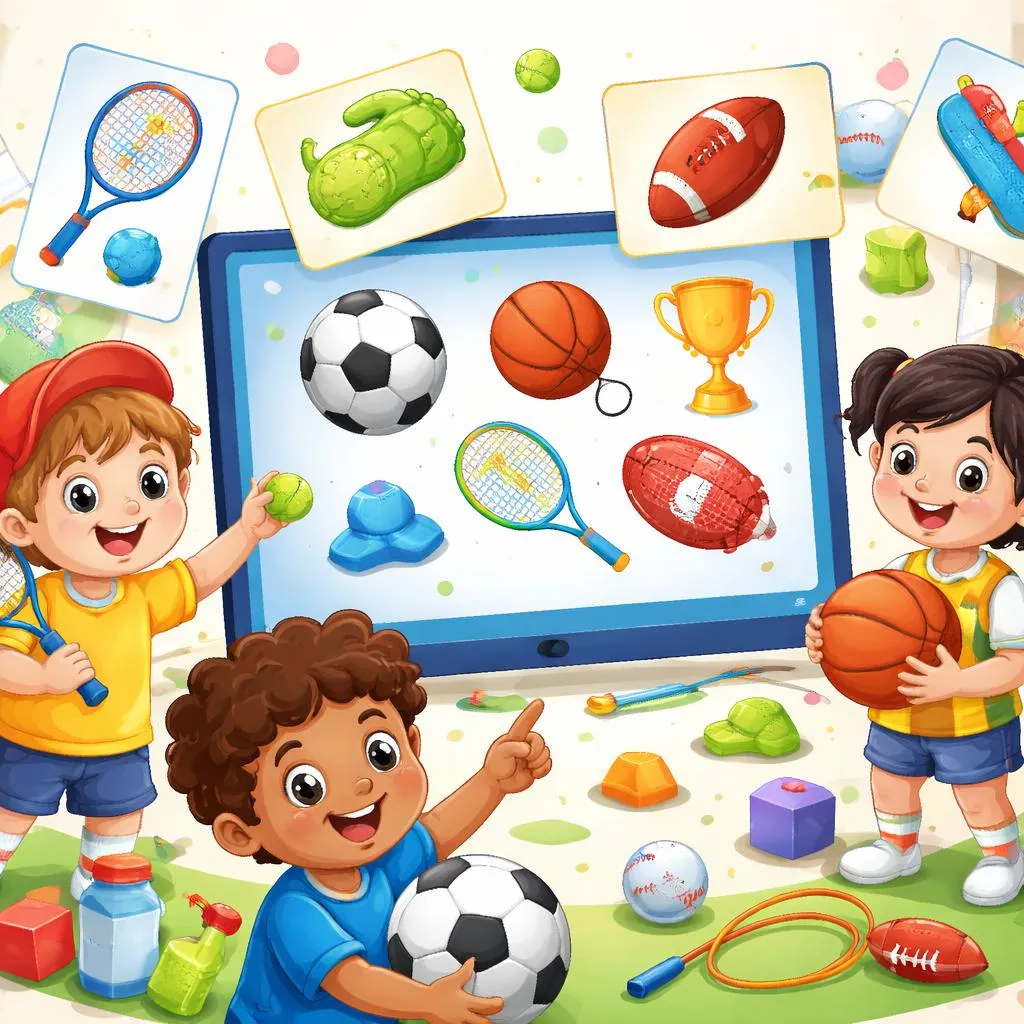

Learning a new language opens doors to exciting worlds. For young learners, connecting English with fun topics makes the process natural and enjoyable. Sports offer a perfect bridge. Children love movement and play. They understand games. They feel excitement about teams and competitions. Using a sport list to teach English taps into this existing passion. It turns vocabulary lessons into adventures.
This article guides you, as a parent or teacher, through using sports to build English skills. We will explore what sports vocabulary includes. We will look at different categories. We will see how these words fit into daily life. We will also share fun activities and printable tools. Let us lace up our learning shoes and begin!
What Is a Sport List in English Learning? A sport list is simply a collection of sports names. But in English teaching, it becomes much more. It is a themed vocabulary set. It groups words by a common topic. This helps children learn related words together. The brain remembers connected ideas better. When we teach "football," we can also teach "ball," "kick," and "goal." A sport list provides the core words. From there, we build sentences and stories.
Think of it as a menu. The sport list offers the main dishes. We then add sides of adjectives and verbs. We can describe the sport. We can talk about what players do. This approach makes learning organic. It does not feel like memorizing random words. It feels like exploring a favorite subject in a new language.
Meaning and Explanation of Sports Vocabulary Sports vocabulary covers many word types. It includes the names of the sports themselves. Words like soccer, swimming, and tennis. It also includes the equipment. Think of balls, rackets, bats, and goggles. Then we have the action verbs. Players run, jump, throw, and catch. We also have places. Games happen on a field, in a pool, or on a court.
Teaching this vocabulary means explaining these connections. When we introduce "basketball," we show a ball and a hoop. We demonstrate the action of "dribbling" and "shooting." We place the game on a "court." This multi-sensory approach works well. It links the word to an image, an action, and a place. The meaning becomes clear without direct translation. The child builds a full picture of the word in their mind.
Categories or Lists of Sports for Kids Organizing sports into groups helps learning. We can sort them in different ways. One simple method is by where we play them.
First, we have outdoor sports. These happen in open spaces. Examples include:
Soccer: We kick a ball on a grassy field.
Tennis: We hit a ball over a net with a racket.
Athletics: We run, jump, or throw on a track.
Next, we have indoor sports. These take place inside buildings.
Swimming: We race in a pool.
Basketball: We shoot a ball through a hoop on a court.
Gymnastics: We perform flips and balances in a gym.
We can also group sports by equipment.
Ball sports: Football, baseball, volleyball.
Water sports: Swimming, diving, surfing.
Winter sports: Ice skating, skiing, snowboarding.
These lists provide clear categories. They help children see patterns. They make the new vocabulary feel organized and manageable.
Daily Life Examples of Sports in Action Bringing sports vocabulary into daily conversation is key. We can talk about what we see. Perhaps a child has a physical education class today. We can ask, "What sport will you play in PE class today?" This connects the word to their immediate experience.
Maybe a family watches a game on television. This is a perfect moment. We can point and say, "Look, they are playing baseball. He is hitting the ball with a bat." We describe the action using the new words. After the game, we can talk about it. "Did you like watching the swimmers? They were very fast!"
Even playtime offers chances. If a child is running in the yard, we can say, "You are running fast, like an athlete!" If they throw a ball, we can say, "Good throw!" These simple comments weave English into their world. It shows them the language is alive and useful right now.
Printable Flashcards for Sports Vocabulary Flashcards remain a powerful learning tool. They are simple and effective. For sports, we can make cards with a picture on one side and the word on the other. The picture helps visual learners. Seeing the word reinforces reading skills.
You can create sets for different sport categories. Have a set for ball sports. Have another for water sports. Use them for simple games. Show the picture. Ask the child to say the word. Show the word. Ask them to act out the sport. These cards are portable. You can use them anywhere.
For younger children, use clear, bright images. A picture of a smiling child kicking a soccer ball works well. For older kids, you might use official sport logos or pictures of famous athletes. This adds another layer of interest. Making the cards together can also be a fun craft activity. Children can draw their own pictures and write the words themselves.
Learning Activities or Games with a Sport List Games make learning active and memorable. Here are some ideas using a sport list.
Charades: This is a classic. A child picks a sport from the list. They must act it out without speaking. Others guess the sport in English. "Is it swimming? Is it tennis?" This game gets everyone moving and speaking. It reinforces the connection between the word and the physical activity.
Matching Game: Create two sets of cards. One set has sport names. The other set has pictures or equipment. For example, the word "tennis" matches with a picture of a racket. The word "swimming" matches with goggles. Children lay the cards face down and take turns finding matches. This builds vocabulary recognition and memory skills.
"I Spy" with Sports: This works well anywhere. "I spy with my little eye, something you use to play baseball." The child looks for the bat or the ball. Or, "I spy a sport that uses a net and a small, white ball." They guess "tennis" or "badminton." This sharpens their listening and deduction skills while using the new words.
Draw and Tell: Ask a child to draw their favorite sport. After they finish, they describe the picture to you. They can say, "This is a soccer ball. This is the goal. The player is kicking the ball." This combines creativity with language production. It allows them to use the words in a personal and meaningful way.
These activities turn learning from a passive task into an active adventure. They use movement, sight, and creativity. This deepens understanding and makes the new words stick. The goal is always communication and fun. By using a simple sport list, we create countless opportunities for English to come alive. Children stop learning words and start playing with them. That is where real language growth happens.