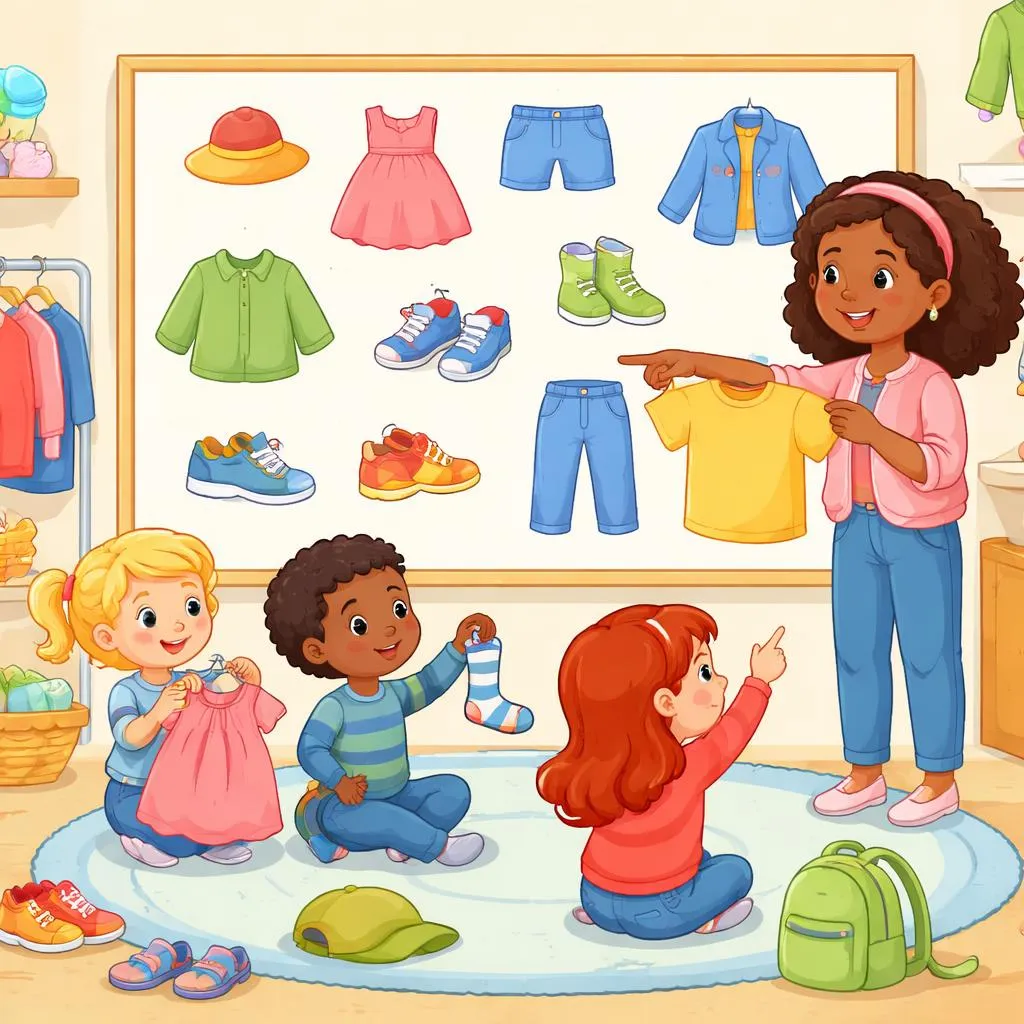

Clothing is a part of every child's daily life. They get dressed each morning. They put on shoes before playing outside. They wear special clothes for different weather. Teaching vocabulary about clothing connects language learning to these everyday experiences. Children can see the words in action. They can touch the items as they learn. As teachers, we can use songs, games, and real clothing to make this lesson engaging and memorable. Let's explore how to guide students through this essential vocabulary.
What Is Clothing Vocabulary? Clothing vocabulary includes all the words we use for items we wear on our bodies. This includes things we wear every day. It includes special clothes for different weather. It includes accessories like hats and gloves.
When we teach vocabulary about clothing, we start with the most common items.
Shirt: A piece of clothing for the upper body.
Pants: A piece of clothing for the lower body, covering each leg separately.
Socks: Clothing worn on the feet, inside shoes.
Shoes: Footwear that protects the feet.
Hat: Clothing worn on the head.
Jacket: A warm outer layer for the upper body.
Dress: A one-piece garment for women and girls.
Skirt: A garment that hangs from the waist.
Gloves: Clothing for the hands.
Scarf: A long piece of cloth worn around the neck for warmth.
These are the key clothing words that young learners can easily identify and name.
Meaning and Explanation: Why Do We Wear Different Clothes? After naming the clothing items, we explain why we wear them. This gives the vocabulary deeper meaning.
We point to each item and describe its purpose.
We wear shirts to cover our upper body. They keep us warm and look nice.
We wear pants to cover our legs. They protect us and help us move.
We wear socks to keep our feet warm and dry inside shoes.
We wear shoes to protect our feet when we walk outside.
We wear hats to keep our head warm or protect it from the sun.
We wear jackets when it is cold or rainy outside.
We wear dresses and skirts for many occasions, from play to parties.
We wear gloves to keep our hands warm in cold weather.
We wear scarves around our neck when it is windy and cold.
Understanding the purpose of each clothing item makes the words more meaningful. When we talk about vocabulary about clothing, we are not just naming. We are describing how clothes help us every day.
Categories or Lists: Types of Clothing We can group clothing in different ways to help with memory.
By Where We Wear Them:
Head: hat, cap, headband
Upper body: shirt, t-shirt, blouse, jacket, coat, sweater
Lower body: pants, jeans, shorts, skirt
Feet: socks, shoes, boots, sandals
Hands: gloves, mittens
Neck: scarf, necklace
By Weather or Season:
Summer: t-shirt, shorts, sandals, sun hat, swimsuit
Winter: coat, jacket, sweater, boots, gloves, scarf, hat
Rainy: raincoat, rain boots, umbrella
Sunny: sun hat, sunglasses
By Activity:
School: uniform, comfortable clothes
Play: play clothes, sneakers
Sleep: pajamas, nightgown
Sports: sports uniform, sneakers
Party: fancy dress, party shoes
By Who Wears Them:
Baby: onesie, bib, booties
Child: all the basic items
Adult: larger versions of the same items
These categories help students see relationships between different clothing words. It turns a simple list into an organized system for learning vocabulary about clothing.
Daily Life Examples: Talking About Clothes All Day We can point out clothing throughout the daily routine. This constant reinforcement helps the words stick.
During Morning Greeting: "Good morning! I see you are wearing a blue shirt today. Look at Sarah's new sneakers!"
During Getting Dressed Time: In programs where children change for outdoor play, we narrate the process. "First, we put on our jackets. Then we put on our hats. Now we need our gloves."
During Weather Discussions: "It is cold today. What should we wear?" Students suggest jackets, hats, and gloves. "It is sunny and hot. What should we wear?" Students suggest t-shirts and shorts.
During Story Time: "Look at the character in this book. What is she wearing? She has a red dress and yellow boots."
During Dress-Up Center: In dramatic play, children naturally use clothing vocabulary. We can introduce new words. "Would you like to wear the firefighter hat or the chef's apron?"
By weaving the vocabulary into everyday conversation, we make it natural. Students stop thinking of vocabulary about clothing as a lesson. It becomes part of normal language.
Printable Flashcards: Visual Tools for Learning Flashcards are essential for introducing and reviewing vocabulary about clothing.
Basic Clothing Cards: We create cards with clear pictures. One card shows a shirt. One card shows pants. One card shows a hat. On the back, we write the word. We use these for quick recognition games.
Weather Connection Cards: We create another set of cards showing weather. A sun, a snowflake, rain. Students match the clothing to the weather. "What do we wear when it snows?" They find the hat, gloves, and coat cards.
Color and Clothing Cards: We create cards that combine color words with clothing. A red shirt. Blue pants. Yellow hat. Students practice both color and clothing vocabulary.
Label Cards: We create cards with just the words. Students can place these word cards next to the correct picture. This builds reading skills alongside vocabulary.
These flashcards support any lesson about vocabulary about clothing and provide hands-on practice.
Learning Activities or Games: Hands-On Exploration Games and activities make the vocabulary come alive.
Activity 1: Dress the Bear We provide a large bear cutout and separate clothing pieces. Students take turns choosing clothing and placing it on the bear. They name each item. "I put the hat on the bear. I put the shoes on the bear." This playful activity builds vocabulary in context.
Activity 2: Clothing Sort We provide a pile of real or picture clothing items. Students sort them into categories. All the things we wear on our feet go in one pile. All the things we wear on our head go in another. This builds categorization skills.
Activity 3: What's Missing? We lay out several clothing items. Students close their eyes. We remove one item. They open their eyes and guess what is missing. "The sock is missing!" This builds observation and memory.
Activity 4: Clothing Relay We have two piles of clothing. Students race in teams to put on the items. "Put on the hat! Put on the scarf! Put on the gloves!" The first team to correctly dress their team member wins. This combines movement with listening comprehension.
Activity 5: Weather Wardrobe We describe a weather situation. "It is raining outside." Students must choose the correct clothing from a pile. They hold up a raincoat and rain boots. This connects clothing to real-world needs.
Activity 6: Paper Dolls Students create paper dolls and paper clothing. They can design outfits for different occasions. A school outfit. A party outfit. A sleep outfit. They name each piece as they create it.
Activity 7: Clothing Bingo We create bingo cards with clothing pictures. We call out clothing words. Students cover the matching picture. This game builds listening and recognition.
Activity 8: Dress-Up Relay We have a box of dress-up clothes. Students take turns picking an item, naming it, and putting it on. By the end, one student might be wearing many layers. This is always good for laughter.
By using these activities, we ensure that every student can name and identify vocabulary about clothing with confidence. The learning is active, social, and connected to their own lives. They leave the lesson not just knowing words, but understanding the clothes they wear every day.