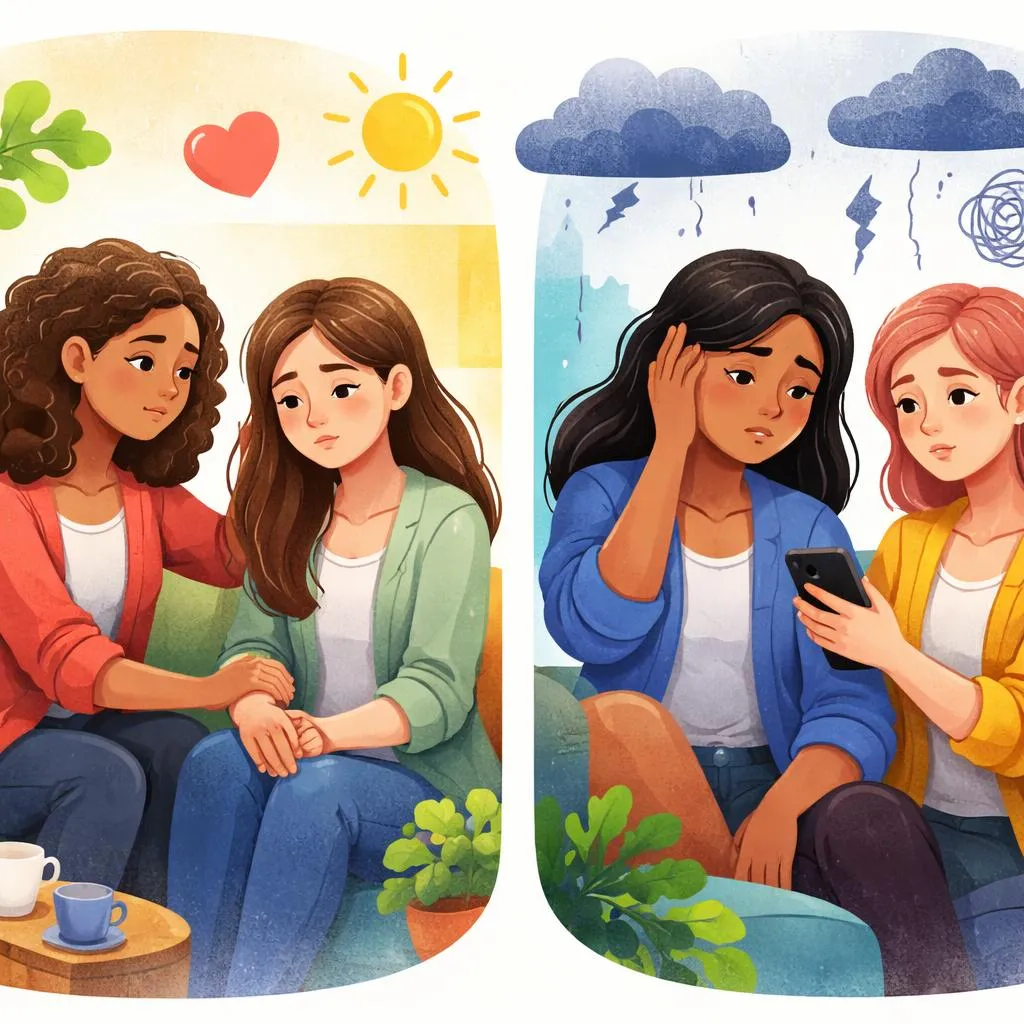

What Do These Expressions Mean? “I'm worried” and “I'm concerned” both express unease about a situation. They tell someone something does not feel right in your mind. Children say these words about school, friends, or family. Both ask for attention and care.
“I'm worried” means I feel anxious or scared about what might happen. It is emotional and strong. A child says it when a parent is late. It lives in the belly and the heart.
“I'm concerned” means I have noticed a problem that needs watching. It sounds calmer and more thoughtful. An adult says it about a slow leak or a sad friend. It lives in the thinking mind.
These expressions seem very similar. Both say “something is not right.” Both can lead to help. But one feels like a feeling while the other feels like an observation.
What's the Difference? One is emotional. The other is thoughtful. “I'm worried” carries fear and uncertainty. Your heart beats faster. You might imagine bad outcomes.
“I'm concerned” carries careful attention. You notice a problem. You want to check on it. It is calmer.
Think of a child waiting for a ride. “I'm worried Mom forgot me” feels scared. “I'm concerned Mom might be stuck in traffic” feels logical. One is a feeling. One is a thought.
One is more personal. The other is more general. “I'm worried” describes your own feeling. “I'm concerned” can describe a situation. “I'm concerned about the weather” is different from “I'm worried.”
Also, “worried” often imagines bad futures. “Concerned” stays in the present. Teach children the difference to help them calm down. Naming the feeling as “worry” is the first step to solving it.
When Do We Use Each One? Use “I'm worried” for strong, personal feelings. Use it when you feel scared or anxious. Use it when you need comfort or help. It fits emotional moments.
Examples at home: “I'm worried about my spelling test tomorrow.” “I'm worried because you are late.” “I'm worried the dog is sick.”
Use “I'm concerned” for calmer observations. Use it when you notice a problem but feel okay. Use it to start a careful conversation. It fits thoughtful moments.
Examples for thinking: “I'm concerned that my friend seems sad lately.” “I'm concerned about the crack in this wall.” “I'm concerned we might miss the bus if we don't leave soon.”
Children can use both. “I'm worried” asks for comfort. “I'm concerned” asks for problem-solving. Both are valid. Both deserve a response.
Example Sentences for Kids I'm worried: “I'm worried I lost my favorite toy.” “I'm worried about the big storm tonight.” “I'm worried you are angry at me.”
I'm concerned: “I'm concerned that my plant is turning brown.” “I'm concerned you haven't eaten your lunch.” “I'm concerned about the scratch on the car.”
Notice “I'm worried” shares a feeling. “I'm concerned” shares an observation. Parents respond differently. Worry gets a hug. Concern gets a plan.
Teach your child to name which one they feel. “I'm worried” means “I need comfort.” “I'm concerned” means “I need to think.” Both are brave to say.
Common Mistakes to Avoid Some children say “I'm concerned” to sound grown up. That is fine. But do not hide real worry. If you feel scared, say “worried.” Honesty helps more than fancy words.
Wrong: “I'm concerned about the dark.” Right: “I'm worried about the dark. Can you stay with me?”
Another mistake: ignoring worry. Do not say “I'm concerned” when your heart is racing. Name the real feeling. Worry needs kindness, not logic.
Wrong: “I'm concerned my mom is late.” (feeling scared) Right: “I'm worried my mom is late. I feel scared.”
Some learners keep worry inside. They never say “I'm worried.” That leads to bigger fear. Teach children to say the words. Saying “I'm worried” makes worry smaller.
Also avoid saying “don't worry” to a worried child. That dismisses their feeling. Say “I hear you. Let's figure this out together.” Listening is the best medicine for worry.
Easy Memory Tips Think of “I'm worried” as a fast heartbeat. Boom boom boom. Your body feels tight. Emotional and loud.
Think of “I'm concerned” as a raised eyebrow. You look closer. You think. You watch. Calm and careful.
Another trick: remember the first letter. “Worried” has W for “what if.” “Concerned” has C for “check.” What if gets “worried.” Check gets “concerned.”
Parents can say: “Worried for feelings. Concerned for thinking.” That helps children sort their minds. When the heart races, say “worried.” When the mind wonders, say “concerned.”
Practice at bedtime. Ask “are you worried or concerned about tomorrow?” Your child learns to name their inner world. That skill builds emotional strength.
Quick Practice Time Let us try a small exercise. Choose the better phrase for each situation.
You wait for a phone call that should have come an hour ago. Your stomach feels tight. a) “I'm concerned about the call.” b) “I'm worried. Something might be wrong.”
You notice your friend has not laughed all day. You want to check on them calmly. a) “I'm worried you are sad.” b) “I'm concerned. Are you okay?”
Answers: 1 – b. A tight stomach means true worry. 2 – b. A calm check-in fits “concerned.”
Fill in the blank: “When my dad is driving in heavy snow, I say ______.” (“I'm worried” fits weather-related fear.)
One more: “When I see that my fish is swimming differently, I say ______.” (“I'm concerned” fits a calm observation of a pet.)
Worry and concern are both caring. One is louder. One is quieter. Both say “I care about what happens.” Teaching your child both words gives them tools for life. Worry asks for help. Concern asks for awareness. Both are brave.
Wrap-up “I'm worried” expresses emotional fear about the future. “I'm concerned” expresses careful observation about a present situation. Use “worried” when your heart feels scared. Use “concerned” when your mind notices a problem. Both feelings are normal. Naming them is the first step to feeling better.