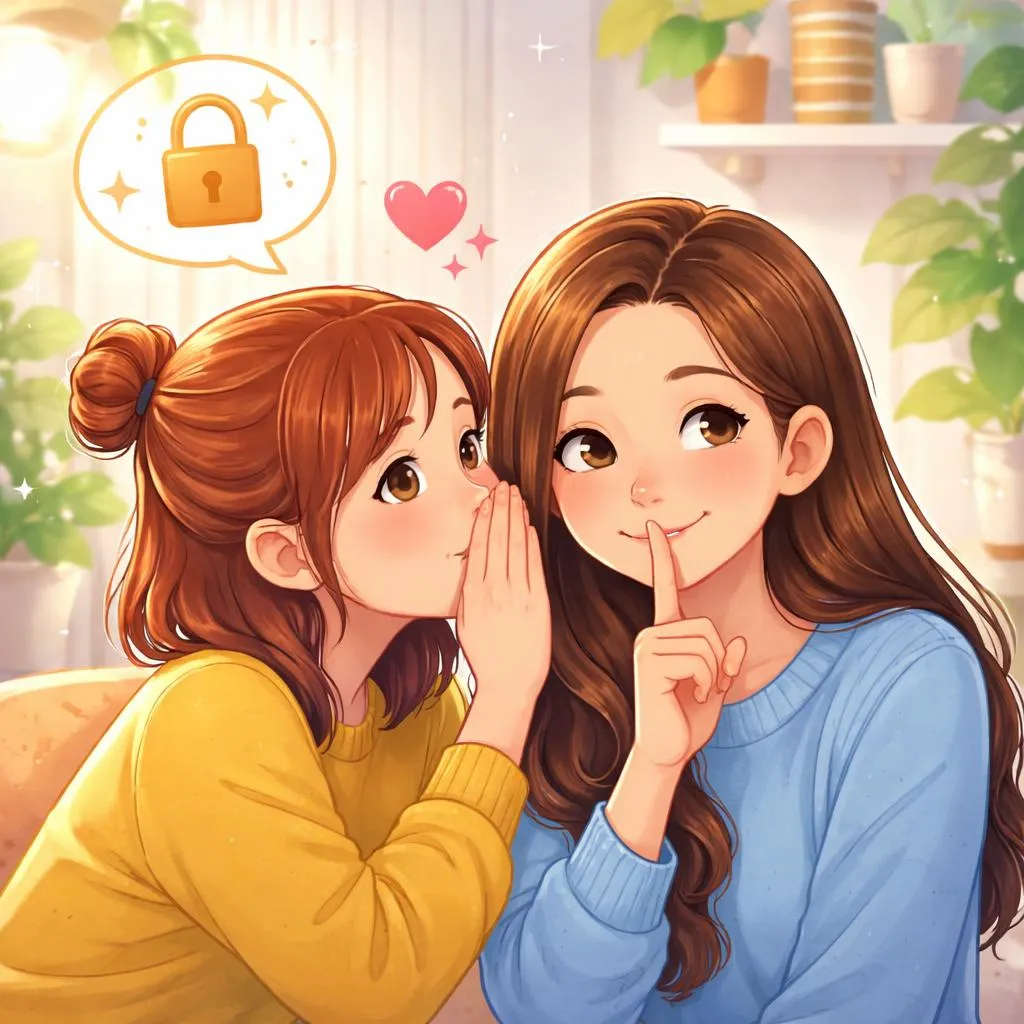

What Do These Expressions Mean? “It's a secret” and “don't tell” both mean that certain information should not be shared with others. They tell a child that some words are only for certain people to hear. Children hear these words about surprise gifts, private feelings, or special plans. Both teach trust.
“It's a secret” means this information is private and not for others to know. It is a statement of fact. A child says it when whispering about a birthday surprise. It feels special and important.
“Don't tell” means you are instructing someone not to share the information. It is a command. A child says it when sharing a personal feeling. It is more direct and urgent.
These expressions seem similar. Both ask for silence. Both build trust. But one states the nature of the information while one gives an instruction.
What's the Difference? One is a statement about the information. One is a command to a person. “It's a secret” describes the information itself. It explains why you should not tell. It is softer.
“Don't tell” is a direct instruction to the listener. It tells the person what to do. It can sound stronger or more urgent. It is more active.
Think of a child making a card for a parent. The child tells a sibling, “It's a secret.” That explains the situation. If the sibling starts to talk, the child says “Don't tell!” That stops the action. One is for sharing. One is for stopping.
One is for before the sharing. The other is for during. “It's a secret” is said when you first share. “Don't tell” is said when you see someone about to speak. Use the first for identification. Use the second for prevention.
Also, “it's a secret” can be said with excitement. “Don't tell” can sound like a warning. Tone matters.
When Do We Use Each One? Use “it's a secret” to identify private information. Use it when you first share something that should not be repeated. Use it to build excitement or trust. It fits surprise planning.
Examples at home: “It's a secret. We are getting Mom a gift.” “Shh, it's a secret. Don't tell anyone.” “This is our secret. Promise?”
Use “don't tell” to stop someone from speaking. Use it when you see a person about to reveal the secret. Use it as a quick instruction. It fits urgent moments.
Examples for prevention: “Don't tell! She will hear you.” “Don't tell. We talked about this.” “Don't tell. It's a surprise.”
Children need both phrases. “It's a secret” for sharing. “Don't tell” for protecting. Both keep secrets safe.
Example Sentences for Kids It's a secret: “It's a secret. You can't tell anyone.” “This is our secret, okay?” “Shh, it's a secret plan.”
Don't tell: “Don't tell! It's a surprise.” “Don't tell, or they will find out.” “Don't tell anyone, please.”
Notice “it's a secret” names the rule. “Don't tell” enforces the rule. Children learn both. One for sharing. One for stopping.
Parents can use both. Making a surprise: “it's a secret.” Child about to speak: “don't tell.” Children learn secret-keeping.
Common Mistakes to Avoid Some children use “don't tell” for everything, even happy secrets. It can sound scary. For happy surprises, say “it's a secret” with a smile. Keep the tone light.
Wrong: “Don't tell!” (whispering about a birthday gift) Better: “It's a secret. Smile and be quiet.”
Another mistake: saying “it's a secret” about something that is not truly a secret. A secret means not telling anyone. If it is okay to tell some people, say “just between us” or “don't tell everyone.” Be honest.
Wrong: “It's a secret that I have a pet fish.” (not a secret) Better: “It's just my news.”
Some learners forget that secrets should not be about safety. If a secret is about someone getting hurt, tell an adult. Bad secrets are not to keep. Teach the difference.
Also avoid saying “don't tell” to a child who is scared. If they are scared, they should tell an adult. Never ask a child to keep a scary secret.
Easy Memory Tips Think of “it's a secret” as a locked box. The box has a lock. The key is inside. Special and private. For identifying secrets.
Think of “don't tell” as a finger over the lips. Shh. Be quiet. For stopping speech.
Another trick: remember the timing. “It's a secret” is for the first time. “Don't tell” is for when someone is about to talk. First gets “secret.” Talking gets “don't tell.”
Parents can say: “Secret for the plan. Don't tell for the 'I understand' man.”
Practice at home. Make a surprise: “it's a secret.” Sibling walks toward parent: “don't tell!”
Quick Practice Time Let us try a small exercise. Choose the better phrase for each situation.
A child is planning a surprise party for a friend. They tell their sibling the plan. a) “Don’t tell.” b) “It’s a secret. We can’t tell her.”
The sibling starts to say the word “party” near the friend. The first child stops them. a) “It’s a secret.” b) “Don’t tell! She’s right there.”
Answers: 1 – b. Sharing the secret plan for the first time fits “it’s a secret.” 2 – b. Stopping someone about to speak fits the urgent “don’t tell.”
Fill in the blank: “When I tell my best friend I am getting a puppy, I say ______.” (“It’s a secret” fits the special, private, happy sharing moment.)
One more: “When my little brother starts to tell Mom about her gift, I whisper ______.” (“Don’t tell” fits the urgent, stopping, whispering moment.)
Secrets build trust. “It’s a secret” shares the bond. “Don’t tell” protects the bond. Teach your child both. A child who keeps good secrets grows into a trusted friend.
Wrap-up “It’s a secret” identifies information as private and not to be shared. “Don’t tell” is a direct instruction to stop someone from revealing that information. Use “it’s a secret” when you first share private information. Use “don’t tell” when someone is about to speak and reveal the secret. Both phrases teach discretion and trust. A child who learns to keep good secrets builds strong, honest friendships.