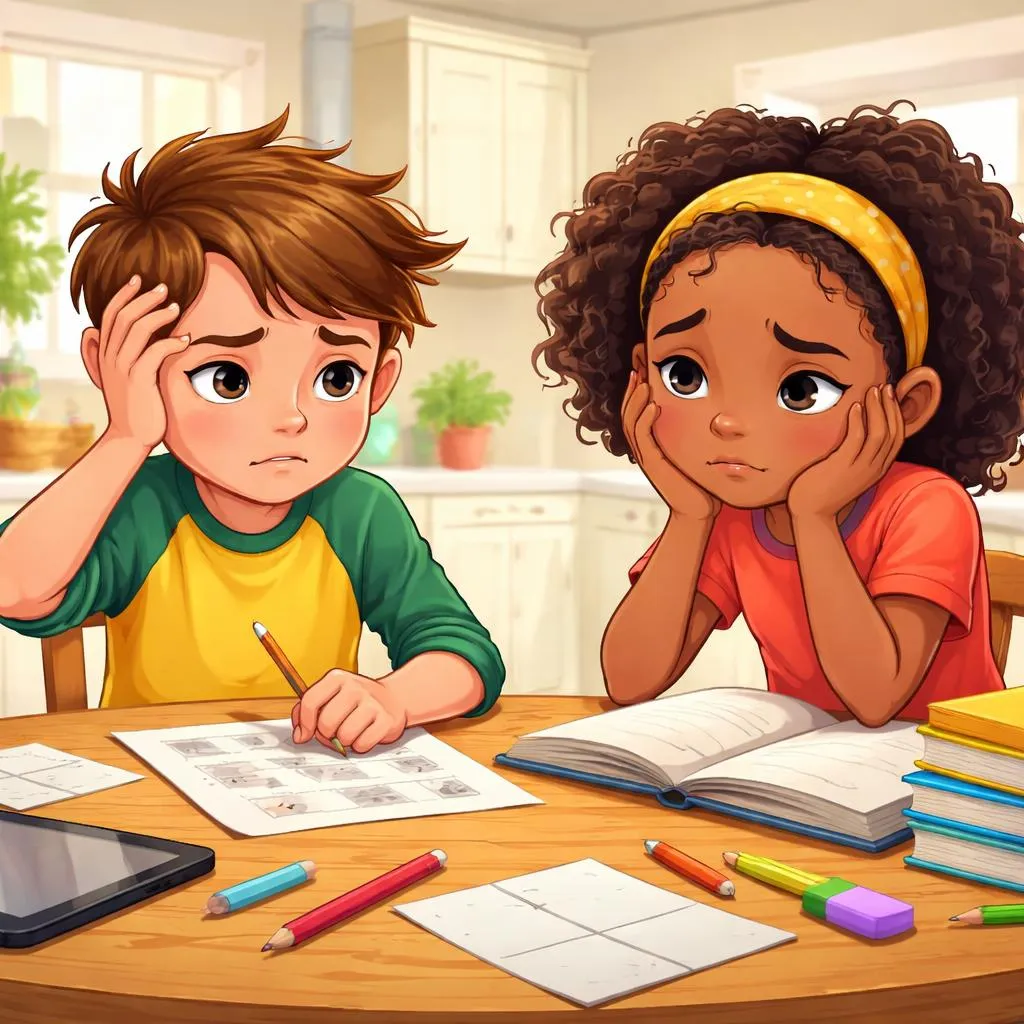

What Do These Expressions Mean? “That's hard” and “that's tough” both describe something difficult. They tell someone a task requires significant effort or skill. Children say these words about challenging homework or new skills. Both ask for patience and help.
“That's hard” means this requires a lot of effort from me. It is direct and honest. A child says it when learning a new math concept. It focuses on the task difficulty.
“That's tough” means this is difficult and maybe unfair. It sounds more emotional and resilient. A child says it after a hard game or a bad day. It focuses on the struggle.
These expressions seem very similar. Both say “I am struggling.” Both ask for support. But one is about the task while one is about the feeling.
What's the Difference? One is about the task. The other is about the experience. “That's hard” describes the challenge level. A hard puzzle. A hard word to spell. It points at the thing.
“That's tough” describes the emotional weight. A tough loss. A tough conversation. It points at the feeling. It carries more heart.
Think of a child facing a long division problem. “That's hard” is true. “That's tough” would also work, but feels more personal. One is observation. One is shared feeling.
One is for tasks. The other for situations. “That's hard” fits homework, chores, and physical tasks. “That's tough” fits losses, unfairness, and emotional struggles. Choose based on what is difficult.
Also, “tough” can mean strong. “That's tough” can mean “that is strong” in slang. But for difficulty, “tough” adds a layer of endurance. You push through toughness. Hardness you solve.
When Do We Use Each One? Use “that's hard” for learning and doing. Use it for schoolwork, new skills, and physical challenges. Use it when you need more time or teaching. It fits skill-based difficulty.
Examples at home: “That's hard. I can't reach the top shelf.” “That's hard. I keep getting this answer wrong.” “Tying my shoes used to be hard. Now it is easy.”
Use “that's tough” for emotional difficulty. Use it for losing, waiting, or handling disappointment. Use it when you need comfort, not just help. It fits life struggles.
Examples for feelings: “That's tough that your team lost.” “Waiting a whole week is tough.” “That's tough. I know you really wanted to go.”
Children can use both. “That's hard” for school and tasks. “That's tough” for feelings and situations. Both are honest. Both deserve a response.
Example Sentences for Kids That's hard: “That's hard. Can you show me one more time?” “This puzzle is hard. I need a break.” “That's hard. My arms are tired.”
That's tough: “That's tough that you missed the party.” “Losing my favorite hat is tough.” “That's tough. Tomorrow will be better.”
Notice “that's hard” points at the task. “That's tough” points at the heart. One asks for teaching. One asks for a hug. Both are brave to say.
Parents can respond differently. “That's hard” gets “let me show you again.” “That's tough” gets “I'm sorry. Let's talk.” Children learn to name what they need.
Common Mistakes to Avoid Some children say “that's tough” for easy tasks. That sounds dramatic. A small chore is not tough. It might be hard. Save “tough” for real emotional weight.
Wrong: “That's tough” (putting away one book). Right: “That's hard” (if it is high up).
Another mistake: giving up after saying “that's hard.” Hard does not mean impossible. Say “that's hard, but I will try again.” Perseverance lives next to honesty.
Wrong: “That's hard. I quit.” Right: “That's hard. Can we take a break and try again?”
Some learners use “that's hard” to avoid trying. Do not use difficulty as an excuse. Hard things grow your brain. Say it, then try anyway.
Also avoid comparing struggles. “That's not hard. Your sister did it” hurts. Every child's hard is different. Respect their honest assessment.
Easy Memory Tips Think of “that's hard” as a heavy backpack. The weight is real. You need to carry it or empty it. Task-focused.
Think of “that's tough” as a scraped knee. It stings. You need a bandage and a hug. Feeling-focused.
Another trick: remember the letters. “Hard” has H for “head” (thinking). “Tough” has T for “tears” (feeling). Head gets “hard.” Tears get “tough.”
Parents can say: “Hard for help. Tough for a hug.” That helps children choose their words. School struggles get “hard.” Heart struggles get “tough.”
Practice at homework time. “This problem is hard. Can you help me?” “This day is tough. Can I have a hug?” Your child learns to ask for what they need.
Quick Practice Time Let us try a small exercise. Choose the better phrase for each situation.
Your child cannot figure out a long division problem. They need teaching. a) “That's tough. My day is bad.” b) “That's hard. Can you show me again?”
Your child's best friend moves away. They feel sad and discouraged. a) “That's hard to understand.” b) “That's tough. I'm really sorry.”
Answers: 1 – b. A learning task fits “that's hard.” 2 – b. An emotional loss fits “that's tough.”
Fill in the blank: “When I lift something heavy, I say ______.” (“That's hard” fits physical, task-based difficulty.)
One more: “When I lose a game I practiced very hard for, I say ______.” (“That's tough” fits the emotional disappointment of loss.)
Hard and tough are both real. Naming them helps you face them. “Hard” asks for strategy. “Tough” asks for comfort. Both lead to growth.
Wrap-up “That's hard” describes a difficult task or skill. “That's tough” describes a difficult emotional situation. Use “hard” for learning and doing. Use “tough” for loss and struggle. Both words are honest. Naming your difficulty is the first step to overcoming it.