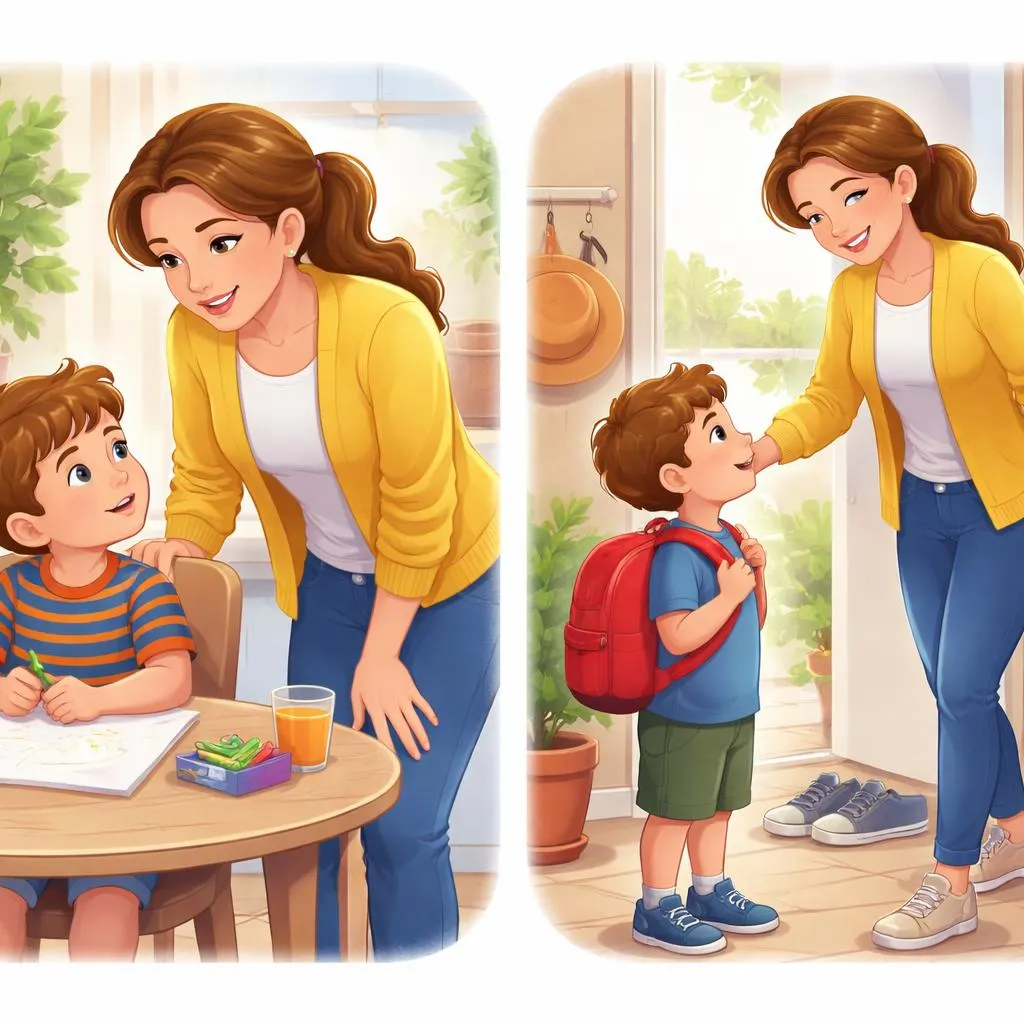

What Do These Expressions Mean? “Tell me” and “let me know” both ask someone to share information. They request that a person speaks or writes an answer. Children hear these words when parents ask about their day. Both open conversations.
“Tell me” means speak your thoughts or facts to me now. It is direct and immediate. A parent says it when a child comes home from school. It asks for words right away.
“Let me know” means inform me when you have the answer. It is softer and gives time. A parent says it when a child needs to think or check. It asks for a future response.
These expressions seem similar. Both ask for information. Both show interest in what a child thinks. But one is for now while one is for later.
What's the Difference? One is immediate. One is future-focused. “Tell me” expects an answer right now. You ask. The child speaks. It works for feelings and quick facts.
“Let me know” expects an answer later. The child might need time. They might need to check something. It is more patient.
Think of a child who just got a test score. “Tell me what you got” asks for the score now. “Let me know when you find out” is for later. One is urgent. One is relaxed.
One can feel like a command. The other feels like a request. “Tell me” can sound demanding if your voice is sharp. “Let me know” almost always sounds gentle. Choose based on your tone and timing.
Also, “tell me” often asks for stories or feelings. “Let me know” often asks for facts or plans. “Tell me about your day” (story). “Let me know what time you're coming home” (plan).
When Do We Use Each One? Use “tell me” for immediate sharing. Use it for feelings, events, and quick answers. Use it when you are ready to listen right now. It fits connection moments.
Examples at home: “Tell me about the book you read.” “Tell me why you feel sad.” “Tell me what happened at the park.”
Use “let me know” for future information. Use it for plans, decisions, and check-ins. Use it when the child needs time to respond. It fits planning moments.
Examples for later: “Let me know when you finish your homework.” “Let me know what you want for your birthday.” “Let me know if you need a ride home.”
Children need both phrases. “Tell me” invites immediate sharing. “Let me know” gives them space and time. One for closeness. One for respect.
Example Sentences for Kids Tell me: “Tell me the truth. I won't be angry.” “Tell me your favorite part of the movie.” “Tell me what you drew in this picture.”
Let me know: “Let me know if you feel sick tomorrow.” “Let me know when you decide which game to play.” “Let me know if you need help with your project.”
Notice “tell me” asks for words now. “Let me know” asks for words later. One is a hug in question form. One is a promise to listen when ready.
Parents can use both every day. At dinner: “tell me one fun thing from school.” Before bed: “let me know if you need water later.” Children learn different tones for different needs.
Common Mistakes to Avoid Some children say “tell me” when they mean “let me know.” That sounds pushy. If the person needs time, say “let me know.” It is kinder and more patient.
Wrong: “Tell me when you decide.” (impatient) Right: “Let me know when you decide.”
Another mistake: saying “let me know” and then not listening. If you ask someone to tell you later, pay attention. When they speak, stop and listen. Otherwise they will stop sharing.
Wrong: “Let me know” (then ignores the answer). Right: “Let me know. I will listen carefully.”
Some learners forget to say please. Both phrases need politeness. “Tell me, please” works. “Please let me know” works. Kindness always matters.
Also avoid using “tell me” to demand information. “Tell me NOW” is scary. Use a soft voice. Curiosity should not feel like an interrogation.
Easy Memory Tips Think of “tell me” as a cup held out. You want the information poured in now. You are ready to receive. Immediate and open.
Think of “let me know” as a note on a door. The note says “leave your message here.” You will find it later. Patient and trusting.
Another trick: remember the timeline. “Tell me” happens in now-time. “Let me know” happens in next-time. Now gets “tell me.” Next gets “let me know.”
Parents can say: “Tell for today. Let me know for a future day.” That helps children know when to speak. Right now gets “tell me.” Tomorrow or later gets “let me know.”
Practice at breakfast. “Tell me what you dreamt about.” (now) “Let me know what you want for lunch.” (later) Your child learns the rhythm of conversation.
Quick Practice Time Let us try a small exercise. Choose the better phrase for each situation.
Your child just walked in the door from school. You want to hear about their day. a) “Let me know about your day later.” b) “Tell me about your day. I'm listening.”
Your child needs to decide between two birthday party dates. You are not rushing them. a) “Tell me which date you choose right now.” b) “Let me know which date works better when you decide.”
Answers: 1 – b. The moment they arrive fits the immediate “tell me.” 2 – b. A decision needs time. “Let me know” is patient and kind.
Fill in the blank: “When I see my friend crying, I say ______ what happened.” (“Tell me” asks for immediate sharing of feelings.)
One more: “When I ask my child to check the weather for tomorrow, I say ______ if it will rain.” (“Let me know” gives time to check the forecast.)
Listening is love. “Tell me” invites sharing now. “Let me know” invites sharing when ready. Both say “what you think matters to me.” That is the heart of connection.
Wrap-up “Tell me” asks for information immediately. “Let me know” asks for information when the person is ready. Use “tell me” for feelings and events now. Use “let me know” for plans and decisions later. Both phrases build trust. Listening is the greatest gift you can give.