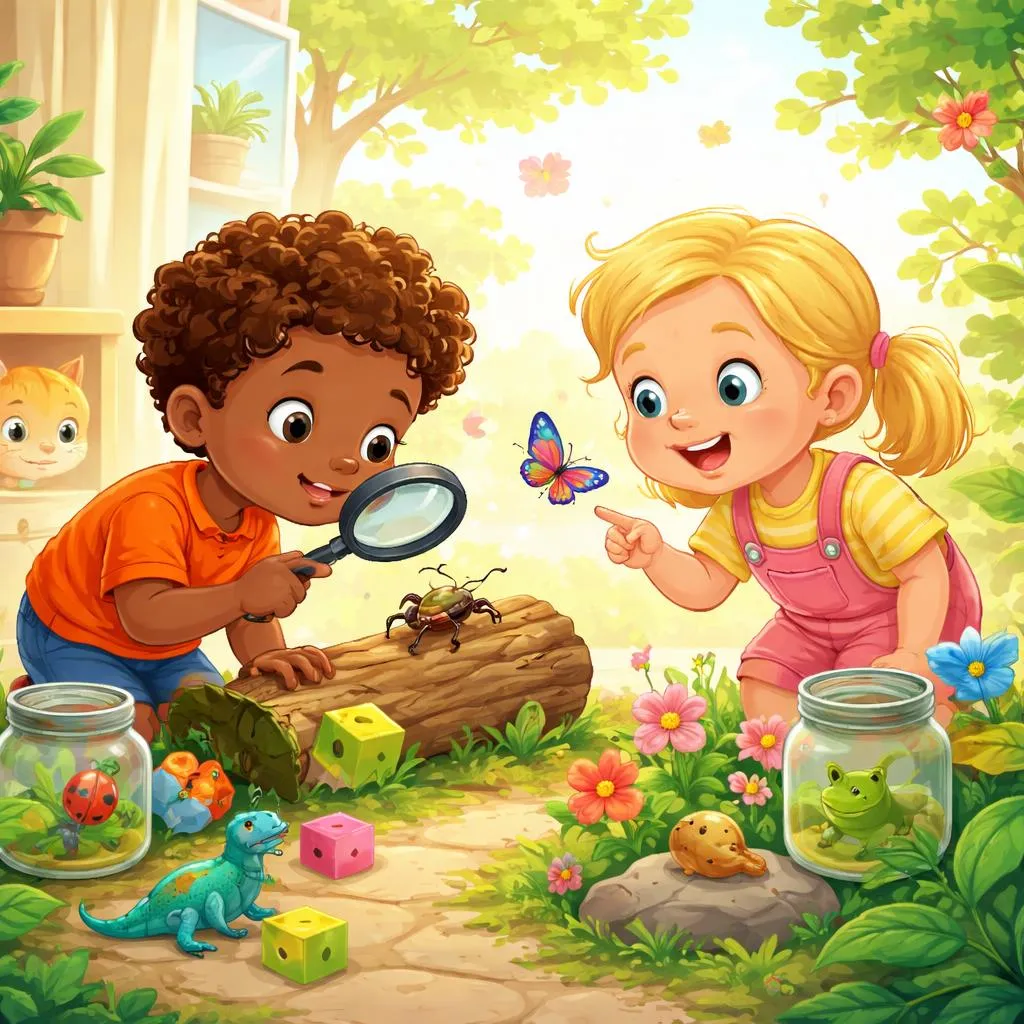

What Do These Expressions Mean? “What is it?” and “what's that?” both ask for an explanation. They seek the name or purpose of something unknown. Children ask these questions constantly as they explore. Both phrases come from natural curiosity.
“What is it?” means tell me the identity of this thing. It asks for a definition or category. A child asks it while pointing at an object. It expects a name like “a butterfly.”
“What's that?” means tell me about that specific thing over there. It points to something at a distance. A child asks it when seeing something unfamiliar. It expects a name or description.
These expressions seem very similar. Both help children learn new words. Both satisfy curiosity. But one feels closer while the other feels farther.
What's the Difference? One is for nearby objects. The other is for distant things. “What is it?” usually means something close. You can almost touch it. It sits right in front of you.
“What's that?” usually means something farther away. You need to point or look across the room. It sits at a distance. The word “that” creates space.
Think of a child in a kitchen. A parent holds a fruit. The child asks “what is it?” The fruit is close. If the child sees a bird outside the window, they ask “what's that?” The bird is far.
One is more immediate. The other is more observational. “What is it?” touches the object. “What's that?” observes from afar. Both teach. Both matter.
Also, “what's that?” works for sounds. You hear a noise and ask “what's that?” You cannot use “what is it?” for a sound you cannot see. That is a key difference.
When Do We Use Each One? Use “what is it?” for things you hold or touch. Use it for objects on a table or in a hand. Use it when the thing is close to both people. It fits tight spaces like a car or a lap.
Examples close up: “You found something in the sand. What is it?” “This button does something. What is it?” “A box arrived. What is it?”
Use “what's that?” for things at a distance. Use it for sounds, faraway objects, or outdoor sights. Use it when you need to point or look up. It fits larger spaces like a park or a school.
Examples far away: “I hear a noise in the attic. What's that?” “Look at the sky. What's that bright spot?” “Someone is waving at us. What's that about?”
Children naturally learn this difference. They say “what's that?” while pointing at the moon. They say “what is it?” while holding a new toy. Trust their instincts.
Example Sentences for Kids What is it? “You have a secret in your hand. What is it?” “The teacher showed a picture. What is it?” “This machine makes a sound. What is it called?”
What's that? “What's that crawling on the wall?” “I see smoke far away. What's that?” “What's that noise coming from your room?”
Notice “what's that?” uses a contraction. “What is it?” can contract to “what's it?” But “what's it?” sounds less common. Most people say “what is it?” fully.
Children hear “what's that?” very often. It rolls off the tongue easily. “What is it?” sounds a bit more careful. Both work for curious kids.
Parents can answer both the same way. Just name the object or describe it. The question form matters less than the answer. Keep satisfying that curiosity.
Common Mistakes to Avoid Some learners use “what is it?” for far things. That sounds strange to native speakers. If you cannot touch it, use “what's that?” Distance changes the word.
Wrong: (pointing at a cloud) “What is it?” Right: (pointing at a cloud) “What's that?”
Another mistake: using “what's that?” for held objects. If you hold a crayon, ask “what is it?” “What's that?” sounds like you see it across a field. Match the word to the space.
Wrong: (holding a marble) “What's that?” Right: (holding a marble) “What is this?” or “What is it?”
Some children forget to point. “What's that?” needs a pointing finger or a nod. Otherwise the other person does not know which thing. Always add a gesture.
Also avoid answering too quickly. Let the child guess first. Ask “what do you think it is?” That builds thinking skills alongside vocabulary.
Easy Memory Tips Think of “what is it?” as a magnifying glass. The magnifying glass touches the object. You see tiny details. It works for close things.
Think of “what's that?” as binoculars. The binoculars look at far things. You see distance and space. It works for things across the room.
Another trick: remember the T sound. “That” has a T for “there” (far away). “It” has no T for “immediate” (close). Match the T to distance. That helps you remember.
Parents can say: “It for in your hand. That for across the land.” That little rhyme sticks in memory. Practice with toys at home. Hold a toy and say “what is it?” Put a toy across the room and say “what's that?”
Quick Practice Time Let us try a small exercise. Choose the better phrase for each situation.
Your child holds a strange-looking rock they found. a) “What's that on the ground?” b) “What is it? Let me see.”
Your child hears a loud truck outside the window. a) “What is it in your ear?” b) “What's that loud noise?”
Answers: 1 – b. A held object needs the close-up phrase. 2 – b. A distant sound needs “what's that?”
Fill in the blank: “When I see a bug on my hand, I ask ______.” (“What is it?” works because the bug touches you.)
One more: “When I see a strange animal across the field, I ask ______.” (“What's that?” fits faraway things perfectly.)
Both questions show a curious mind. Encourage both every day. Curious children become great learners. Keep answering their wonderful questions.
Wrap-up “What is it?” asks about close things you can touch. “What's that?” asks about distant things or sounds. Use “it” for near. Use “that” for far. Both questions open the door to learning. Every answer you give feeds a child's growing world.