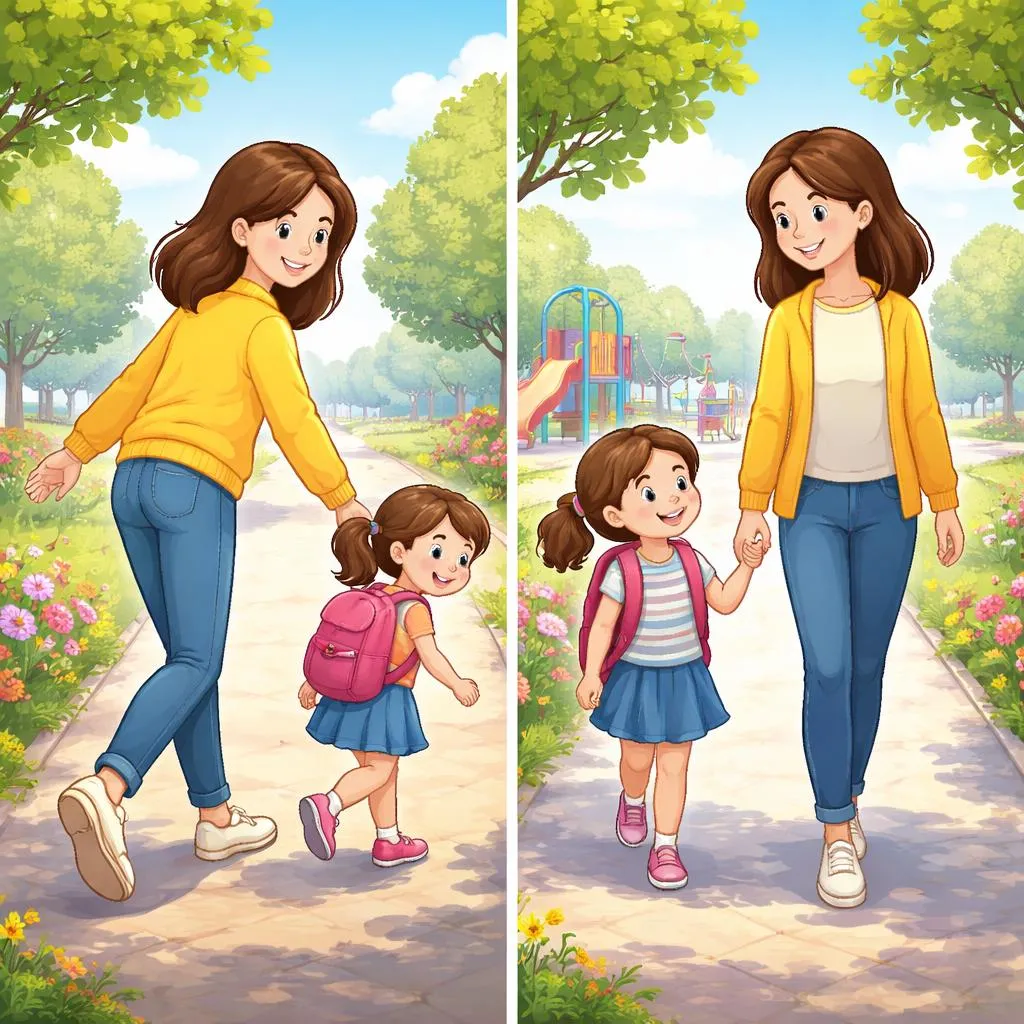

What Do These Expressions Mean? “Follow me” and “come with me” both invite someone to move with you. They tell a person to go where you are going. Children hear these words when parents lead them to new places. Both create movement and trust.
“Follow me” means walk behind me in my path. It implies a line: leader first, then follower. A parent says it in a crowded store. It feels like a command or an adventure.
“Come with me” means join me as an equal companion. It implies walking together side by side. A parent says it when inviting a child to the kitchen. It feels like an invitation.
These expressions seem very similar. Both mean “let's go together.” Both get a child from one place to another. But one is about leading while the other is about accompanying.
What's the Difference? One is about leading. The other is about joining. “Follow me” places the speaker in front. The listener walks behind. It works well for navigating crowds or danger.
“Come with me” places the speaker and listener together. No one is ahead or behind. It feels more like a partnership. It works well for everyday movement.
Think of a child in a busy parking lot. “Follow me” keeps them safely behind you. “Come with me” might let them wander to the side. One is safer for some situations.
One is more commanding. The other is more inviting. “Follow me” can sound like an order. “Come with me” sounds like a suggestion. Choose based on urgency.
Also, “follow me” works for teaching a path. “Follow me to the library” means learn the way. “Come with me to the library” means join the trip. One teaches independence. One builds togetherness.
When Do We Use Each One? Use “follow me” for navigating or teaching. Use it in crowds, parking lots, or new places. Use it when you need the child right behind you. It fits safety and direction moments.
Examples for safety: “Follow me through the crowd. Stay close.” “Follow me. I know the way to the bathroom.” “Follow me to the exit. It is this way.”
Use “come with me” for inviting and accompanying. Use it for chores, walks, or fun activities. Use it when you want a partner. It fits daily togetherness.
Examples for companionship: “Come with me to the garden. Let's water the plants.” “Come with me. I'll show you my room.” “Come with me to the kitchen. We need to set the table.”
Children need both phrases. “Follow me” keeps them safe in busy places. “Come with me” makes them feel wanted. One protects. One includes.
Example Sentences for Kids Follow me: “Follow me to the front of the line.” “I know a shortcut. Follow me.” “Follow me quietly to the library.”
Come with me: “Come with me. I have a surprise for you.” “Come with me to the park. Let's play.” “Come with me. We can build a fort together.”
Notice “follow me” points the way. “Come with me” opens an invitation. One is a map. One is a welcome. Both lead to good places.
Parents can use both every day. Walking through a store: “follow me.” Going to the backyard: “come with me.” Children learn different tones for different needs.
Common Mistakes to Avoid Some children say “follow me” when they want a friend to play. That sounds bossy. Use “come with me” for friends. It sounds like an invitation, not an order.
Wrong: “Follow me to the swings.” Right: “Come with me to the swings.”
Another mistake: saying “come with me” in a dangerous place. If you need the child behind you for safety, say “follow me.” Side-by-side walking is not always safe. Match the phrase to the risk.
Wrong: “Come with me” (crossing a busy street). Right: “Follow me closely across the street.”
Some learners forget to make eye contact. Look at the child when you speak. Hold out your hand for “come with me.” Point for “follow me.” Gestures help.
Also avoid saying “follow me” in a scary voice. That frightens children. Use a calm, confident voice. “Follow me” should feel safe, not threatening.
Easy Memory Tips Think of “follow me” as a path of footprints. You leave prints. The child steps in them. One leader. One follower. Safe and clear.
Think of “come with me” as two hands holding. You walk side by side. Equal partners. Friendly and warm.
Another trick: remember the first letter. “Follow” has F for “front.” “Come” has C for “companion.” Front gets “follow me.” Companion gets “come with me.”
Parents can say: “Follow for safety. Come for a playdate.” That means dangerous or crowded places get “follow me.” Fun or daily trips get “come with me.”
Practice at the grocery store. Parking lot: “follow me.” Inside aisle: “come with me to get apples.” Two phrases. One safe, happy child.
Quick Practice Time Let us try a small exercise. Choose the better phrase for each situation.
You and your child are in a crowded train station. You need to get to the platform. a) “Come with me to the platform.” b) “Follow me closely. Stay right behind me.”
You want your child to help you bake cookies in the kitchen. a) “Follow me to the kitchen.” b) “Come with me. Let's bake together.”
Answers: 1 – b. A crowded, risky place needs “follow me.” 2 – b. A fun, equal activity fits “come with me.”
Fill in the blank: “When we walk through a busy parking lot, I tell my child ______.” (“Follow me” keeps them safe behind you.)
One more: “When I want to show my child a beautiful sunset, I say ______.” (“Come with me” invites them to share the moment.)
Leading children is a gift. “Follow me” keeps them safe. “Come with me” brings them close. Both say “I will take you somewhere good.” That is the heart of parenting.
Wrap-up “Follow me” tells a child to stay behind you for safety or direction. “Come with me” invites a child to join you as a companion. Use “follow me” in crowds and dangerous places. Use “come with me” for everyday togetherness. Both phrases keep children close. Your voice guides them home.