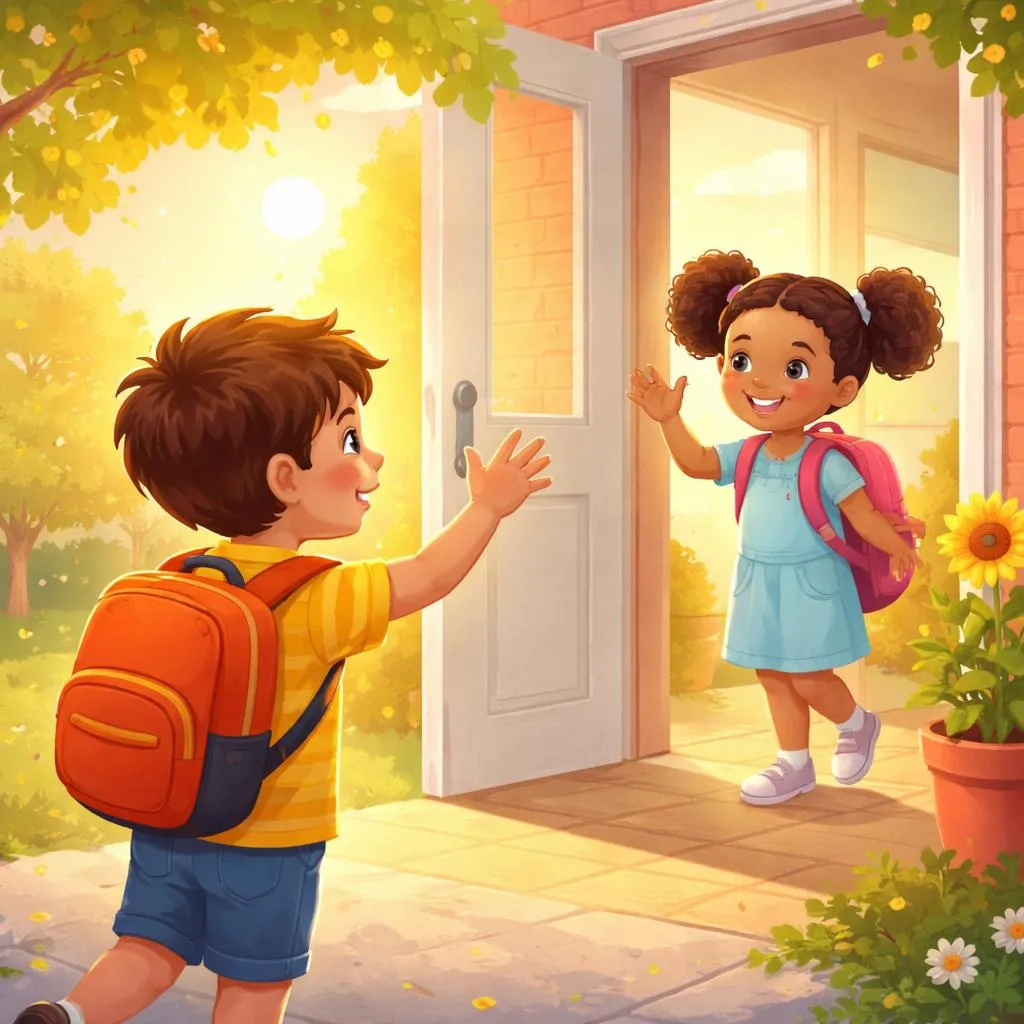

What Do These Expressions Mean? “See you tomorrow” and “until tomorrow” both promise a future meeting. They tell someone that you expect to meet again the next day. Children say these words at bedtime, after school, or before a trip. Both offer comfort and continuity.
“See you tomorrow” means I will look at you again tomorrow. It is common and friendly. A child says it when leaving a friend's house. It feels warm and certain.
“Until tomorrow” means I will be apart from you only until tomorrow. It sounds softer and more poetic. An adult says it in a letter or a gentle goodbye. It feels like a tiny promise.
These expressions seem similar. Both say “this goodbye is short.” Both look forward to the next day. But one is for everyday talk while one is for special goodbyes.
What's the Difference? One is for daily life. One is for gentle, poetic moments. “See you tomorrow” works for almost everything. School, playdates, bedtime, camp. It fits a child's daily life.
“Until tomorrow” sounds like a story or a lullaby. You might say it before a long sleep or a separation. A child saying “until tomorrow” is sweet but unusual. It is correct but less common.
Think of a child after a playdate. “See you tomorrow at school” is perfect. “Until tomorrow at school” sounds like a movie. One matches the moment. One is a bit fancy.
One is more common. The other is more special. “See you tomorrow” appears dozens of times a day. “Until tomorrow” appears in quiet, tender moments. Use the first for daily life. Use the second for gentle emphasis.
Also, “until tomorrow” can sound like “goodbye forever but not yet.” It is a bit dramatic. “See you tomorrow” is simple and happy. Choose based on the mood.
When Do We Use Each One? Use “see you tomorrow” for most daily goodbyes. Use it after school, at bedtime, or when leaving a friend. Use it when you are sure you will meet again. It fits routine.
Examples at home and school: “See you tomorrow, Mom. Love you.” “See you tomorrow at the bus stop.” “Goodnight. See you tomorrow morning.”
Use “until tomorrow” for softer, more tender moments. Use it before a long sleep, a surgery, or a sad parting. Use it when you want to sound extra gentle. It fits special goodbyes.
Examples for gentleness: “Until tomorrow, my sweet one. Sleep well.” “I will be here. Until tomorrow.” “Until tomorrow. Dream of me.”
Most children should just say “see you tomorrow.” It is clear, friendly, and natural. “Until tomorrow” is good to understand for stories. But for daily life, “see you tomorrow” is perfect.
Example Sentences for Kids See you tomorrow: “See you tomorrow. Don't forget your lunch.” “See you tomorrow at the park.” “Goodnight, Daddy. See you tomorrow.”
Until tomorrow: “Until tomorrow, Grandma. Sleep tight.” “Until tomorrow. I will miss you until then.” “Until tomorrow, my friend.”
Notice “see you tomorrow” sounds like a happy wave. “Until tomorrow” sounds like a soft hug. Children learn both. But they should say “see you tomorrow” for most goodbyes.
Parents can use both. “See you tomorrow” for school mornings. “Until tomorrow” for tender bedtime moments. Children learn different tones for different times.
Common Mistakes to Avoid Some children say “until tomorrow” every day. That sounds overly dramatic. Save it for especially tender or special goodbyes. Use “see you tomorrow” for daily life.
Wrong: “Until tomorrow” (to a friend at the bus stop). Right: “See you tomorrow” (waving happily).
Another mistake: saying “see you tomorrow” when you will not. If you are going on vacation, do not promise tomorrow. Say “see you later” or “see you in a week.” Be honest about the timeline.
Wrong: “See you tomorrow” (leaving for a month). Right: “See you when I get back. I will miss you.”
Some learners forget to say goodbye first. Both phrases work best after a proper goodbye. Say “goodnight” or “have a good day” first. Then add “see you tomorrow.”
Also avoid saying “until tomorrow” in a sad voice. It can sound like you are not sure. Say it with warmth and certainty. Tomorrow will come.
Easy Memory Tips Think of “see you tomorrow” as a sunrise. The sun comes up every day. Reliable and bright. Everyday certainty.
Think of “until tomorrow” as a candle in the dark. The candle glows softly. It promises light will return. Gentle and tender.
Another trick: remember the feeling. “See you tomorrow” feels like a wave. “Until tomorrow” feels like a lullaby. Wave gets “see you tomorrow.” Lullaby gets “until tomorrow.”
Parents can say: “See for daily. Until for a soft, gentle finale.” That means everyday goodbyes get “see you tomorrow.” Tender bedtime moments get “until tomorrow.”
Practice at home. School morning: “See you tomorrow.” Bedtime whisper: “Until tomorrow, my love.” Two different levels of tenderness.
Quick Practice Time Let us try a small exercise. Choose the better phrase for each situation.
Your child leaves a friend's house after a playdate. They will see each other at school in the morning. a) “Until tomorrow at school.” b) “See you tomorrow at school.”
Your child is going to sleep. You want to say a very gentle, tender goodbye for the night. a) “See you tomorrow morning.” b) “Until tomorrow, my sweet one. Sleep well.”
Answers: 1 – b. A daily playdate fits the friendly “see you tomorrow.” 2 – a or b. Both work. “Until tomorrow” fits a tender, soft moment.
Fill in the blank: “When I leave my classroom at the end of the day, I tell my friend ______.” (“See you tomorrow” is the natural, happy choice.)
One more: “When my mom tucks me in and kisses my forehead, she whispers ______.” (“Until tomorrow” fits that soft, loving bedtime ritual.)
Goodbyes are hard. “See you tomorrow” makes them easier. “Until tomorrow” makes them sweeter. Teach your child both. Every goodbye means someone will come back.
Wrap-up “See you tomorrow” promises a future meeting in everyday language. “Until tomorrow” makes the same promise with gentle, poetic softness. Use “see you tomorrow” for daily goodbyes. Use “until tomorrow” for tender, special moments. Both phrases say “this is not goodbye forever.” That is the greatest comfort of all.