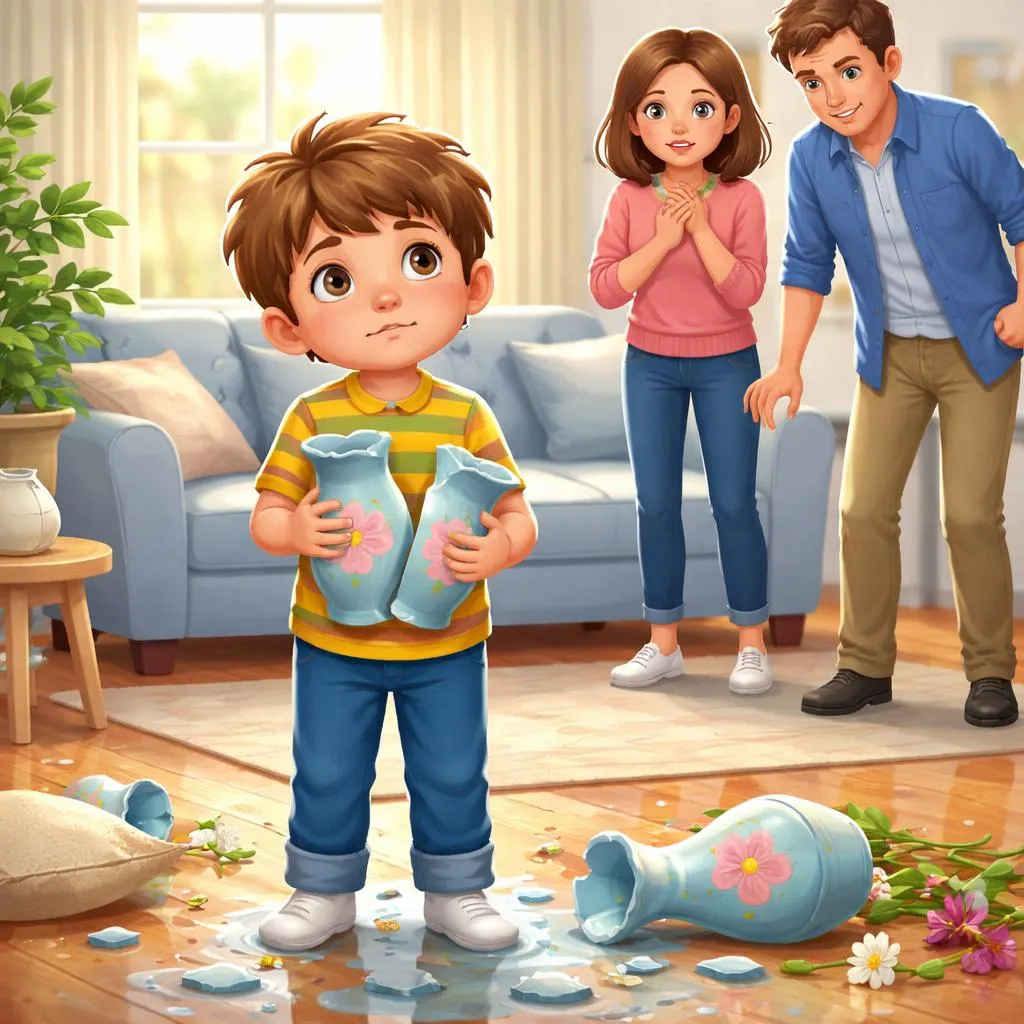

What Do These Expressions Mean? “I broke it” and “I damaged it” both admit that you caused harm to something. They tell someone that an item is no longer in good condition. Children say these words when they drop a cup or tear a page. Both take responsibility.
“I broke it” means I caused it to stop working or come apart. It is direct and common. A child says it when a toy cracks. It feels honest and final.
“I damaged it” means I caused harm that may be minor or major. It sounds softer and less dramatic. An adult says it about a scratch or a dent. It feels more technical and less emotional.
These expressions seem similar. Both say “I am the reason this is hurt.” Both admit a mistake. But one is for everyday accidents while one is for technical reports.
What's the Difference? One is for total breakage. One is for any harm. “I broke it” means the item no longer works or is in pieces. A broken cup. A broken phone. It is strong and clear.
“I damaged it” can mean small harm. A scratch. A dent. A small tear. It is less severe. It covers everything from minor to major.
Think of a child who dropped a plate. The plate cracks in half. “I broke it” is right. The plate gets a small chip. “I damaged it” is more accurate. One is bigger. One is smaller.
One is for kids. One is for insurance forms. “I broke it” is what real people say. “I damaged it” appears in grown-up discussions. Children should say “broke” for most accidents.
Also, “broke” is final. “Damaged” can be fixed. A broken toy might be trash. A damaged toy might be repaired. Choose based on the hope of fixing.
When Do We Use Each One? Use “I broke it” for most childhood accidents. Use it for cracked, shattered, or stopped working items. Use it when the item is clearly no longer whole. It fits honest moments.
Examples at home: “I broke it. The vase fell off the table.” “I broke it. The screen is cracked.” “I am sorry. I broke it by accident.”
Use “I damaged it” for minor harm or formal situations. Use it for scratches, small dents, or stains. Use it when you need to be precise. Children rarely need this phrase.
Examples for minor harm: “I damaged the book cover. It got wet.” “The car has a small scratch. I damaged it.” “I damaged the wall when I moved the chair.”
Most children should just say “I broke it” for accidents. It is honest and clear. “Damaged” is good to understand. But for everyday life, “broke” works.
Example Sentences for Kids I broke it: “I broke it. The toy came apart.” “I am really sorry. I broke it by accident.” “I broke it when I dropped it on the floor.”
I damaged it: “I damaged the box when I opened it.” (small tear) “The paint got scratched. I damaged it.” (minor) “I damaged the page by spilling water.” (stain)
Notice “I broke it” sounds like a real child. “I damaged it” sounds like a grown-up report. Children learn both. But they should say “I broke it” for most accidents.
Parents can use “broke” at home. Use “damaged” for vocabulary lessons. “The car door got a scratch. We damaged it.” Learning happens in small moments.
Common Mistakes to Avoid Some children say “I damaged it” to sound less guilty. It does not work. Parents still feel upset. Say “I broke it” and be brave. Honesty is always best.
Wrong: “I damaged the lamp.” (cracked in half) Right: “I broke the lamp. I am sorry.”
Another mistake: saying “I broke it” for minor scratches. That is too dramatic. A small scratch is not broken. Use “damaged” or “I scratched it” instead.
Wrong: “I broke the table.” (small scratch) Right: “I damaged the table. I made a scratch.”
Some learners forget to apologize. Do not just say “I broke it.” Say “I am sorry.” Apology plus honesty equals growth.
Wrong: “I broke it.” (no sorry) Right: “I am sorry. I broke it by mistake.”
Also avoid blaming the tool or the floor. “The floor broke it” is not honest. You dropped it. You broke it. Taking responsibility is brave.
Easy Memory Tips Think of “I broke it” as a split in half. The two pieces do not fit. It is done. Finished. Final and clear.
Think of “I damaged it” as a small dent. The dent is there but the thing still works. It can be fixed. Minor and fixable.
Another trick: remember the result. “Broke” means no longer works. “Damaged” means still works but looks hurt. No work gets “broke.” Looks hurt gets “damaged.”
Parents can say: “Broke for no go. Damage for a little woe.” That means broken items get “broke.” Small scratches get “damaged.”
Practice at home. A cracked cup: “I broke it.” A scratched table: “I damaged it.” Two levels of honesty.
Quick Practice Time Let us try a small exercise. Choose the better phrase for each situation.
Your child drops a glass. It shatters into many pieces. a) “I damaged the glass.” b) “I broke the glass. I am so sorry.”
Your child spills juice on a book cover. The pages are fine. The cover has a stain. a) “I broke the book.” b) “I damaged the book cover. It has a stain.”
Answers: 1 – b. Shards and pieces fit “broke.” 2 – b. A stain is damage, not broken.
Fill in the blank: “When I accidentally snap my pencil in half, I say ______.” (“I broke it” fits a clean, unusable break.)
One more: “When I scratch the paint on the wall moving furniture, I say ______.” (“I damaged it” fits minor, aesthetic harm.)
Accidents happen. “I broke it” is brave for big breaks. “I damaged it” is honest for small marks. Both teach responsibility. Both lead to fixing what we can.
Wrap-up “I broke it” admits that an item no longer works or is in pieces. “I damaged it” admits minor harm like scratches or stains. Use “broke” for cracks and shatters. Use “damaged” for small marks and dents. Both phrases take responsibility. Honesty about mistakes is a sign of strength, not weakness.