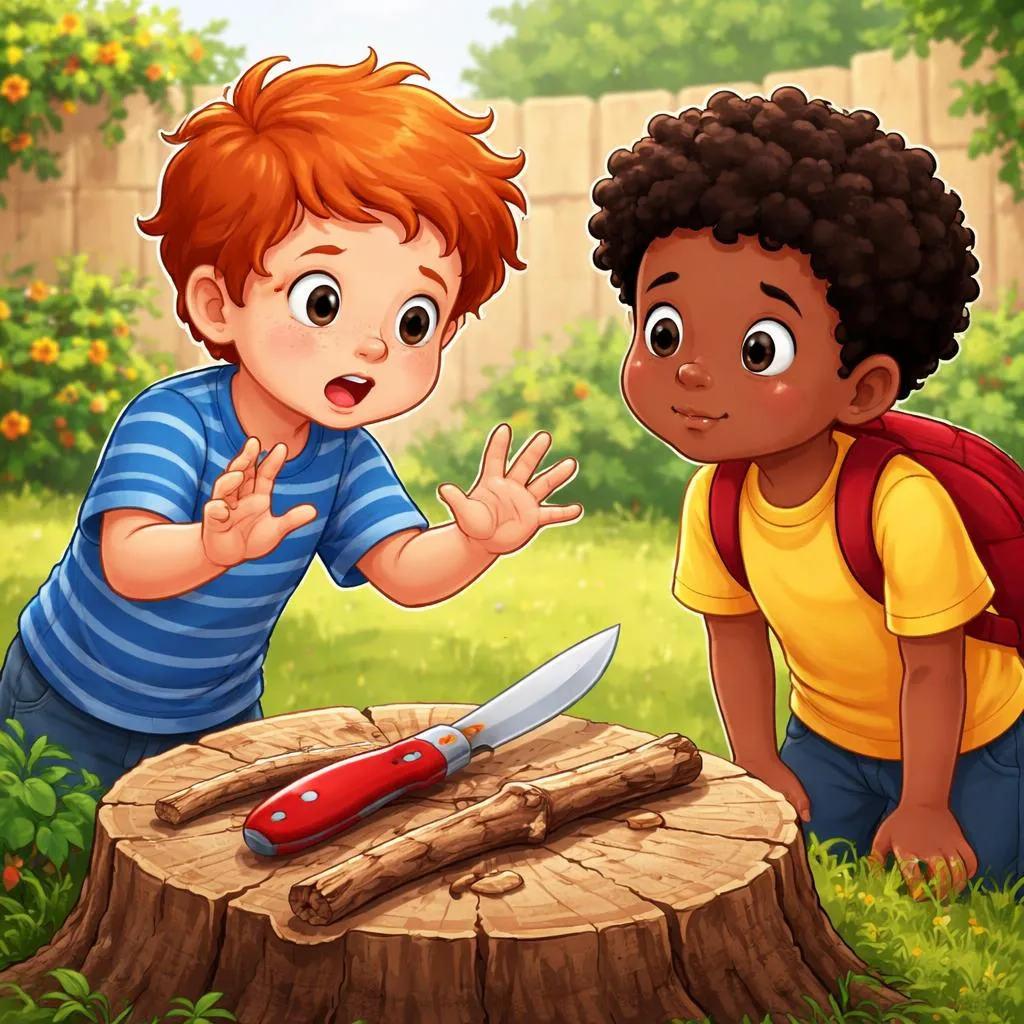

What Do These Expressions Mean? “It's sharp” and “it can cut” both describe an object that could slice skin. They tell someone that touching the edge could cause bleeding or injury. Children hear these words about knives, scissors, broken glass, or tools. Both prevent cuts.
“It's sharp” means the edge is thin and can easily pierce or slice. It is a statement about the object's quality. A child says it when pointing at a knife. It warns without explaining the result.
“It can cut” means this object has the ability to slice through material. It is about the object's action or consequence. A child says it when picking up scissors. It names what could happen.
These expressions seem similar. Both warn that an object is dangerous to touch. Both prevent injuries. But one describes the object while one describes the possible action.
What's the Difference? One describes the object's quality. One describes the possible consequence. “It's sharp” tells you about the edge. It is the standard, classic warning. It is shorter and very common.
“It can cut” explains what will happen if you touch it wrong. It is more specific about the risk. It is slightly more educational. It names the injury.
Think of a child near a knife. “It's sharp, don't touch” is the classic warning. “It can cut you, be careful” is also good. One names the quality. One names the result.
One is for quick warnings. The other is for teaching. “It's sharp” is fast and effective. “It can cut” teaches the reason for the warning. Use the first for speed. Use the second for lessons.
Also, “It's sharp” can describe non-cutting things. A sharp pain. A sharp turn. “It can cut” is only about cutting. Be clear in context.
When Do We Use Each One? Use “it's sharp” for most quick safety warnings. Use it for knives, scissors, broken glass, or tools. Use it to stop a child from touching. It fits fast, urgent moments.
Examples at home: “It's sharp. Don't touch the knife.” “The broken glass is sharp. Stay away.” “Those scissors are sharp. Ask for help.”
Use “it can cut” for teaching moments. Use it to explain why the object is dangerous. Use it for older children. It fits educational safety talks.
Examples for teaching: “The knife can cut you. Always carry it pointing down.” “The tin can lid can cut. Be careful opening it.” “Those scissors can cut paper. They can also cut skin.”
Children need both phrases. “It's sharp” for quick warnings. “It can cut” for learning the why. Both prevent cuts.
Example Sentences for Kids It's sharp: “It's sharp. Don't run with the scissors.” “The edge is sharp. Watch your fingers.” “It's sharp. Let an adult help.”
It can cut: “The knife can cut. Be very careful.” “Broken glass can cut your feet. Wear shoes.” “That tool can cut. I will show you how to use it safely.”
Notice “it's sharp” describes the object. “It can cut” describes the danger. Children learn both. One for speed. One for understanding.
Parents can use both. Handing scissors: “it's sharp.” Teaching knife safety: “this knife can cut you.” Children learn the what and the why.
Common Mistakes to Avoid Some children say “it can cut” for things that are sharp but not dangerous. A sharp pencil can poke but not really cut. Save “it can cut” for things that truly slice skin. Be accurate.
Wrong: “A pencil can cut you.” Better: “A pencil can poke you. Be careful.”
Another mistake: saying “it's sharp” for everything pointy. A pin is sharp. A cactus is sharp. The phrase works, but the warning is the same. Use the phrase for any sharp object.
Wrong vs right is subtle. “It's sharp” works for all sharp things.
Some learners forget that “sharp” can describe intelligence. “She is sharp” means smart. “The knife is sharp” means dangerous. Context makes the meaning clear.
Also avoid letting children handle sharp things without supervision. Words are not enough. Always watch. Teach with words. Protect with presence. Safety is both.
Easy Memory Tips Think of “it's sharp” as a jagged line. The line looks pointy and dangerous. A quality of the object. For quick warnings.
Think of “it can cut” as a red drop of blood. The drop shows what could happen. A consequence of touching. For teaching moments.
Another trick: remember the focus. “Sharp” focuses on the object. “Can cut” focuses on the result. Object gets “sharp.” Result gets “can cut.”
Parents can say: “Sharp for the blade. Cut for the help it made.” That means the object's sharpness gets “it's sharp.” The potential injury gets “it can cut.”
Practice at home. Knife: “it's sharp.” Scissors: “these can cut.” Two phrases. Same safety.
Quick Practice Time Let us try a small exercise. Choose the better phrase for each situation.
A child reaches for a steak knife on the kitchen counter. a) “It can cut.” b) “It's sharp. Don't touch it.”
A parent is teaching a 7-year-old how to safely open a box with scissors. a) “It's sharp.” b) “Scissors can cut. Hold them like this.”
Answers: 1 – b. An urgent moment needs the quick warning “it's sharp.” 2 – b. A teaching moment fits the explanatory “can cut.”
Fill in the blank: “When I see my toddler near a pair of scissors, I say ______.” (“It's sharp” is the quick, clear warning for young children.)
One more: “When I teach my older child knife safety, I say ______.” (“This knife can cut you. Always point it down.” fits the teaching moment.)
Sharp things are everywhere. “It's sharp” warns quickly. “It can cut” teaches wisely. Teach your child both. A child who respects sharp edges stays safe.
Wrap-up “It's sharp” is a quick warning about an object's dangerous edge. “It can cut” explains the possible injury from touching that edge. Use “it's sharp” for urgent, fast warnings. Use “it can cut” for teaching moments about consequences. Both phrases prevent serious cuts. A child who knows sharp objects grows up careful.