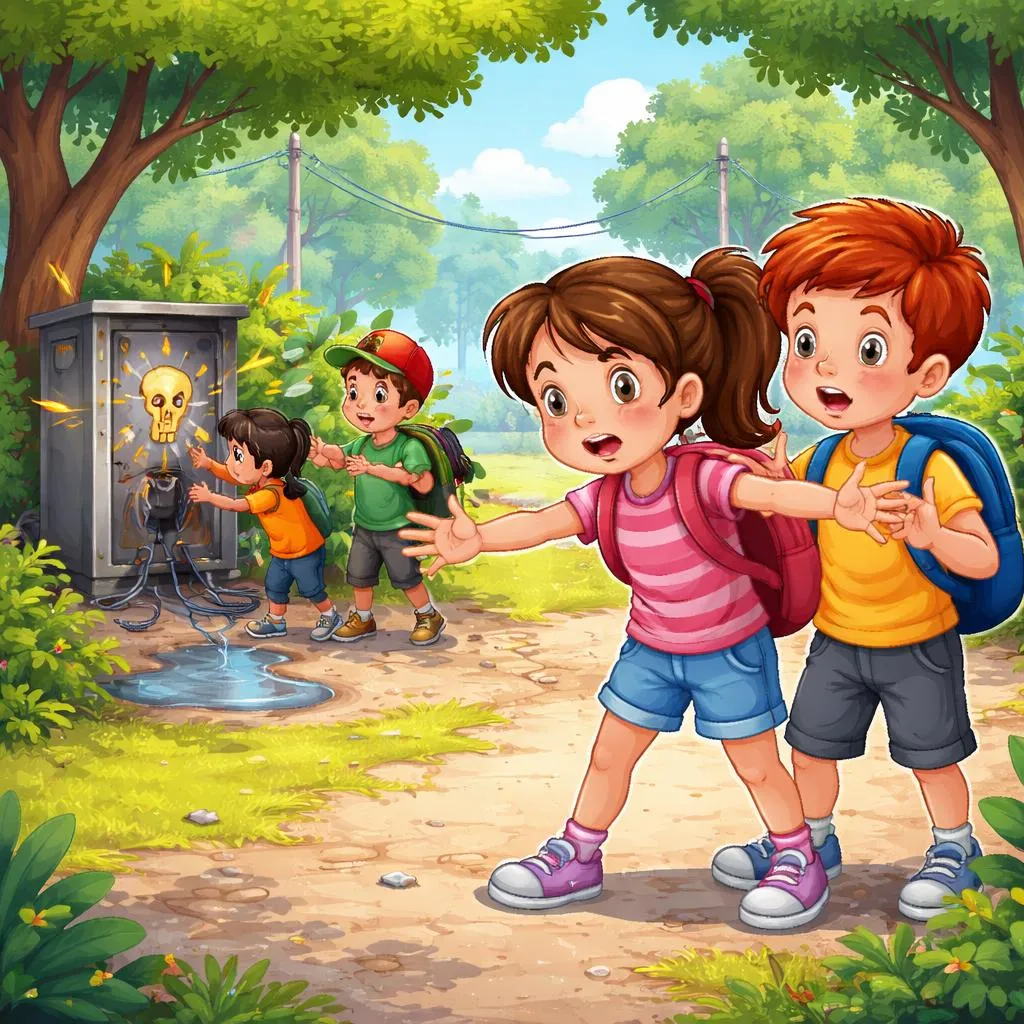

What Do These Expressions Mean? “It's dangerous” and “be wary” both tell someone to watch out for harm or risk. They warn that a situation, object, or action could cause injury. Children hear these words near hot stoves, sharp tools, or busy streets. Both prevent accidents.
“It's dangerous” means this thing or situation can hurt you. It is direct and clear. A child says it when a friend touches a hot pan. It names the danger openly.
“Be wary” means be watchful and cautious of possible danger. It sounds softer and more abstract. An adult says it about strangers or unknown situations. It warns without naming a specific danger.
These expressions seem similar. Both say “do not be careless here.” Both protect from harm. But one names the danger while one describes a posture of caution.
What's the Difference? One names the danger directly. One describes a cautious attitude. “It's dangerous” points at something specific. The hot stove. The sharp knife. The busy road. It names the threat.
“Be wary” is more general. It means “pay attention, something might be wrong.” It does not name what. It asks for alertness.
Think of a child near a fire. “It's dangerous to touch the fire” is clear. “Be wary near the fire” is also true but less specific. One names the risk. One asks for care.
One is for children. The other is for older people. “It's dangerous” is what you say to a young child. “Be wary” sounds like advice to a teenager or adult. Use the first for kids. Use the second for grown-ups.
Also, “wary” means suspicious or cautious. A child might not know this word. “Dangerous” is easier to understand. Teach simple words first.
When Do We Use Each One? Use “it's dangerous” for most safety warnings to children. Use it for hot things, sharp things, heights, or traffic. Use it to name the specific danger. It fits teaching moments.
Examples at home: “It's dangerous to run near the pool.” “It's dangerous to touch the stove.” “It's dangerous to play in the street.”
Use “be wary” for general caution or with older children. Use it about strangers, unknown animals, or tricky situations. Use it when you are not sure of the specific danger. It fits abstract warnings.
Examples for caution: “Be wary of strangers who offer candy.” “Be wary when walking alone at night.” “Be wary of that dog. It looks scared.”
Children need both phrases. “It's dangerous” for specific, clear risks. “Be wary” for general caution. One names. One alerts.
Example Sentences for Kids It's dangerous: “It's dangerous to climb on that old fence.” “It's dangerous. The knife is very sharp.” “It's dangerous. Stay away from the fire.”
Be wary: “Be wary of people you don't know.” “Be wary when crossing a dark parking lot.” “Be wary. That animal might be scared.”
Notice “it's dangerous” names the threat. “Be wary” names the attitude. Children learn both. One for clear danger. One for caution.
Parents can use both. Hot stove: “it's dangerous.” Unknown dog: “be wary of that dog.” Children learn different kinds of warnings.
Common Mistakes to Avoid Some parents say “be wary” to a young child. The child may not understand the word. Say “it's dangerous” or “be careful” first. Save “wary” for older children.
Wrong: “Be wary of the hot stove” (to a 4-year-old). Better: “It's dangerous to touch the stove. Hot!”
Another mistake: saying “it's dangerous” for every small risk. If you say it too much, children stop listening. Save it for real dangers. For small risks, say “be careful” or “watch out.”
Wrong: “It's dangerous to walk on the rug” (wrinkled rug). Better: “Watch your step on the rug.”
Some learners use “be wary” for a specific danger. “Be wary of that cliff” is fine. But “it's dangerous near that cliff” is clearer. When in doubt, name the danger.
Also avoid saying “it's dangerous” in a panicked voice. Panic scares children without teaching them. Say it calmly but firmly. Calm warnings work better.
Easy Memory Tips Think of “it's dangerous” as a red stop sign. The sign says STOP. Clear and specific. For named dangers.
Think of “be wary” as a yellow caution flag. The flag says “slow down and look.” General and alert. For unknown or fuzzy risks.
Another trick: remember the age. “Dangerous” for young children. “Wary” for teenagers and adults. Young gets “dangerous.” Older gets “be wary.”
Parents can say: “Danger for the little. Wary for the brittle.” That means young children need “it's dangerous.” Older children can understand “be wary.”
Practice at home. Knife on counter: “it's dangerous.” Unknown knock at door: “be wary. Don't open it.” Two different warnings. One safe child.
Quick Practice Time Let us try a small exercise. Choose the better phrase for each situation.
A 4-year-old approaches a hot oven. The parent needs to stop them immediately. a) “Be wary of the oven.” b) “It's dangerous. The oven is hot!”
A teenager is walking alone at night. The parent wants to remind them to be alert. a) “It's dangerous to walk.” b) “Be wary of your surroundings. Stay alert.”
Answers: 1 – b. A young child needs the clear, direct “it's dangerous.” 2 – b. A teenager needs the general caution phrase “be wary.”
Fill in the blank: “When my toddler reaches for a sharp knife, I say ______.” (“It's dangerous” is the immediate, clear warning for a young child.)
One more: “When my teenager goes to a new city, I remind them to ______ of pickpockets.” (“Be wary” fits the general, abstract caution for older kids.)
Knowing danger keeps children safe. “It's dangerous” names the threat clearly. “Be wary” teaches alertness. Teach your child both. A child who knows danger avoids it.
Wrap-up “It's dangerous” names a specific threat clearly for young children. “Be wary” describes a general attitude of caution for older children and adults. Use “it's dangerous” for hot stoves, sharp knives, and busy streets. Use “be wary” for strangers, unknown situations, and abstract risks. Both phrases prevent harm. A child who understands danger grows up safe.