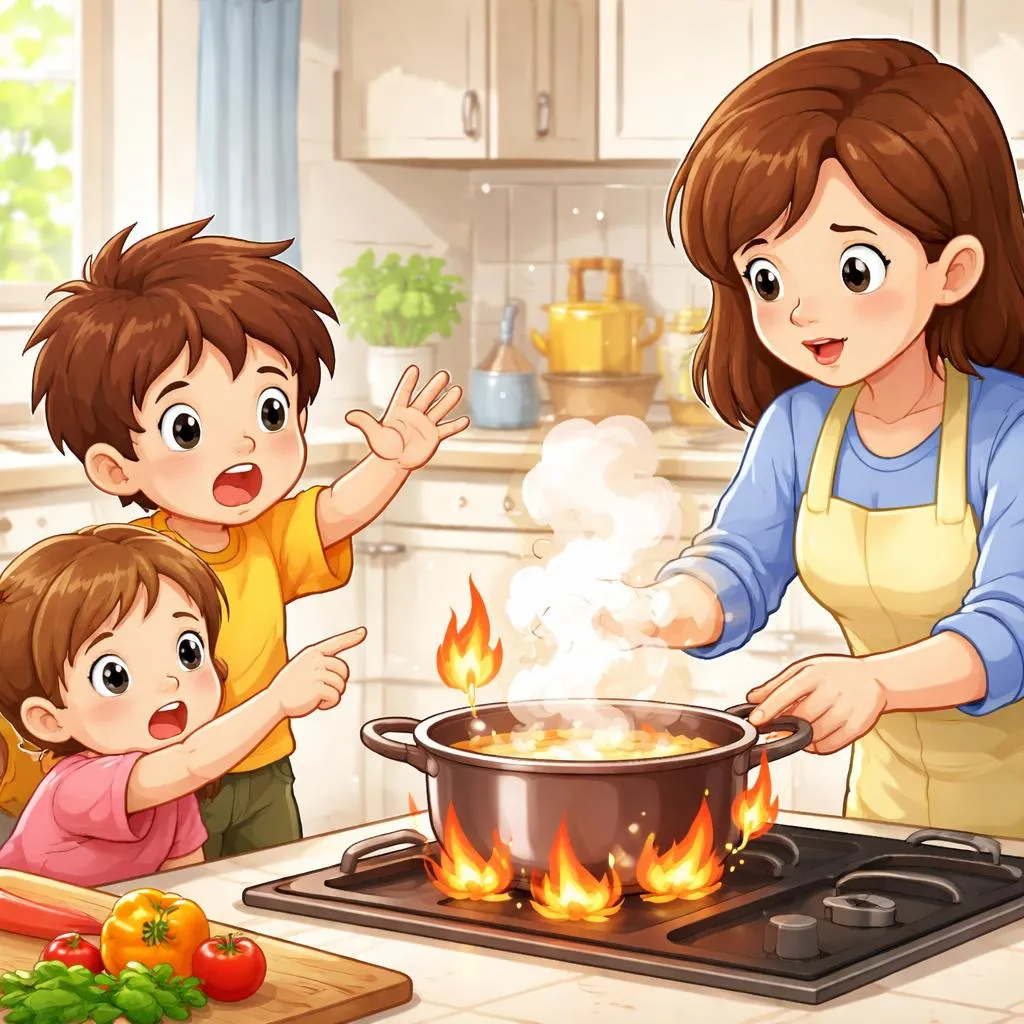

What Do These Expressions Mean? “It's hot” and “it's burning” both warn that an object or surface has a high temperature. They tell someone that touching it could cause pain or injury. Children hear these words about stoves, fire, or hot drinks. Both prevent burns.
“It's hot” means the temperature is high and could hurt you. It is common and direct. A child says it when touching a warm pan. It is a general warning.
“It's burning” means something is on fire or so hot it is scorching. It sounds stronger and more urgent. A child says it when flames appear or smoke rises. It is a more serious alarm.
These expressions seem similar. Both relate to high heat. Both warn of potential injury. But one is for normal heat while one is for extreme, active heat.
What's the Difference? One is for dangerous heat. One is for active fire or scorching heat. “It's hot” works for any high temperature. Hot stove. Hot soup. Hot sun. It is the standard, useful warning.
“It's burning” is stronger and more specific. It means something is on fire or so hot it is blackening. A piece of paper in a flame is burning. A forgotten pot on a stove is burning.
Think of a child near a warm mug. “It's hot, don't touch” is right. “It's burning” would be an exaggeration. One matches the moment. One is too dramatic.
One is for warning. The other is for emergency. “It's hot” says “be careful.” “It's burning” says “get help now.” Use the first for daily safety. Use the second for real fires.
Also, “burning” usually involves flames or smoke. If you see flames, say “it's burning.” If you just feel heat, say “it's hot.” Be accurate.
When Do We Use Each One? Use “it's hot” for most heat warnings. Use it for stoves, ovens, hot water, and sunny pavement. Use it to prevent burns in daily life. It fits everyday safety.
Examples at home: “It's hot. Don't touch the pan.” “It's hot outside. Wear a hat.” “The soup is hot. Blow on it first.”
Use “it's burning” for emergencies and active fires. Use it for flames, smoke, or scorching surfaces. Use it to get help fast. It fits urgent moments.
Examples for urgency: “The toast is burning. Smoke is coming out.” “It's burning. Call for help.” “The candle fell over. The table is burning.”
Children need both phrases. “It's hot” for daily warnings. “It's burning” for emergencies. Both prevent burns.
Example Sentences for Kids It's hot: “It's hot. Wait for it to cool down.” “It's hot. Use a pot holder.” “The sand is hot. Put your shoes on.”
It's burning: “It's burning. The paper is on fire.” “Something is burning in the kitchen. I smell smoke.” “The wood is burning in the fireplace.”
Notice “it's hot” sounds like a normal warning. “It's burning” sounds like an alarm. Children learn both. One for care. One for crisis.
Parents can use both. Hot pan: “it's hot.” Fire in the fireplace: “the wood is burning.” (observation) Smoke from toaster: “it's burning! Unplug it!”
Common Mistakes to Avoid Some children say “it's burning” for warm things. That is an exaggeration. A warm cookie is not burning. Save “burning” for real heat emergencies.
Wrong: “It's burning!” (warm soup) Right: “It's hot. Be careful.”
Another mistake: saying “it's hot” when there is an active fire. If something is on fire, say “it's burning” to get help fast. Understating an emergency is dangerous. Use strong words for strong dangers.
Wrong: “It's hot” (fire on the stove). Right: “It's burning! Call for help!”
Some learners forget that “burning” can also describe pain. “My hand is burning” means it hurts from heat. “It's burning” means the object is on fire or scorching. Context makes the meaning clear.
Also avoid shouting “it's hot” in a panicked voice. A calm, firm voice is enough for normal heat. Save panic for real emergencies. Calm warnings work better.
Easy Memory Tips Think of “it's hot” as a red stove burner. The burner glows red. Dangerous but not on fire. Warning level.
Think of “it's burning” as orange flames. Flames leap up. Smoke rises. Emergency level. Fire alarm level.
Another trick: remember the temperature. “Hot” is high heat. “Burning” is fire or scorching. High heat gets “hot.” Fire gets “burning.”
Parents can say: “Hot for the stove. Burning for the fire you shove.” That means hot surfaces get “it's hot.” Flames and smoke get “it's burning.”
Practice at home. Hot pan: “it's hot.” Candle flame: “the candle is burning.” Toaster smoke: “it's burning! Unplug it!” Two different warnings. Same safety.
Quick Practice Time Let us try a small exercise. Choose the better phrase for each situation.
A child sees steam rising from a hot cup of cocoa. a) “It's burning.” b) “It's hot. Let it cool down.”
A child sees smoke coming from a toaster and small flames inside. a) “It's hot.” b) “It's burning! Get an adult!”
Answers: 1 – b. A hot cup of cocoa fits the normal warning “it's hot.” 2 – b. Smoke and flames fit the emergency warning “it's burning.”
Fill in the blank: “When I see a red burner on the stove, I say ______.” (“It's hot” is the accurate, daily safety warning.)
One more: “When I see flames on a piece of paper, I shout ______.” (“It's burning” fits the emergency, fire situation.)
Heat and fire are different. “It's hot” teaches daily caution. “It's burning” teaches emergency response. Teach your child both. A child who knows fire safety stays alive.
Wrap-up “It's hot” warns of dangerous heat from stoves, drinks, or sun. “It's burning” warns of active fire or scorching that requires immediate help. Use “it's hot” for everyday heat warnings. Use “it's burning” for emergencies with flames or smoke. Both phrases prevent burns and save lives. A child who knows heat knows how to stay safe.