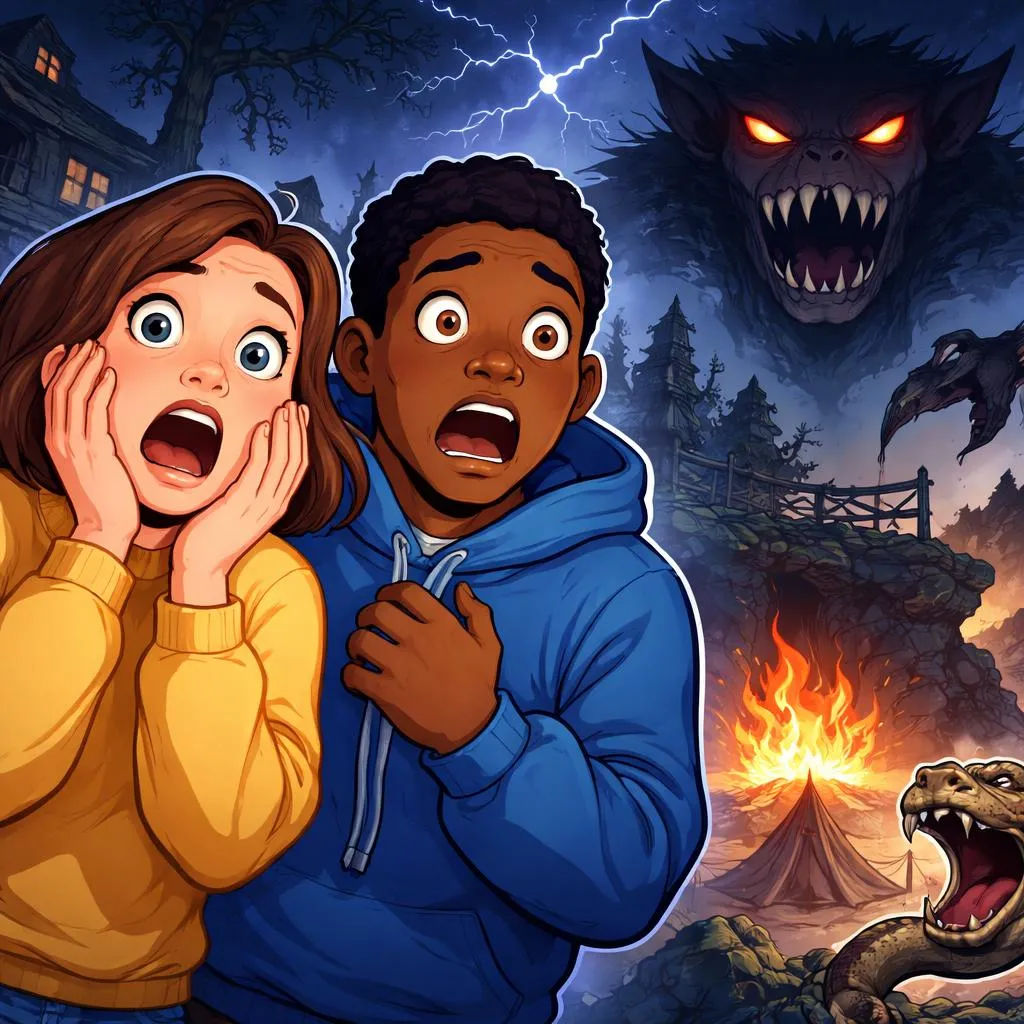

What Do These Expressions Mean? “That's scary” and “that's frightening” both react to something that causes fear. They tell someone that a thing or situation makes you feel afraid. Children say these words during storms, dark rooms, or loud noises. Both ask for comfort and safety.
“That's scary” means I feel fear right now. It is common and direct. A child says it when a dog barks loudly. It feels immediate and real.
“That's frightening” means this causes a deep, lasting fear. It sounds stronger and more formal. An adult says it about a dangerous situation. It feels heavier and more serious.
These expressions seem very similar. Both say “I am afraid.” Both ask for protection. But one is for quick fear while one is for deep fear.
What's the Difference? One is for everyday fears. The other is for serious fears. “That's scary” works for most fearful moments. A shadow. A loud thunder. A spider. It fits normal childhood fears.
“That's frightening” works for real danger or deep dread. A car almost hitting you. A strange person following you. It fits rare, serious moments. It sounds more adult.
Think of a child hearing thunder. “That's scary” feels right. “That's frightening” feels too strong for a storm. One matches the moment. One overshoots.
One is more common. The other is more intense. “That's scary” appears every day. “That's frightening” appears in books and serious talks. Use the first for normal fear. Save the second for real danger.
Also, “frightening” suggests something might harm you. “Scary” can be harmless fun, like a Halloween costume. A costume is scary-fun. Not frightening. Frightening means real threat.
When Do We Use Each One? Use “that's scary” for most fearful situations. Use it for surprises, loud noises, and imaginary fears. Use it when you need comfort but are not in real danger. It fits daily life.
Examples at home: “That's scary when the lights flicker.” “That's scary. I don't like that noise.” “The dark is scary. Can you leave the door open?”
Use “that's frightening” for real danger or deep fear. Use it for near-accidents, threats, or news of danger. Use it when the fear is serious and lasting. It fits rare, serious moments.
Examples for serious fear: “That car almost hit us. That's frightening.” “The news about the storm is frightening.” “Walking alone at night can be frightening.”
Children rarely need “frightening.” Teach them to understand it. But for daily fears, “scary” works perfectly. Save the strong word for strong moments.
Example Sentences for Kids That's scary: “That's scary when the screen goes black.” “The roller coaster drop is scary but fun.” “That's scary. Hold my hand.”
That's frightening: “That earthquake was frightening.” “Getting lost in a big crowd is frightening.” “That frightening dream woke me up.”
Notice “that's scary” works for small and medium fears. “That's frightening” works for big, real threats. One is a shiver. One is a shake. Both are real fears.
Parents can use both with children. “That's scary, but I'm right here.” (comfort) “That situation sounds frightening. Let's stay safe.” (serious) Children learn the scale of fear.
Common Mistakes to Avoid Some children say “that's frightening” for small scares. That sounds dramatic. A creaking door is scary, not frightening. Save the stronger word for stronger fear.
Wrong: “That's frightening” (a tiny spider). Right: “That's scary. I don't like spiders.”
Another mistake: laughing at a child's fear. Do not say “that's not scary.” Fear is real to the child. Say “I understand. Let me help you feel safe.”
Wrong: “That's not scary. Don't be silly.” Right: “That feels scary to you. I will stay with you.”
Some learners forget that fear needs action. Do not just say the words. Ask “what would help you feel safer?” A hug. A light. A hand to hold.
Wrong: “That's scary.” (does nothing) Right: “That's scary. Let's turn on the night light.”
Also avoid comparing fears. “That's not as scary as...” dismisses the child's feeling. Every fear is real to the person feeling it. Respect each fear.
Easy Memory Tips Think of “that's scary” as a quick jump. You jump back. Your heart beats fast for a second. Then you breathe.
Think of “that's frightening” as a long freeze. You cannot move. Your whole body feels cold. The fear stays.
Another trick: remember the letters. “Scary” has S for “startle.” “Frightening” has F for “frozen.” Startle gets “scary.” Frozen gets “frightening.”
Parents can say: “Scary for quick. Frightening for sick.” That means quick fears get “scary.” Fears that make you feel sick or truly unsafe get “frightening.”
Practice talking about fears at home. A loud noise: “that's scary.” A news story about a danger: “that's frightening.” Your child learns to name the size of the fear.
Quick Practice Time Let us try a small exercise. Choose the better phrase for each situation.
Your child sees a large spider on the wall. They are nervous. a) “That's frightening.” b) “That's scary, but I will move it outside.”
Your family sees a tornado warning on the news. Everyone goes to the basement. a) “That's scary.” b) “That's frightening. We need to stay safe.”
Answers: 1 – b. A spider is scary, not life-threatening. 2 – b. A real weather danger fits “frightening.”
Fill in the blank: “When I hear a bump in the night, I say ______.” (“That's scary” fits normal nighttime fears.)
One more: “When I see a car run a red light near us, I say ______.” (“That's frightening” fits a real, dangerous moment.)
Fear is a normal feeling. Naming it helps tame it. “That's scary” names small fear. “That's frightening” names big fear. Both are brave to say.
Wrap-up “That's scary” expresses common, everyday fear. “That's frightening” expresses deep, serious, or dangerous fear. Use “scary” for most fears. Use “frightening” for real threats or lasting dread. Both words are honest. Asking for comfort when scared is always brave.