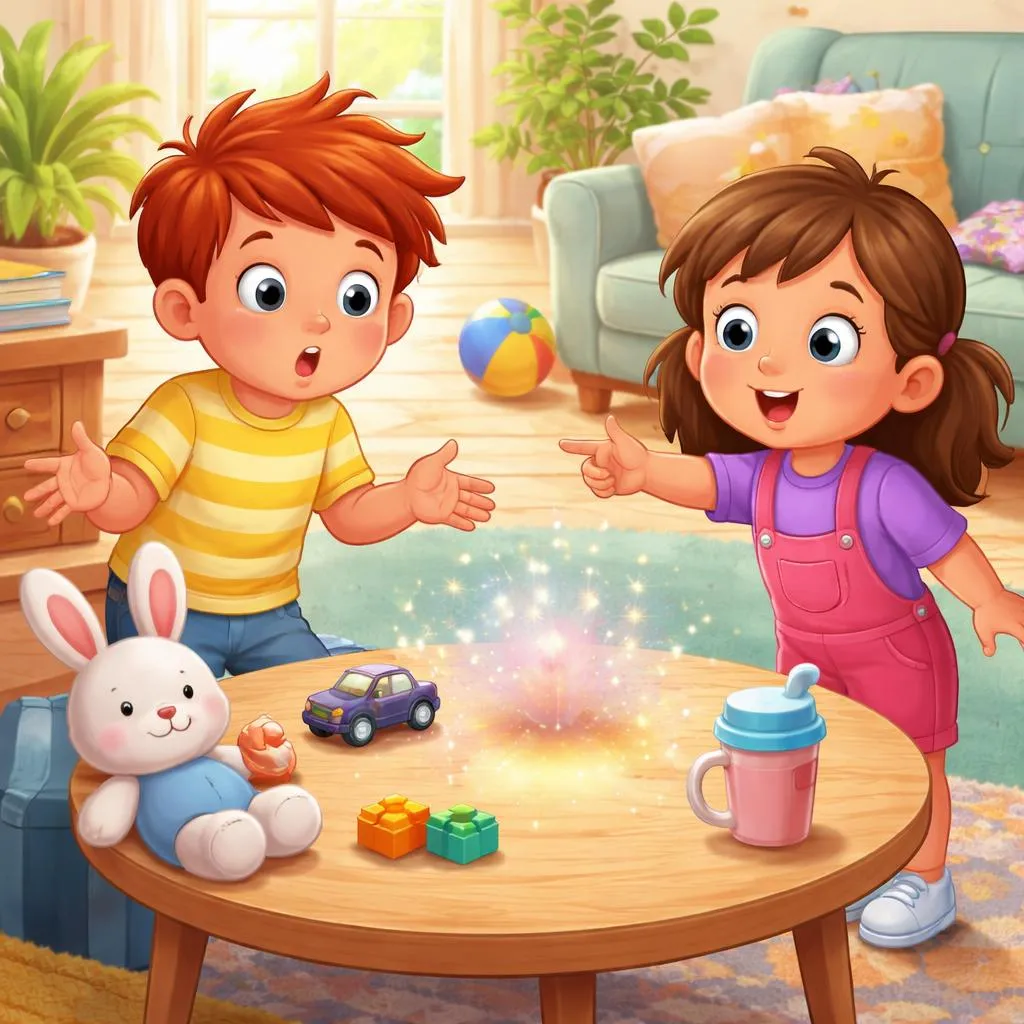

What Do These Expressions Mean? “It's gone” and “it disappeared” both mean that something is no longer where it used to be and cannot be seen. They tell someone that an object has left its place, often in a mysterious way. Children say these words about bubbles popping, clouds moving, or snacks being eaten. Both express surprise.
“It's gone” means the thing is not here anymore. It is short and direct. A child says it when a cookie is eaten. It is the everyday word.
“It disappeared” means it was here and then suddenly was not here, often in a way you cannot explain. It is more dramatic and mysterious. A child says it when a balloon floats away. It feels like magic.
These expressions seem similar. Both say “it left.” Both show a change. But one is for expected leaving while one is for mysterious vanishing.
What's the Difference? One is for expected or simple leaving. One is for mysterious, sudden vanishing. “It's gone” works for anything that left. Food eaten, sun setting, car driving away. It is a simple statement.
“It disappeared” implies something was there one moment and not the next, often in a surprising way. A magic trick, a ghost, a stolen item. It is more dramatic. It suggests mystery.
Think of a child eating a piece of candy. “It's gone” is right. “It disappeared” would be too dramatic for a candy you ate. One is for eating. One is for magic.
One is for normal endings. The other is for surprising vanishings. “It's gone” for finishing a snack. “It disappeared” for a hidden object. Use the first for ordinary. Use the second for mystery.
Also, “disappeared” can be used for people. “My dad disappeared” is scary. Be careful with that word. “Gone” is safer for people.
When Do We Use Each One? Use “it's gone” for most things that leave. Use it for eaten food, used-up crayons, or finished games. Use it as a simple fact. It fits everyday life.
Examples at home: “My cookie is gone. I ate it.” “The sun is gone. It's nighttime.” “The sticker is gone. It fell off.”
Use “it disappeared” for mysterious or sudden vanishings. Use it for magic tricks, hidden objects, or things that were there one second and not the next. Use it for drama. It fits mystery moments.
Examples for mystery: “The magician's rabbit disappeared!” “My pencil disappeared. I just had it.” “The clouds disappeared. The sun came out.”
Children can use both. “It's gone” for normal. “It disappeared” for mystery. Both are fun.
Example Sentences for Kids It's gone: “The snow is gone. It melted.” “My juice is gone. I finished it.” “The bird is gone. It flew away.”
It disappeared: “The coin disappeared under the cup.” “My sock disappeared in the laundry.” “The rainbow disappeared as fast as it came.”
Notice “it's gone” is simple and calm. “It disappeared” is dramatic and mysterious. Children learn both. One for facts. One for wonder.
Parents can use both. Finished snack: “it's gone.” Magic trick: “it disappeared.” Children learn different tones.
Common Mistakes to Avoid Some children say “disappeared” for everything. That drains the mystery. Save it for when something really vanishes mysteriously. Use “gone” for eating and finishing.
Wrong: “My apple disappeared.” (you ate it) Right: “My apple is gone. I ate it.”
Another mistake: using “gone” for something that might come back. If your dad is at the store, he is not “gone” forever. Say “he left” or “he's out.” “Gone” can sound permanent.
Wrong: “Dad is gone.” (he went to the store) Better: “Dad went to the store.”
Some learners forget that “disappeared” can be scary. Do not say “my mom disappeared” unless it is true. That word causes panic. Use it carefully.
Also avoid saying “it's gone” for things that are not yours. “The library book is gone” means you lost it. Take responsibility. Say “I lost the library book.”
Easy Memory Tips Think of “it's gone” as an empty plate. No food left. Simple. For endings.
Think of “it disappeared” as a magician's hat. Poof. Where did it go? For mystery.
Another trick: remember the surprise. “Gone” is not surprising. “Disappeared” is surprising. No surprise gets “gone.” Surprise gets “disappeared.”
Parents can say: “Gone for a snack. Disappeared for a magic trick's crack.” That means eating and finishing get “gone.” Mysterious vanishings get “disappeared.”
Practice at home. Eat a cracker: “it's gone.” Hide a coin: “it disappeared.” Two different vanishings.
Quick Practice Time Let us try a small exercise. Choose the better phrase for each situation.
A child finishes their milk. The glass is empty. a) “My milk disappeared.” b) “My milk is gone. I drank it all.”
A child watches a magic show where a silk scarf vanishes from a box. a) “The scarf is gone.” b) “The scarf disappeared! It's magic!”
Answers: 1 – b. Finishing a drink fits the simple “gone.” 2 – b. A magic trick vanishing fits the mysterious “disappeared.”
Fill in the blank: “When I eat the last bite of my sandwich, I say it's ______.” (“Gone” is the simple, everyday, eating-related choice.)
One more: “When my pencil falls behind my desk and I can't find it anywhere, I say it ______.” (“Disappeared” fits the mysterious, sudden, surprising loss.)
Things vanish every day. “It's gone” says goodbye. “It disappeared” says wow. Teach your child both. A child who can describe a vanishing can handle loss and wonder.
Wrap-up “It's gone” is a simple, direct statement that something is no longer there, often because it was eaten, used, or left. “It disappeared” is a more dramatic, mysterious word for something that was there one second and gone the next in a surprising way. Use “it's gone” for finished snacks, melted snow, and flown-away birds. Use “it disappeared” for magic tricks, hidden objects, and sudden vanishings. Both words describe loss and change. A child who learns both can tell a parent if something is simply finished or mysteriously vanished.