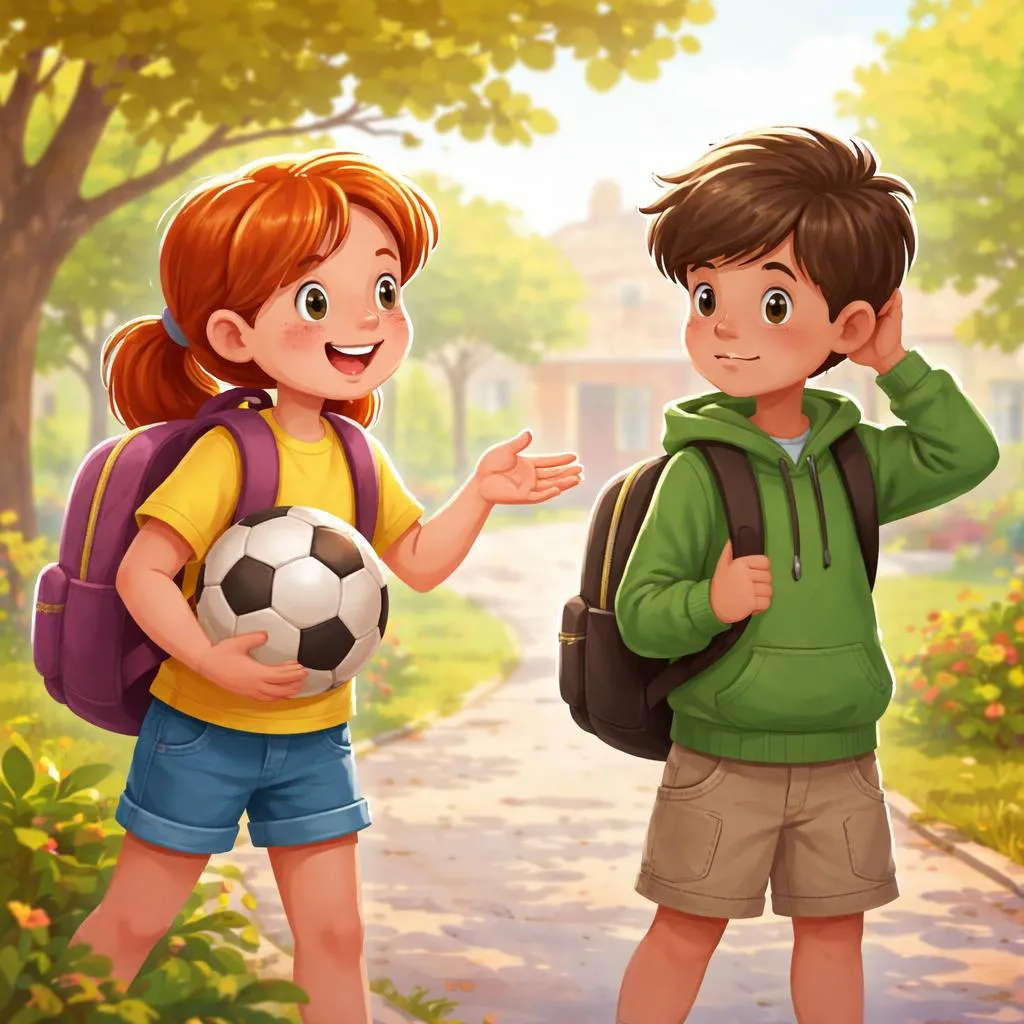

What Do These Expressions Mean? “Maybe later” and “perhaps another time” both tell someone that you are not ready to do something now, but you might be in the future. They keep the door open without making a promise. Children say these words when they need time to think or are not sure. Both are gentle and kind.
“Maybe later” means there is a chance I will do it at a future time. It is common and casual. A child says it when a friend asks to play but they are tired. It is soft and hopeful.
“Perhaps another time” means possibly on a different day, not today. It sounds more formal and polite. A child might say it when declining a playdate invitation. It feels very grown-up and careful.
These expressions seem similar. Both say “not right now, but maybe someday.” Both protect feelings. But one is casual while one is formal.
What's the Difference? One is for everyday talk. One is for formal or careful moments. “Maybe later” is what children say to friends. It is natural and friendly. It doesn't sound too serious.
“Perhaps another time” is more formal and distant. It sounds like something an adult would say in a business meeting. A child saying it sounds very polite but unusual. It is correct but rare in children's speech.
Think of a child at a playground. A friend asks to play on the swings together. The child is tired. “Maybe later” is right. “Perhaps another time” sounds like a cancellation letter.
One is for soon. The other is for another day. “Maybe later” can mean in an hour or tomorrow. “Perhaps another time” usually means another day entirely. “Later” is sooner. “Another time” is more distant.
Also, “perhaps” is a less common word. Children understand “maybe” better. For young kids, use “maybe later.” For older kids learning formal English, teach “perhaps.”
When Do We Use Each One? Use “maybe later” for casual, short-term delays. Use it with friends, siblings, and classmates. Use it when you might do it soon. It fits everyday life.
Examples at home: “Maybe later. I'm reading right now.” “Maybe later. Let me finish my snack.” “Maybe later. I need a break first.”
Use “perhaps another time” for formal or long-term delays. Use it when declining a party invitation or a big plan. Use it to be very polite. It fits formal moments.
Examples for formality: “Perhaps another time. I am busy this weekend.” “Perhaps another time. Thank you for asking me.” “Perhaps another time. Let's plan for next month.”
Children rarely need “perhaps another time.” Teach it for understanding, not daily use. “Maybe later” works for almost all situations. Simple is kinder.
Example Sentences for Kids Maybe later: “Maybe later. I'm in the middle of this game.” “Maybe later. Ask me again in ten minutes.” “Maybe later. I'm too tired right now.”
Perhaps another time: “Perhaps another time. I have plans today.” (formal) “Perhaps another time. Thank you for the invitation.” “Perhaps another time. Let's play next week.”
Notice “maybe later” sounds like a friend. “Perhaps another time” sounds like a letter. Children learn both. One for daily. One for formal.
Parents can use both. “Maybe later, I'm cooking.” “Perhaps another time for the playdate.” Children learn different levels of politeness.
Common Mistakes to Avoid Some children say “maybe later” when they mean “no.” That gives false hope. If you really do not want to do it, say “no thank you.” “Maybe later” should mean maybe, not no.
Wrong: “Maybe later” (means no, never). Better: “No thank you. I don't want to.”
Another mistake: saying “perhaps another time” to a close friend. It sounds too formal. Friends expect “maybe later” or “not now.” Save formal phrases for formal situations.
Wrong: “Perhaps another time” (to a best friend). Better: “Maybe later. I'm busy now.”
Some learners forget that “maybe later” can be vague. If someone asks when, say “in about ten minutes.” Specificity is kind. Vague answers can feel like rejection.
Also avoid using “maybe later” to get out of things you promised. If you said you would do it, do it. “Maybe later” is not for breaking promises. Be a person of your word.
Easy Memory Tips Think of “maybe later” as a clock with a question mark. The time is not set. Soon but not now. Casual and friendly.
Think of “perhaps another time” as a calendar flipping pages. The pages turn to next week. Formal and distant. For polite declines.
Another trick: remember the formality. “Maybe” is for friends. “Perhaps” is for formal letters. Friends get “maybe later.” Letters get “perhaps another time.”
Parents can say: “Maybe for a friend. Perhaps for a formal send.” That means casual talk gets “maybe later.” Written or formal declines get “perhaps another time.”
Practice at home. Friend asks to play: “maybe later.” Declining a party invitation: “perhaps another time.” Two different politeness levels.
Quick Practice Time Let us try a small exercise. Choose the better phrase for each situation.
A child is building with blocks. A friend asks to join. The child wants to finish alone first but will play later. a) “Perhaps another time.” b) “Maybe later. Let me finish my tower.”
A child is invited to a birthday party on a day they already have plans. They need to decline politely. a) “Maybe later. I'm busy.” b) “Perhaps another time. Thank you for the invitation.”
Answers: 1 – b. A short, friendly delay fits “maybe later.” 2 – b. A formal invitation decline fits “perhaps another time.”
Fill in the blank: “When my friend asks to play while I am eating, I say ______.” (“Maybe later” is the casual, friendly, daily choice.)
One more: “When I write a note declining a party, I write ______.” (“Perhaps another time” fits formal, written, polite language.)
Not now does not mean never. “Maybe later” keeps the door open. “Perhaps another time” closes it politely. Teach your child both. A child who says no kindly keeps friends.
Wrap-up “Maybe later” is a casual, friendly way to delay something to the near future. “Perhaps another time” is a more formal, polite way to decline for a longer period or for written invitations. Use “maybe later” with friends, siblings, and in everyday talk. Use “perhaps another time” for formal invitations, written notes, or very polite declines. Both phrases are kind ways to say “not now.” A child who can say not now with kindness will always have friends.