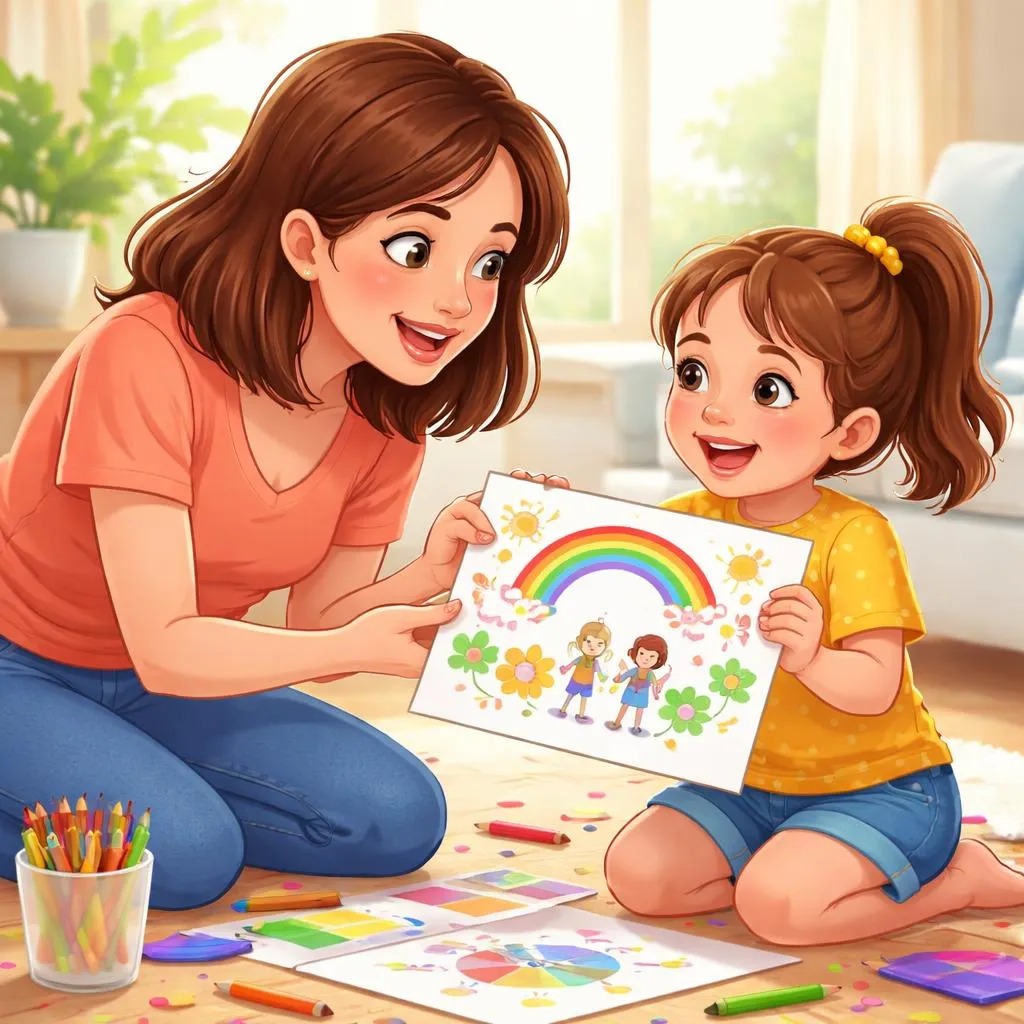

What Do These Expressions Mean? “Show me” and “let me see” both ask a child to present something visually. They request that you share a drawing, a toy, or an action. Children hear these words when parents want to admire their work. Both express interest and care.
“Show me” means present the thing or action to me directly. It is active and direct. A parent says it when a child learns a new dance. It asks for a demonstration.
“Let me see” means allow my eyes to look at the thing. It is slightly more passive. A parent says it when a child hides a drawing. It asks for access to view.
These expressions seem very similar. Both ask to look at something. Both show that you value what the child made or found. But one asks for a demonstration while one asks for viewing access.
What's the Difference? One often asks for action. The other asks for viewing. “Show me” often means demonstrate or point. A child might need to turn something around or perform a trick. It is more active.
“Let me see” means let my eyes look. The child might just hold it still. No performance is needed. It is quieter.
Think of a child with a new magic trick. “Show me how it works” asks for action. “Let me see the card” asks for a still look. One is a performance. One is an observation.
One can feel more eager. The other can feel more gentle. “Show me!” sounds excited. “Let me see” sounds curious. Both are wonderful. Both say “I care.”
Also, “show me” can be used for locations or directions. “Show me where you hurt” (pointing). “Let me see” does not work for directions. Choose based on what you need.
When Do We Use Each One? Use “show me” for actions, tricks, and locations. Use it when a child wants to demonstrate something. Use it when you need a pointing finger. It fits active moments.
Examples at home: “Show me how you built that tower.” “Show me where you put my keys.” “Show me that new dance move.”
Use “let me see” for looking at objects. Use it for drawings, crafts, and found treasures. Use it when the child just needs to hold it up. It fits quiet admiring moments.
Examples for viewing: “Let me see your painting. It looks beautiful.” “Let me see the rock you found.” “Let me see your new shoes.”
Children need both phrases. “Show me” for action demonstrations. “Let me see” for quiet viewing. Both celebrate the child's world.
Example Sentences for Kids Show me: “Show me how you tie your shoes now.” “Show me the way to the playground.” “Show me your best cartwheel.”
Let me see: “Let me see your drawing up close.” “Let me see what you have in your pocket.” “Let me see your tooth that fell out.”
Notice “show me” asks for a performance or a point. “Let me see” asks for a still look. One is a stage. One is a gallery. Both honor what the child shares.
Parents can use both every day. New skill: “show me how you do that.” New treasure: “let me see what you found.” Children learn the difference naturally.
Common Mistakes to Avoid Some children say “show me” when they just want to look. That can pressure a friend to perform. If you just want to look, say “let me see.” It is gentler.
Wrong: “Show me your drawing” (just to look). Right: “Let me see your drawing. It's lovely.”
Another mistake: saying “let me see” but not really looking. If you ask to see, pay attention. Look at the thing. Comment on it. Otherwise the child feels ignored.
Wrong: “Let me see” (glances quickly at phone). Right: “Let me see” (looks carefully). “That's wonderful.”
Some learners forget to be kind about what they see. Do not criticize a child's proud work. If you cannot say something nice, say “thank you for showing me.” Kindness always wins.
Also avoid grabbing while saying “let me see.” Wait for the child to hand it to you. Respect their hold on the object. Gentle hands build trust.
Easy Memory Tips Think of “show me” as a little stage. The child performs. You watch. Applause follows. Active and fun.
Think of “let me see” as a gentle lamp. You shine light on the object. You admire quietly. Still and warm.
Another trick: remember the outcome. “Show me” leads to action or pointing. “Let me see” leads to looking. Action gets “show me.” Looking gets “let me see.”
Parents can say: “Show for action. See for looking satisfaction.” That means performances get “show me.” Still objects get “let me see.”
Practice at art time. Child draws: “let me see.” Child does a magic trick: “show me again.” Two phrases. One proud child.
Quick Practice Time Let us try a small exercise. Choose the better phrase for each situation.
Your child built a block tower and wants you to look at it still standing. a) “Show me how you built that.” b) “Let me see that tower. It's so tall.”
Your child learned to whistle and wants to prove it. a) “Let me see you whistle.” (not quite right) b) “Show me! I want to hear.”
Answers: 1 – b. A still tower just needs looking at. “Let me see.” 2 – b. A performance needs the active “show me.”
Fill in the blank: “When my child does a new somersault, I clap and say ______ again!” (“Show me” fits action demonstrations perfectly.)
One more: “When my child brings me a pretty leaf from outside, I say ______ that leaf.” (“Let me see” fits quiet, admiring moments with objects.)
Seeing through a child's eyes is magic. “Show me” invites them to perform proudly. “Let me see” invites them to share quietly. Both say “your world interests me.” That interest is love.
Wrap-up “Show me” asks for a demonstration or pointing. “Let me see” asks for quiet viewing of an object. Use “show me” for actions and locations. Use “let me see” for drawings, crafts, and treasures. Both phrases celebrate a child's world. Looking with love is the greatest gift.