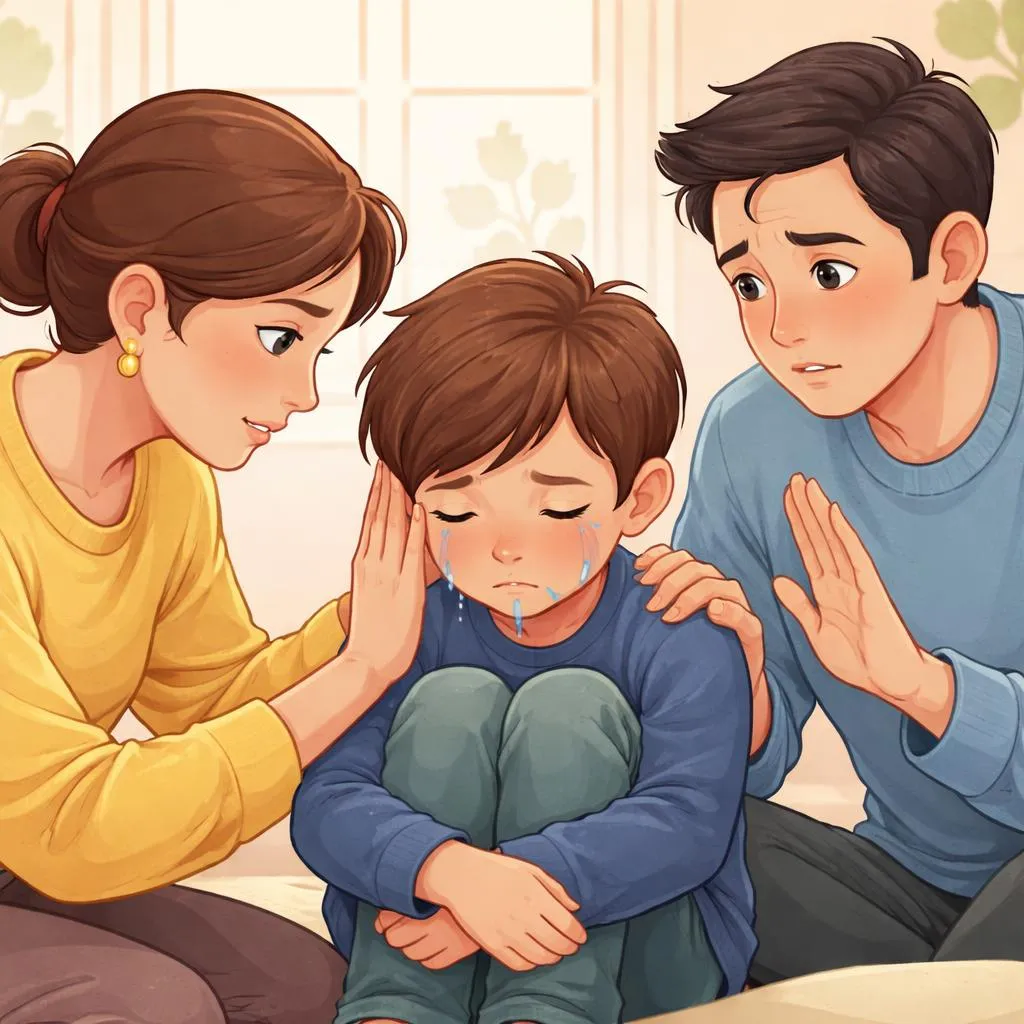

What Do These Expressions Mean? “Don't cry” and “no tears” both tell someone to stop crying. They ask a person to hold back visible sadness. Adults say these words to upset children. Both phrases focus on the act of crying itself.
“Don't cry” means stop producing tears right now. It is a direct command. A parent says it when a child falls down. It tries to comfort but sometimes misses the mark.
“No tears” means keep your eyes dry. It sounds softer and more poetic. A grandparent might say it during a sad goodbye. It focuses on the result, not the action.
These expressions seem very similar. Both want the crying to end. Both come from a place of caring. But one can feel dismissive while the other feels gentle.
What's the Difference? One is a command. The other is a wish. “Don't cry” tells a child what not to do. It stops the expression of feeling. It can sound impatient.
“No tears” observes what is happening. It names the tears without ordering them away. It feels more like a hope than a rule. Children hear less pressure in these words.
Think of a scraped knee. “Don't cry” says “stop your response.” “No tears” says “let's keep your face dry.” The first fights feelings. The second works with them.
One is more common. The other is more gentle. “Don't cry” appears everywhere in daily speech. “No tears” appears in stories and quiet moments. Choose carefully when a child truly hurts.
Also, “don't cry” can make a child cry more. Feeling told to stop often backfires. “No tears” does not fight the emotion. It simply names what you hope to see.
When Do We Use Each One? Use “don't cry” for small upsets. Use it when a child drops a toy or loses a game. Use it when the crying is bigger than the problem. It fits everyday frustrations.
Examples at home: “Don't cry about the broken crayon. We have more.” “Don't cry. The ice cream truck comes back tomorrow.” “Don't cry over spilled milk. Let's clean it up.”
Use “no tears” for real sadness. Use it during goodbyes, disappointments, or losses. Use it when you want to validate feelings first. It fits tender moments.
Examples with care: “No tears at the airport. We will see Grandma soon.” “I know you are sad. No tears right now. Let's breathe.” “No tears for the lost balloon. We can get another.”
Avoid either phrase for deep grief. If a pet dies or a friend moves away, let tears fall. Sometimes crying helps healing. Know when to stay quiet and offer a hug.
Example Sentences for Kids Don't cry: “Don't cry because your tower fell. Build it again.” “Don't cry. The bandage does not hurt that much.” “Don't cry over a small scratch.”
No tears: “No tears at the doctor's office. You are so brave.” “I promise no tears before bedtime. Let's read a story.” “No tears for the goodbye. We will write letters.”
Notice “don't cry” feels faster and sharper. “No tears” feels slower and softer. Children respond better to soft words when truly upset. Save sharp words for very small problems.
Parents can also say “it is okay to cry sometimes.” That teaches emotional honesty. Balance “no tears” with “tears are normal.” Healthy children need both messages.
Common Mistakes to Avoid Many adults say “don't cry” too quickly. They skip the listening part. A child needs to feel heard first. Otherwise “don't cry” feels like rejection.
Better approach: Listen. Hug. Then say “let's find a solution.” Only use “don't cry” for very small things. For real pain, stay with the feeling.
Another mistake: using “no tears” as a command. You cannot command tears away. Say “no tears” as a gentle hope, not an order. Pair it with comfort.
Wrong: “No tears right now. Stop it.” Right: “No tears, sweet one. I am here with you.”
Some parents never let children cry. That teaches children to hide feelings. Crying releases stress. Let some tears fall before you speak.
Also avoid comparing children. “Don't cry like a baby” is very hurtful. Never shame tears. Tears show a working heart.
Easy Memory Tips Think of “don't cry” as a stop sign. The sign says STOP right now. It works for small problems. But it feels too hard for big feelings.
Think of “no tears” as a tissue. The tissue gently wipes tears away. It does not fight the feeling. It simply helps the face feel dry.
Another trick: remember the sound. “Don't cry” has a hard K sound at Cry. Try. Lie. Sounds sharp. “No tears” has soft S and R sounds. Tears. Fears. Cheers. Softer on the ear.
Parents can say: “Hard words for small bumps. Soft words for big hurts.” That simple rule guides your choice. Match your words to the size of the feeling.
Practice noticing your own words. When you feel impatient, you say “don't cry.” When you feel patient, you say “no tears.” Your own feelings matter too.
Quick Practice Time Let us try a small exercise. Choose the better phrase for each situation.
A child cries because their pencil broke during homework. a) “No tears. I will sharpen it.” b) “Don't cry. It is just a pencil.”
A child cries because their best friend is moving away. a) “Don't cry about it.” b) “No tears right now. Let's draw a picture for them.”
Answers: 1 – b. A broken pencil is a small problem. 2 – b. A friend moving needs soft, gentle words.
Fill in the blank: “When I fall off my bike and nothing hurts badly, my dad says ______.” (“Don't cry” fits small falls with no real injury.)
One more: “When I miss my grandpa who lives far away, my mom says ______.” (“No tears” works better for missing someone.)
Neither phrase is perfect. Sometimes the best response is no words at all. A hug teaches more than both phrases combined.
Wrap-up “Don't cry” stops small tears quickly. “No tears” gently hopes for dry eyes during bigger feelings. Use “don't cry” for tiny problems. Use “no tears” for tender moments. Remember that tears are not the enemy. Listening and love matter more than any phrase.