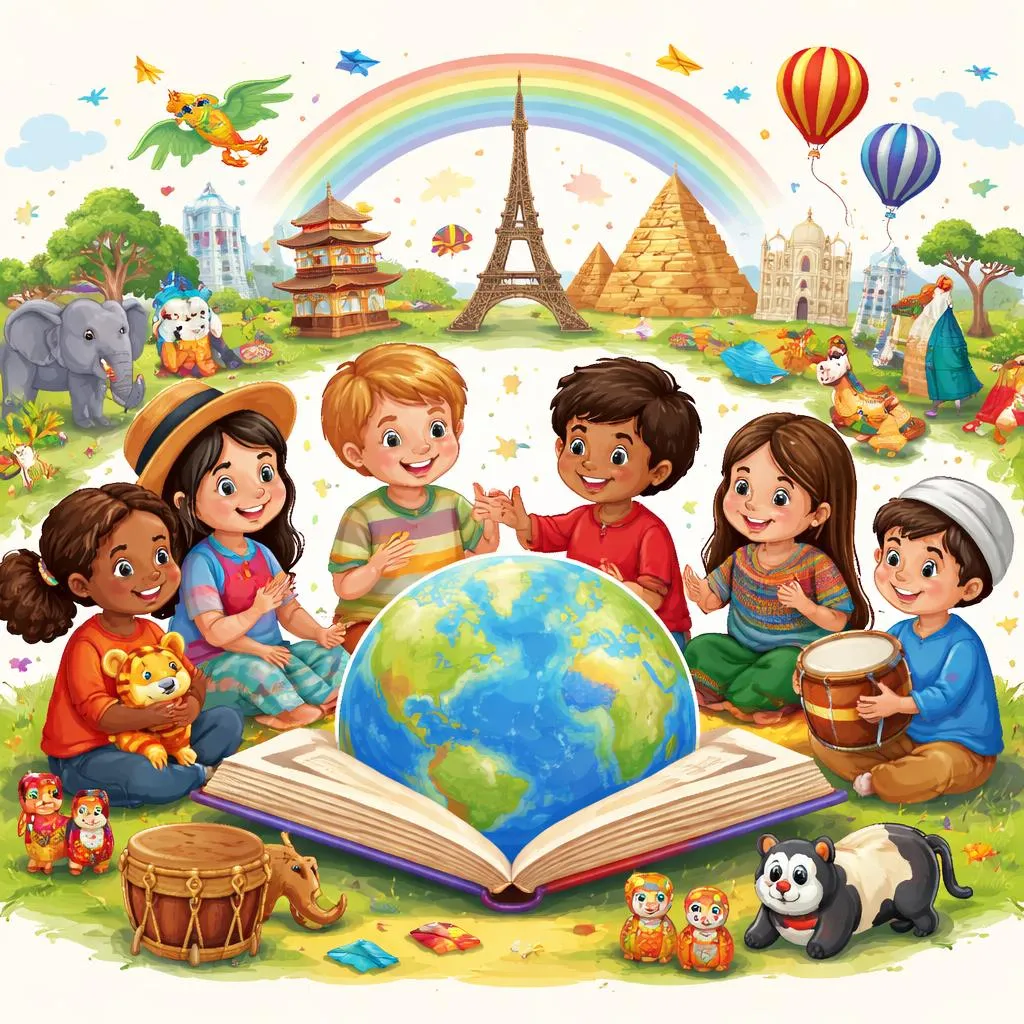

The world contains countless ways of living. Different foods fill markets. Different clothes cover bodies. Different stories fill imaginations. Children's stories about different cultures open windows onto this diversity. They show that people everywhere share hopes and fears while expressing them uniquely. This article explores methods for using these culturally rich tales in teaching.
What Defines a Culture Story for Children?
A children's story about different cultures presents life from another perspective. The story might take place in another country. It might feature traditions unfamiliar to the reader. It might use names, foods, and celebrations from a specific cultural context.
These stories do more than teach facts. They invite readers inside another way of experiencing the world. A child in Japan celebrates different holidays. A child in Nigeria eats different foods. A child in Peru wears different clothes. Yet all children laugh, cry, and dream.
The best culture stories balance difference with similarity. They highlight unique traditions while showing universal emotions. Readers learn that people everywhere love their families and want happiness. The packaging differs. The core remains the same.
Why Use Culture Stories for Language Learning?
Children's stories about different cultures offer several advantages for language development. First, they introduce vocabulary for unfamiliar concepts. Kimono, tortilla, sari, and kimchi become real through story context. This expands word knowledge beyond everyday experience.
Second, these stories build cultural awareness. Learners discover that English serves speakers from countless backgrounds. The language carries stories from everywhere. This understanding supports global citizenship.
Third, culture stories generate curiosity. Children want to know about different ways of living. This natural motivation drives engagement with text. Interested learners comprehend and retain more.
Fourth, these stories provide comparison opportunities. Learners can contrast their own lives with story characters' lives. This comparative thinking builds analytical language skills.
Categories of Culture Stories
Children's stories about different cultures fall into several categories. Each offers unique learning opportunities.
Traditional Folktales These stories come from specific cultural oral traditions. Anansi stories from West Africa. Brer Rabbit tales from African American culture. Coyote stories from Native American traditions. These tales carry cultural values and wisdom.
Modern Life Stories These narratives show contemporary children in various cultures. A day in the life of a child in India. A family celebration in Mexico. A school experience in Japan. These stories show current cultural practices.
Holiday and Festival Stories These tales focus on specific cultural celebrations. Diwali stories from India. Lunar New Year tales from China. Eid stories from Muslim cultures. These narratives explain holiday traditions meaningfully.
Immigration and Heritage Stories These narratives explore what happens when cultures meet. A child whose family came from another country. A grandparent sharing old traditions. A family maintaining heritage in a new land. These stories address cultural identity.
Vocabulary Learning Through Culture Stories
Culture stories introduce vocabulary in rich contextual settings. Words for cultural items appear with descriptions and illustrations. Kimono connects to images of Japanese dress. Tortilla connects to pictures of Mexican cooking. This visual support aids understanding.
Food vocabulary expands naturally through these tales. Names for dishes from around the world appear in story contexts. Learners encounter sushi, tamales, curry, and baklava within narratives that explain what these foods mean to characters.
Celebration vocabulary builds through holiday stories. Diwali introduces lamp, rangoli, and firework. Lunar New Year brings red envelope, dragon, and parade. Each celebration adds its own word set.
Family relationship terms vary across cultures. Some stories introduce extended family vocabulary specific to cultural contexts. These variations enrich understanding of how language reflects social structures.
Simple Phonics Points in Culture Stories
Culture stories offer useful phonics material through names and borrowed words. Names from different languages provide practice with various sound patterns. Japanese names offer vowel-rich practice. African names introduce rhythmic syllables. These names become familiar through repetition.
Many culture stories include words borrowed into English from other languages. Tortilla, sushi, and kindergarten came from other tongues. Their pronunciation in English offers phonics practice while showing language connections.
Alliteration appears in culturally specific phrases. "Colorful clothes" in Indian stories. "Spicy salsa" in Mexican tales. These pairs highlight initial sounds while adding cultural flavor.
Exploring Grammar Through Diverse Narratives
Culture stories provide clear grammar models while showing linguistic variety. Sentence structures may differ slightly based on translation from other languages. This exposes learners to the flexibility of English.
Past tense dominates traditional folktales. "Long ago, Anansi the spider lived in a village." This consistent past tense builds familiarity with narrative forms.
Present tense appears in modern life stories. "Ming eats breakfast with her grandparents every morning." This general present expresses cultural routines.
Comparatives emerge when stories discuss differences. "In Mexico, we celebrate differently than in Canada." These structures support comparative thinking.
Learning Activities with Culture Stories
Active engagement with cultural narratives deepens learning. These activities bring diverse perspectives into productive language use.
Culture Comparison Charts After reading a culture story, create a simple chart comparing the story culture with learners' own culture. Food, clothing, celebrations, and daily routines provide comparison categories. This builds comparative language and cultural awareness.
Cultural Object Drawing Identify a cultural object from the story. A sari. A dragon puppet. A Diwali lamp. Learners draw the object and label its parts. Below the drawing, write a sentence about its use in the story. This builds vocabulary and comprehension.
Celebration Exploration After reading a story about a cultural celebration, research more about that holiday. What do people do? What do they eat? What does it mean? Present findings to the class. This builds research and presentation skills.
Story Retelling from Another Perspective Retell a familiar story from another culture's perspective. How might Cinderella be different set in Japan? What would Three Little Pigs look like in Nigeria? This builds creative language use and cultural thinking.
Educational Games with Culture Stories
Games add playful interaction with cultural narratives. These activities work well for groups or individuals.
Culture Story Bingo Create bingo cards with elements from multiple culture stories. Kimono. Tortilla. Dragon. Sari. Anansi. As you describe story moments, learners cover matching elements. This builds listening comprehension and cultural knowledge.
Cultural Object Match Create cards with cultural objects on some and cultural names on others. Sari matches India. Kimono matches Japan. Tortilla matches Mexico. Learners match objects to cultures. This builds cultural vocabulary.
Story Location Guess Describe a culture story setting without naming the culture. "In this place, people celebrate with lanterns and dragons." Learners guess Lunar New Year stories. This builds inference and cultural knowledge.
Printable Materials for Culture Story Learning
Tangible resources support extended exploration of cultural themes. These materials work well for independent practice.
Culture Word Cards Create cards with cultural vocabulary words on one side and simple definitions or pictures on the other. Sari, kimono, tortilla, Diwali, dragon. Use these for matching games or quick reviews.
My Culture Story Response Page Provide a page with prompts for responding to a culture story. "This story took place in..." "Something different from my life..." "Something the same as my life..." "I wondered..." This builds comprehension and personal connection.
World Map Connection Page Provide a simple world map. Learners mark where culture stories took place. Add story titles to the map. This builds geographic awareness alongside cultural learning.
Culture Celebration Calendar Create a simple calendar showing cultural celebrations from stories read. Add new celebrations as stories appear. This builds awareness of cultural diversity throughout the year.
The lasting value of children's stories about different cultures lies in their power to build bridges. Through these tales, learners discover that the world contains many ways to be human. A child in Kenya laughs at different jokes but laughs just the same. A family in Peru eats different foods but gathers around the table with love. These stories plant seeds of curiosity and respect that grow throughout life. The vocabulary learned serves not just communication but connection. Words like sari and kimono become not just labels but doorways into understanding. Each story read together builds language skills while expanding hearts and minds. The classroom becomes a place where the whole world visits, one story at a time.