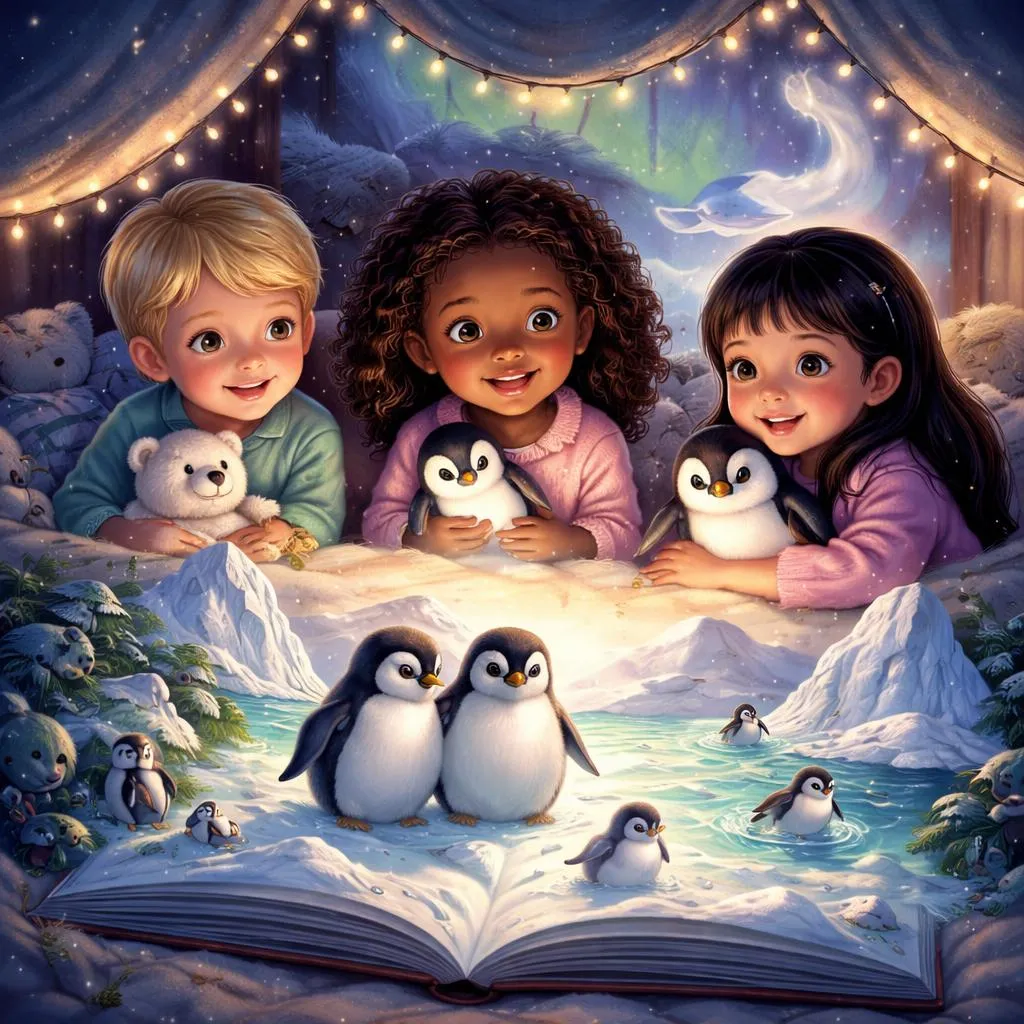

Black and white bodies waddle across ice. Wings that cannot fly become flippers for swimming. These unusual birds live where few humans go. This combination of familiarity and difference makes penguins fascinating. Children's story books about penguins bring these Antarctic creatures into warm classrooms. They introduce amazing animals through engaging narratives. This article explores methods for using these delightful books in teaching.
What Defines a Penguin Story for Children?
A children's story book about penguins places these Antarctic birds at the center of narrative. Some stories present realistic penguin life. Colonies huddle together for warmth. Parents take turns caring for eggs. Chicks learn to swim and find food. These tales teach factual information through story.
Other stories give penguins human qualities. Penguins wear clothes. They talk and have adventures. They face problems children understand. Making friends. Feeling different. Learning new things. These anthropomorphic tales use penguins to explore universal themes.
The best penguin stories balance fact and fiction. They respect what makes penguins special while creating engaging plots. Readers learn about real penguin behaviors while enjoying a good story.
Vocabulary Learning Through Penguin Books
Penguin stories introduce rich Antarctic vocabulary. Habitat words appear naturally. Ice, snow, ocean, and colony create the setting. These words build understanding of where penguins live.
Penguin body part words fill these books. Beak, flipper, feather, and webbed feet describe penguin anatomy. Each word connects to how penguins move and survive.
Action words for penguin behaviors appear frequently. Waddle, slide, dive, swim, and huddle describe penguin life. These verbs help learners imagine how penguins move.
Children's story books about penguins also introduce family vocabulary. Chick, egg, parent, and colony describe penguin social structure. These words help learners understand how penguins raise young.
Simple Phonics Points in Penguin Tales
Penguin stories offer excellent phonics material. Penguin itself provides sound practice. Pen contains short e. Guin offers hard g and in sound. This familiar word builds phonics foundations.
Antarctic animal names give varied sound practice. Seal features long e. Whale has wh and silent e. Fish contains short i. These words appear naturally in penguin habitats.
Action words provide sound patterns. Waddle repeats short a and double l. Slide features long i. Splash begins with spl blend. Each word offers phonetic learning opportunities.
Exploring Grammar Through Penguin Narratives
Penguin stories provide clear grammar models. Present tense describes penguin facts. "Emperor penguins live in Antarctica. They huddle together to stay warm." This general present expresses scientific truths.
Past tense narrates story events. "The little penguin slipped on the ice. He slid all the way to the water." This past tense shows completed action in story context.
Comparatives appear when discussing penguin traits. "Emperor penguins are larger than rockhopper penguins." "Some penguins swim faster than others." These structures support comparison skills.
Learning Activities with Penguin Books
Active engagement with penguin narratives deepens learning. These activities bring Antarctic themes into productive language use.
Penguin Body Part Labeling After reading a penguin story, provide a simple penguin drawing. Learners label body parts using vocabulary from the book. Beak, flipper, feather, belly, feet. This builds vocabulary and connects words to visual representation.
Penguin Movement Game Call out penguin action words from the story. Waddle. Slide. Dive. Swim. Huddle. Learners move according to each word. This physical connection makes vocabulary memorable through body experience.
Penguin Habitat Diorama Create a simple shoe box diorama of penguin habitat. Use cotton for snow. Blue paper for water. Small penguin figures or drawings. Label habitat elements with words from stories. This builds vocabulary and spatial understanding.
Penguin Species Comparison Many penguin books feature different species. Create a simple chart comparing emperor, king, and rockhopper penguins. Size, color, location columns. Learners fill in information from stories. This builds comparative thinking.
Educational Games with Penguin Stories
Games add playful interaction with Antarctic narratives. These activities work well for groups or individuals.
Penguin Bingo Create bingo cards with penguin story elements. Ice. Snow. Egg. Chick. Fish. Colony. As you describe story moments or call words, learners cover matching squares. This builds listening comprehension and vocabulary.
Penguin Charades Act out penguin behaviors from stories without speaking. Waddling. Sliding on belly. Diving for fish. Huddling for warmth. Others guess the behavior. This builds comprehension and movement connection.
Penguin Food Chain Game Create cards representing Antarctic food chain elements. Krill. Fish. Penguin. Leopard seal. Learners arrange in correct order showing who eats what. This builds science understanding alongside language.
Printable Materials for Penguin Story Learning
Tangible resources support extended exploration of penguin themes. These materials work well for independent practice.
Penguin Word Cards Create cards with penguin vocabulary on one side and simple definitions or pictures on the other. Waddle, flipper, colony, chick, huddle. Use these for matching games or quick reviews.
My Penguin Story Page Provide a template for writing an original penguin story. Prompts guide structure. "One cold day in Antarctica..." "A little penguin named..." "The problem was..." "In the end..." This builds narrative skills with Antarctic themes.
Penguin Fact Sheet Create a simple fact sheet with spaces for penguin information. What they eat. Where they live. How they move. How they care for babies. Learners fill in from story knowledge. This builds comprehension and summary skills.
Penguin Life Cycle Page Provide a simple diagram showing penguin life cycle. Egg, chick, growing, adult. Learners label stages and add sentences about each from story knowledge. This builds understanding of development.
The lasting value of children's story books about penguins lies in their ability to make distant creatures relatable. Most children will never visit Antarctica. They will never see penguins in the wild. Yet through stories, these birds become familiar friends. Children learn that penguin parents care for their young just as human parents do. They discover that penguin chicks must learn and grow. This connection builds empathy for animals while teaching language. Each penguin story read together builds vocabulary about the natural world while celebrating the wonder of creatures so different from ourselves. The classroom becomes a place where even the most distant animals come close through the power of story.