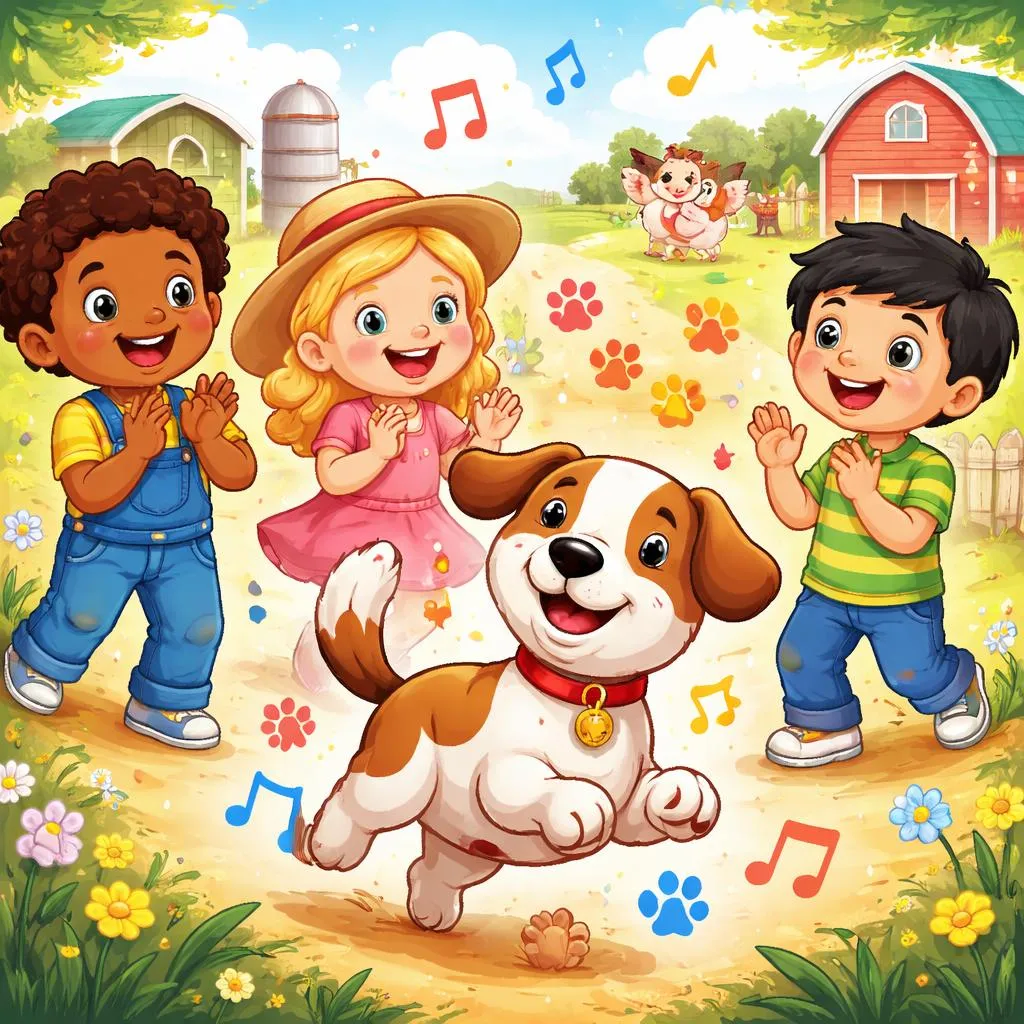

There is a song that fills classrooms with energy and laughter. It involves a farmer, a dog, and a lot of clapping. The song is, of course, about the beloved dog Bingo. The catchy refrain "bingo was its name" sticks in the mind long after the song ends. As teachers, we can use this infectious tune for more than just fun. It is a powerful tool for teaching spelling, rhythm, and phonemic awareness. Let's explore how to bring this classic to life in the classroom.
What is the Bingo Nursery Rhyme? This is a traditional English language song. It is also a clapping game. The song tells the story of a farmer who has a dog. The dog's name is Bingo. The song's structure is unique. It repeats the verses but gradually removes letters from the dog's name, replacing them with claps.
This cumulative structure is excellent for young learners. It builds anticipation. It encourages active participation. The central line, "bingo was its name" , becomes a fun chant. Children learn to spell the word B-I-N-G-O without even realizing it. The song turns a spelling lesson into a playful game.
The Lyrics of the Nursery Rhyme Let's look at the lyrics in their full form. This helps us understand the pattern.
There was a farmer had a dog, And Bingo was his name-o. B-I-N-G-O, B-I-N-G-O, B-I-N-G-O, And Bingo was his name-o.
There was a farmer had a dog, And Bingo was his name-o. (Clap)-I-N-G-O, (Clap)-I-N-G-O, (Clap)-I-N-G-O, And Bingo was his name-o.
The pattern continues. Each verse removes one more letter and adds a clap. We go through all five letters until the name is entirely clapped. The phrase "bingo was its name" appears at the end of every verse. This repetition reinforces the dog's name and the song's theme.
Vocabulary Learning: Key Words in the Song This song introduces several useful words.
Farmer: This is a person who works on a farm. We can discuss what farmers do. They grow food and take care of animals.
Dog: This is a common pet. We can talk about different types of dogs. We can discuss how dogs can be friends and helpers.
Name: This is what we call a person or an animal. We can practice introducing ourselves. "My name is Teacher." "His name is Bingo."
Bingo: This is the specific name of the dog. It is also a word we can spell.
Teaching these words builds a foundation. The phrase "bingo was its name" helps cement the idea that "Bingo" is a proper noun. It is the specific name for this particular dog.
Phonics Points: Focusing on Letter Sounds The song is perfect for phonics instruction. It isolates the letters in BINGO one by one.
The Letter B: We start with the /b/ sound. We practice saying "B" clearly. We can think of other words that start with B, like "ball" and "boy".
The Letter I: We practice the short /i/ sound, as in "igloo" or "insect". We feel how our mouth forms the sound.
The Letter N: We practice the /n/ sound. We feel the tip of our tongue against the roof of our mouth.
The Letter G: We practice the hard /g/ sound, as in "goat" or "girl". We feel the sound at the back of our throat.
The Letter O: We practice the long /o/ sound, as in "open" or "ocean".
As we sing the song, we emphasize these sounds. When we get to the clapping verses, the missing letter is still "heard" in our minds. This strengthens the connection between the letter and its sound. The phrase "bingo was its name" brings all these sounds together at the end.
Grammar Patterns: Simple Structures We can find simple grammar points within the song.
Past Tense: The song uses the past tense "was." "There was a farmer." "Bingo was his name." We can contrast this with the present tense. "Now, there is a dog." This is a gentle introduction to verb tenses.
Possession: The song shows possession with the word "his." "Bingo was his name-o." We explain that "his" tells us the name belongs to the dog. We can practice with other examples. "This is his ball." "This is her book." This connects the song to real-life language use.
Pronouns: The song uses "his" and later, in some versions, "its." The phrase "bingo was its name" uses the possessive pronoun "its." This shows how we talk about animals. We can explain that we use "its" for things and animals when we do not know if they are male or female.
Learning Activities: Bringing the Song to Life Here are some activities to deepen the learning experience.
Activity 1: Letter Cards We need five large cards. Each card has one letter: B, I, N, G, O. We give the cards to five students. As we sing the song, the students holding the correct letter hold up their card. When we get to the clapping verses, the student whose letter is being clapped lowers their card. This makes the spelling pattern visual and physical.
Activity 2: Name Practice We can adapt the song for our students' names. We sing, "There was a teacher had a student, and [Student Name] was their name-o." Then we spell the student's name. For longer names, we can use claps for some letters. This personalizes the learning. It makes the connection between the song and the concept of "name" very clear.
Activity 3: Draw Bingo We ask students to draw a picture of the farmer and his dog. They can write the dog's name, BINGO, at the bottom of the picture. They can also write the key phrase "bingo was its name" under their drawing. This combines art with literacy practice.
Printable Materials: Resources for the Classroom Printable materials support the lesson and provide take-home practice.
Flashcards: We create flashcards for the key vocabulary. One card shows a farmer. One card shows a dog. One card shows the letters B-I-N-G-O. We use these for quick review games.
Spelling Strips: We create simple strips of paper with the word BINGO written on them. Students can point to each letter as they sing. They can also trace the letters for handwriting practice.
Coloring Page: We provide a coloring page of a friendly dog on a farm. Students can color the picture. They can practice writing the word "BINGO" in a banner at the top or bottom.
Educational Games: Making Learning Playful Games turn practice into play. They encourage repetition in a joyful way.
Game 1: Bingo Letter Bingo This game uses the song's theme. We create simple bingo cards with letters on them, not numbers. We call out letters. Students cover the letters they have. The winner is the first to cover five in a row. We can shout "BINGO!" when someone wins, connecting back to the song.
Game 2: Clap and Spell Relay We divide the class into teams. We say a simple three or four-letter word, like "cat" or "dog." The first team must spell the word by clapping for each letter. For "cat," they would clap three times. The other team must guess the word from the claps. This builds on the clapping pattern from the "bingo was its name" song.
Game 3: Name That Letter We sing the song, but we stop at a certain point. We sing, "B-I-N-G-O, B-I-N-G-O, B-I..." and then we pause. The class must shout the next letter, which is "N." This quick game checks their knowledge of the letter sequence.
By using these strategies, we transform a simple clapping song into a rich educational experience. We guide students through vocabulary, phonics, grammar, and spelling. The joyful refrain "bingo was its name" becomes a anchor for learning that stays with them long after the song ends.